How to grow Peperomia caperata? Detailed guide to cultivation methods and benefits
Peperomia caperata growing environment
Prefers partial sun or bright indirect light. The optimal growing temperature is 25-28°C, and the wintering temperature must not fall below 12°C. It prefers a warm, humid environment and well-drained sandy loam, is intolerant of waterlogging, but likes environments with high air humidity.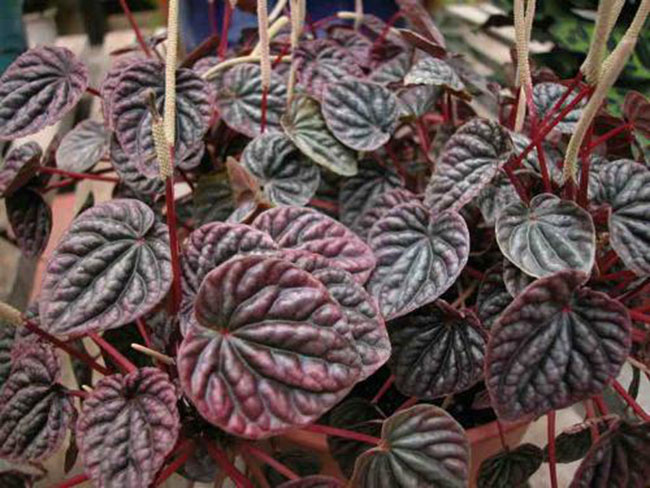
Peperomia caperata morphological characteristics
A clump-forming plant with short stems, and rounded-cordate leaves clustered at the top of the short stems. The petioles are 10-15 cm long, and the plant height is about 20 cm. The leaf surface is deep green and glossy, while the leaf underside is grayish green. The midrib and primary lateral veins are sunken downward, making the leaf surface wrinkled and uneven. The flower spikes are grass green, and the peduncles are reddish brown; the peduncles are 15-29 cm long, making the flower spikes stand out beyond the plant. Both the flowers and leaves are ornamental.
Peperomia caperata propagation methods
It has good adaptability to the environment; even if the soil and water quality are poor, it can still grow well, and it is suitable for planting in the background. Because its roots, which take hold in the bottom sand, spread out, it needs a considerable amount of space to grow. It propagates through new shoots sent out from older parts.
In the domestic horticultural field, propagation and cultivation are often carried out by cuttings, division, or leaf cuttings, with a very high success rate, but a humid environment must be maintained. Adding some rooting hormone makes it even easier to promote successful rooting.
Peperomia caperata cultivation methods
Potting soil for Peperomia caperata
Peperomia caperata is not very picky about its soil. Generally speaking, well-drained leaf mold is sufficient. Gardeners can also make their own nutrient soil suitable for Peperomia caperata, for example, a loose growing medium mixed from garden soil, leaf mold, river sand, etc., with a small amount of cake fertilizer added as a base fertilizer.
Fertilizing Peperomia caperata
Another thing that cannot be ignored during the growth period of Peperomia caperata is fertilizing it. Generally speaking, fertilizing once a month during the growing season is sufficient. As for the choice of fertilizer, gardeners can choose fully decomposed cake fertilizer water, a thin liquid fertilizer mainly based on nitrogen fertilizer, and so on. When fertilizing, be sure to avoid contact with the leaf surface.
Watering Peperomia caperata
Peperomia caperata is a mesophytic flowering plant, so it is best to keep the growing environment moist day and night. Watering should be done so that the potting soil is moist; although it should be moist, care must also be taken that there is no waterlogging. Once water accumulates, root rot is very likely to occur. In summer, when the temperature is high and Peperomia caperata grows vigorously, it is best to water once every 2-3 days, but winter is dry and Peperomia caperata grows slowly, so it is best to control the amount of water.
Light for Peperomia caperata
Peperomia caperata is actually a semi-shade flowering plant. It is best to place the potted Peperomia caperata in a semi-shady spot to receive indirect light. If the light is too strong, the leaves turn yellow; if the light is too weak, the leaves easily lose their gloss. In winter, it can be placed in a sunny spot.
Pruning Peperomia caperata
The growth of Peperomia caperata does not always go as we wish, and sometimes it grows in a very messy, disorderly way. At such times, we should prune Peperomia caperata. The purpose of pruning is to make the plant full and the branches and leaves dense. Pinching can be done in early summer; pinching means pruning the tender leaves growing from the growing tip at the top of the plant, which can inhibit the plant's growth and let new leaves grow out from below.
Pest and disease control for Peperomia caperata
Root rot, stem rot
This is mainly caused by excessive watering and the substrate being too wet for a long time; it can be prevented by controlling the degree of watering. You can also use Root Rot Remedy at 1000 times dilution, watering it in once every half month.
Anthracnose
This is mainly due to high air humidity, with water on the leaves unable to dry for a long time, which easily leads to disease. In production, do a good job of ventilation management, try to choose morning watering, and use fungicides such as thiophanate-methyl, chlorothalonil, and thiram once every half month for regular prevention and control.
Peperomia caperata benefits and effects
1. Purifying the air
Peperomia caperata likes to grow in a bright, indirect-light environment. When the outside temperature is between 20 and 28 degrees, it grows fastest, and it usually likes moist, well-drained soil. It is a beautiful foliage plant; greening the environment and purifying the air are its main effects. The leaves of this plant are glossy and green, elegant and distinctive, with particularly high ornamental value, and it can absorb carbon monoxide and carbon dioxide from the air, making indoor air fresher.
2. Reducing inflammation and promoting diuresis
Reducing inflammation and promoting diuresis are the main manifestations of the medicinal value of Peperomia caperata. After this plant is used as medicine, it can promote the excretion of excess water from the human body and can also eliminate kidney inflammation. It has a clear therapeutic effect on bodily edema or difficult urination caused by nephritis in humans. During treatment, Peperomia caperata can be decocted together with Chinese medicinal materials such as Jiupinghuagen and Shanpitiao and taken as a decoction.
3. Dispersing blood stasis and unblocking collaterals
Peperomia caperata can also disperse blood stasis and unblock collaterals. It can usually be used for the treatment of many common conditions such as traumatic injuries, fractures, and rheumatoid arthritis in humans. During treatment, fresh Peperomia caperata can be pounded and ground into a paste, then applied externally directly to the swollen, painful, and blood-stasis areas, changing the dressing once a day. It can not only disperse blood stasis and unblock collaterals, but also invigorate blood and relieve pain, and it can also dispel rheumatism. In addition, Peperomia caperata can relieve itching, and it also has a clear relieving effect on skin itching caused by rubella in humans. When needed, it can be ground, its juice extracted, and applied directly to the affected area.
Main value of Peperomia caperata
Peperomia caperata is an excellent foliage specimen. Its leaves are glossy and green, elegant and distinctive, and very beautiful. Used as a potted plant to accent shelves, desks, tabletops, and balconies, it is fresh and refined, light and soft, and lovable.
Cultivation methods of Peperomia caperata and propagation methods of Peperomia caperata
Peperomia caperata is a clump-forming plant about 20 cm tall, with short stems and rounded-cordate leaves clustered at the top of the short stems. Today we will talk about the cultivation methods of Peperomia caperata and knowledge about its propagation methods.
Cultivation methods of Peperomia caperata:
1. Nutrient solution: For hydroponic Peperomia caperata, in spring and summer, add foliage plant nutrient solution once every half month. Do not directly use a dissolved solution of agricultural fertilizer. If green algae is found in the hydroponic Peperomia caperata bottle, remove it promptly. The container can be cleaned each time the water is changed. Green algae in the container compete for oxygen around the roots of Peperomia caperata, causing root rot.
2. Temperature: The optimal growing temperature for Peperomia caperata is 16°C to 24°C from April to September, and 13°C to 18°C from September to April of the following year. The minimum winter temperature should be kept above 10°C. If the room temperature exceeds 30°C or falls below 10°C, Peperomia caperata grows slowly.
3. Light: Peperomia caperata can grow well when placed in a semi-shady environment. In summer, avoid direct sunlight; in spring, autumn, and winter, Peperomia caperata can be given a little more sunlight as appropriate. If the light is too strong, it easily causes the leaf margins and leaf tips of Peperomia caperata to scorch. If the light is too weak for a long time, it easily causes Peperomia caperata to lose its gloss.
Propagation methods of Peperomia caperata:
The propagation methods of Peperomia caperata commonly use division or leaf cuttings. The division method for Peperomia caperata can be carried out in early spring. For the leaf cutting method of Peperomia caperata, select healthy, firm Peperomia caperata leaves with 1.5-2.5 cm long petioles. After the cut surface dries slightly, insert them obliquely into a pot with river sand as the substrate. After insertion, water moderately; if the sand bed is too wet, it easily causes rot. At a temperature of about 19°C, roots can develop in about half a month, and when the seedlings grow to 3.5-4.5 cm, they can be transplanted.
More informationHow to grow Peperomia caperata: cultivation methods and precautions for Peperomia caperata
Peperomia caperata is a highly ornamental plant. Its leaves are very beautiful, and the color is purple. The leaf surface looks uneven, like wrinkles, but this is also very distinctive. This highly ornamental foliage plant is also relatively simple to grow. If you do not believe it, follow the editor to see its specific growing methods.
How to grow Peperomia caperata
When grown indoors in pots, it can grow well when placed in a semi-shady environment. In summer, avoid direct sunlight; in spring, autumn, and winter, it can be given a little more sunlight as appropriate. If the light is too strong, it easily causes leaf margins and leaf tips to scorch; if the light is too weak for a long time, it easily loses its gloss. The optimal growing temperature is 19-26°C, and the minimum winter temperature should be kept above 9°C; below 6°C, the leaves easily fall off. During the growing period, watering should be sufficient, but do not water too much, otherwise it easily causes root rot. A growing medium commonly prepared from leaf mold, garden soil, river sand, etc., is used to facilitate drainage and aeration. Apply a thin liquid fertilizer mainly based on nitrogen fertilizer once every half month or so. When the winter temperature is low, watering should be reduced and fertilizing stopped.
Cultivation methods and precautions for Peperomia caperata
Cultivation methods
1. Potting soil
Peperomia caperata is not very picky about its soil. Generally speaking, well-drained leaf mold is sufficient. Gardeners can also make their own nutrient soil suitable for Peperomia caperata, for example, a loose growing medium mixed from garden soil, leaf mold, river sand, etc., with a small amount of cake fertilizer added as a base fertilizer.
2. Fertilizing
Another thing that cannot be ignored during the growth period of Peperomia caperata is fertilizing it. Generally speaking, fertilizing once a month during the growing season is sufficient. As for the choice of fertilizer, gardeners can choose fully decomposed cake fertilizer water, a thin liquid fertilizer mainly based on nitrogen fertilizer, and so on. When fertilizing, be sure to avoid contact with the leaf surface.
3. Watering
Peperomia caperata is a mesophytic flowering plant, so it is best to keep the growing environment moist day and night. Watering should be done so that the potting soil is moist; although it should be moist, care must also be taken that there is no waterlogging. Once water accumulates, root rot is very likely to occur.
In summer, when the temperature is high and Peperomia caperata grows vigorously, it is best to water once every 2-3 days, but winter is dry and Peperomia caperata grows slowly, so it is best to control the amount of water.
4. Light
Peperomia caperata is actually a semi-shade flowering plant. It is best to place the potted Peperomia caperata in a semi-shady spot to receive indirect light. If the light is too strong, the leaves turn yellow; if the light is too weak, the leaves easily lose their gloss. In winter, it can be placed in a sunny spot.
5. Pruning
The growth of Peperomia caperata does not always go as we wish, and sometimes it grows in a very messy, disorderly way. At such times, we should prune Peperomia caperata. The purpose of pruning is to make the plant full and the branches and leaves dense.
Pinching can be done in early summer; pinching means pruning the tender leaves growing from the growing tip at the top of the plant, which can inhibit the plant's growth and let new leaves grow out from below.
6. Repotting
For potted Peperomia caperata, it is best to repot once every 2 years, so for lazy people, there is no need to repot every spring.
Precautions
1. As a mesophytic flowering plant, watering should be done so that the potting soil is moist, and waterlogging must be avoided.
2. Potted plants should be placed in a semi-shady spot. If the light is too strong, the leaves turn yellow; if the light is too weak, the leaves easily lose their gloss. In winter, they can be placed in a sunny spot.
What is the market price of Peperomia caperata
Peperomia caperata prefers partial sun or bright indirect light. The optimal growing temperature is 25-28°C. It prefers a warm, humid environment and well-drained sandy loam, is intolerant of waterlogging, but likes environments with high air humidity. At present, prices vary by variety, but its price fluctuates around 45 yuan.
The effects of Peperomia caperata
1. Reducing inflammation and promoting diuresis: Reducing inflammation and promoting diuresis are the main manifestations of the medicinal value of Peperomia caperata. It has a clear therapeutic effect on bodily edema or difficult urination caused by nephritis in humans. During treatment, Peperomia caperata can be decocted together with Chinese medicinal materials such as Jiupinghuagen and Shanpitiao and taken as a decoction.
2. Dispersing blood stasis and unblocking collaterals: Peperomia caperata can also disperse blood stasis and unblock collaterals. It can usually be used for the treatment of many common conditions such as traumatic injuries, fractures, and rheumatoid arthritis in humans. Used externally, Peperomia caperata can also relieve itching, and it also has a clear relieving effect on skin itching caused by rubella in humans.
3. Ornamental effect: It is a beautiful foliage plant. The leaves of this plant are glossy and green, elegant and distinctive, with particularly high ornamental value.
4. Purifying the air: Greening the environment and purifying the air are its main effects, and it can absorb carbon monoxide and carbon dioxide from the air, making indoor air fresher.
Peperomia caperata has multiple effects. For ordinary traumatic injuries, the medicines used contain components of Peperomia caperata. Not only that, its main value is still purifying the air and making the indoor environment fresher. It is a purely natural purifier. A plant that is both beautiful and able to purify the air is also not expensive, so it is very suitable to place a pot of it at home.