Detailed Guide to the Cultivation Methods and Propagation Techniques of the Episcia
Botanical Features of the Episcia
A perennial evergreen herbaceous plant. The episcia plant is low-growing, only a little over ten cm tall, mostly with a trailing habit and many branches. The leaves are opposite, elliptical, dark green or brownish, with serrated edges and a heart-shaped base; the leaf surface is much wrinkled and densely covered with fine hairs, and the silvery-white midrib runs from the base to the tip, with the areas on both sides of the midrib and lateral veins being pale grayish-green, and the leaf underside light green or pale red. Stolons grow out from the leaf axils at the base of the stem and extend outward along the soil surface; small plantlets grow at the tips of the stems. The flowers are solitary or in small clusters in the leaf axils, bright red, with the flowering period from spring to autumn. The fruiting period is in autumn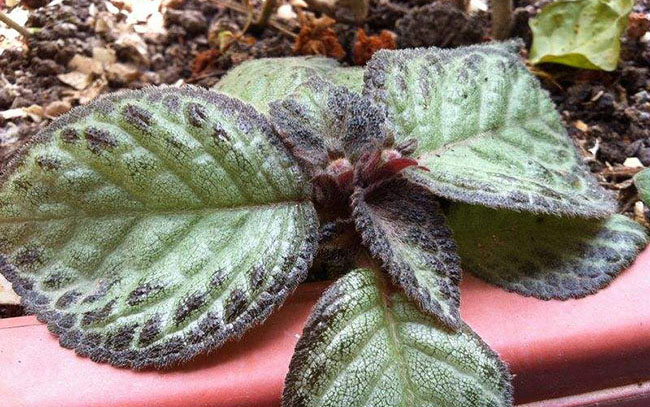
Propagation Methods for the Episcia
Sowing: carried out in April—May, with an optimum germination temperature of 20°C—24°C; germination occurs 1—2 weeks after sowing, the seedlings grow fairly quickly, and by the following year the stem diameter can reach more than 1cm.
Cuttings: best done in spring and autumn; cut off the offsets growing beside the mother plant, let the wounds dry, then insert them into a sand bed, and they can root after 25—30 days.
Grafting: carried out in May—June; the rootstock can be Hylocereus undatus or cactus, and the scion can be a two-year-old seedling or an offset growing beside the mother plant. About 15 days after grafting, the union heals and the plant survives, and after surviving it grows rapidly.
Cultivation Methods for the Episcia
The episcia can be propagated by sowing, but cuttings and division are generally used. For division, generally in late spring and early summer, the plants extending along the stolons are cut off together with the rootstock and planted, and one pot of mother plant can be divided into several pots. Cuttings can be taken from spring to autumn and root very easily. Leaf cuttings are mostly used, that is, the leaf is picked off together with its petiole, the petiole is inserted into river sand or vermiculite, and a certain degree of moisture is maintained. Roots can form in about half a month.
The potting soil for the episcia should be loose, breathable and well-draining; it can be made by mixing equal parts of garden soil, leaf mold and river sand with a small amount of base fertilizer, or it can be grown in moss alone. Repot every spring. During the growing season, apply a dilute liquid fertilizer once every half a month; be careful not to splash the fertilizer water onto the leaf surface when fertilizing, otherwise it easily causes leaf rot. The episcia needs bright shade for growth, but if the sunlight is too strong, the leaves are very easily scorched and killed; insufficient light or too much shade will in turn affect flowering, so semi-shade conditions must be created. It likes warmth, with an optimum growing temperature of 20-30℃ and an overwintering temperature of 10℃. During the growing season, just keep the potting soil moist; if there is too much water, the plant will rot and die; in winter, the potting soil can be kept slightly dry to help it resist the cold and overwinter.
In addition, the episcia leaf surface is very hairy, so care must be taken to avoid injuring the leaves, lest under relatively high humidity this cause rot or infection with anthracnose and brown spot disease; if necessary, spray 1000-fold Topsin or carbendazim for leaf surface protection.
Cultivation Methods of the Episcia Morphological Features of the Episcia
The episcia has beautiful leaf color and bright red flowers; the flowers are solitary or in small clusters in the leaf axils, with the flowering period from spring to autumn. So how is the episcia cultivated? What morphological features does it have? Let us learn about it together below.
I. Cultivation Methods of the Episcia
The episcia can be propagated by sowing, but cuttings and division are generally used. For division, generally in late spring and early summer, the plants extending along the stolons are cut off together with the rootstock and planted, and one pot of mother plant can be divided into several pots. Cuttings can be taken from spring to autumn and root very easily. Leaf cuttings are mostly used, that is, the leaf is picked off together with its petiole, the petiole is inserted into river sand or vermiculite, and a certain degree of moisture is maintained. Roots can form in about half a month.
The potting soil for the episcia should be loose, breathable and well-draining; it can be made by mixing equal parts of garden soil, leaf mold and river sand with a small amount of base fertilizer, or it can be grown in moss alone. Repot every spring. During the growing season, apply a dilute liquid fertilizer once every half a month; be careful not to splash the fertilizer water onto the leaf surface when fertilizing, otherwise it easily causes leaf rot. The episcia needs bright shade for growth, but if the sunlight is too strong, the leaves are very easily scorched and killed; insufficient light or too much shade will in turn affect flowering, so semi-shade conditions must be created. It likes warmth, with an optimum growing temperature of 20-30℃ and an overwintering temperature of 10℃. During the growing season, just keep the potting soil moist; if there is too much water, the plant will rot and die; in winter, the potting soil can be kept slightly dry to help it resist the cold and overwinter.
In addition, the episcia leaf surface is very hairy, so care must be taken to avoid injuring the leaves, lest under relatively high humidity this cause rot or infection with anthracnose and brown spot disease; if necessary, spray 1000-fold Topsin or carbendazim for leaf surface protection.
II. Morphological Features of the Episcia
The episcia is an evergreen plant of the Gesneriaceae family. The whole plant is densely covered with fine hairs, the plant height is over 10cm, and the plant is low-growing, only a little over ten cm tall, mostly with a trailing habit and many branches. The stems are mostly fleshy and soft, densely covered with white fine hairs, and stolon plantlets easily grow from the stem nodes and root upon touching the ground. Runners grow from the leaf axils, trailing in form, with small plantlets at the tips and roots able to form at the base. The leaves are opposite, ovate and fleshy, with a heart-shaped base, and the color is green or green with a bronze tint; the veins are silvery-white, and the leaf surface is green and much wrinkled, with the midrib and lateral veins forming a net-like pattern. The leaf underside is pale green or pale red, densely covered with white soft hairs, and the leaf margins have fine serrations. The flowers are solitary in the leaf axils or in small clusters in the leaf axils, small and dainty and lovely, with 5 petals, orange-red or other flower colors, and the slender pedicels are bright red. The flowers bloom from late spring to summer, with the flowering period from spring to autumn, and it is cultivated for ornamental purposes.
The above isCultivation Methods of the Episciaand the morphological features of the episcia; friends who like the episcia may as well take a look. The episcia is often used for cultivation under forests and on shaded rockery stones, and potted plants are suitable for display and viewing on balconies, windowsills and desks.
Cultivation Methods of the Episcia
The episcia commonly uses sowing, cuttings and grafting for propagation. Next, an introduction to the points to note when planting the episcia:
Sowing: carried out in April—May, with an optimum germination temperature of 20°C—24°C; germination occurs 1—2 weeks after sowing, the seedlings grow fairly quickly, and by the following year the stem diameter can reach more than 1cm. Cuttings: best done in spring and autumn; cut off the offsets growing beside the mother plant, let the wounds dry, then insert them into a sand bed, and they can root after 25—30 days.
Grafting: carried out in May—June; the rootstock can be Hylocereus undatus or cactus, and the scion can be a two-year-old seedling or an offset growing beside the mother plant. About 15 days after grafting, the union heals and the plant survives, and after surviving it grows rapidly.