How to Grow Aechmea fasciata? Cultivation Methods and Precautions
Aechmea fasciata Growing Habits
Ornamental bromeliads like warm, humid environments with plenty of sunlight. Only under bright light conditions can they flower normally and produce the most beautiful leaves, but direct midday sunlight still needs to be avoided in summer. The suitable growing temperature is 20-30°C in summer and 15-18°C in winter; below 10°C growth becomes difficult, and the nighttime minimum should be kept at 5°C. The soil should be neutral or slightly acidic sandy loam mixed with leaf mold or peat soil.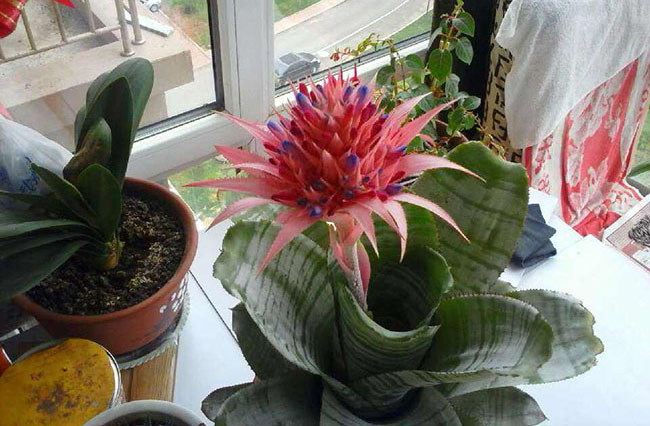
Aechmea fasciata Cultivation Techniques
Substrate Requirements
For large-scale greenhouse cultivation, since bromeliad cultivation takes a long time (about 2 to 3 years from seedling to finished large plant), the cultivation substrate is very important and directly affects the growth rate and quality of the bromeliads. Bromeliads are epiphytic plants, and their roots need air to grow, so the cultivation substrate must be loose, breathable, well-draining, and structurally stable. In addition, bromeliads prefer slightly acidic substrates, with the pH value best kept between 5.5 and 6.5. Generally, peat soil mixed with perlite at a ratio of 10:1 is used. Before use, the substrate must be sealed and disinfected with a 100-fold formaldehyde solution; after 15 days, remove the sealed conditions, and it can be used after 1 week. At the same time, the interior of the greenhouse must be disinfected two days in advance.
Planting Requirements
Seedlings should be planted immediately upon arrival. The planting depth is generally kept at 1 to 2 cm. If too deep, the substrate will enter the heart of the seedling and affect its growth. In addition, the substrate should not be pressed too tightly; keep it as breathable as possible. Water immediately after planting, and water thoroughly to ensure good contact between roots and soil (Note: the leaf axils must not lack water after planting).
Temperature Requirements
The suitable temperature for ornamental bromeliads is between 21°C and 28°C during the day and around 18°C to 21°C at night. It should not exceed 35°C or fall below 15°C. If the temperature is above 35°C, it will cause high-temperature damage, resulting in slow plant growth, small flower shapes, and fewer flower branches. If the temperature stays below 10°C for a long time, the leaves and bracts will show phenomena such as reddening, white spots, white tips, or loss of color, and the affected parts will dry out and become scorched; if the temperature continues to drop, the plant will die.
Generally, seedlings are relatively tender, so the temperature should be controlled between 20°C and 25°C, and large day-night temperature differences are strictly prohibited. After 3 months of planting, the temperature can be adjusted to between 18°C and 28°C, and the day-night temperature difference should be appropriately increased to benefit growth. In summer, cooling can be achieved by opening water curtains or fan systems; in winter, thermal screens and heating systems are used for insulation or heating.
Humidity Requirements
Bromeliads like high-humidity environments, and the air humidity should be maintained between 75% and 85%. Within this humidity range, the plants become plump and full, and the leaf color is bright and glossy. If the humidity is too low (below 50%), the leaves will curl inward or fail to extend, and even the leaf tips may become scorched. However, the humidity should not be too high either; if it is too high, brown spots will appear on the leaves, and in severe cases, heart rot will occur. The relative humidity at the seedling stage should be controlled between 80% and 85%, and after 3 months of planting it should be controlled between 75% and 85%. Air humidity can be increased by sprinkling water under the planting beds and along the walkways, which also helps lower the temperature
Light Requirements
Light intensity is an important factor determining plant growth rate, plant form, flower shape, flower color, and more. The suitable light intensity for bromeliads is around 18,000 lux. Within the suitable light range, increasing light intensity will promote smaller leaves, a more compact plant form, larger flower shapes, and faster flower coloring. If the light is too strong, spots will appear on the leaves, and in severe cases the leaves will be scorched. If the light is too weak, the plants will become leggy, the color will be dull, and the inflorescence will be slender and lose color. Generally speaking, the light intensity at the seedling stage should be controlled at around 15,000 lux. Too much light will affect the speed of seedling recovery. After three months, the light intensity can be increased to 20,000 to 25,000 lux. If the light is too strong, a shading system can be used for shading; in the morning, evening, and on cloudy days, make full use of the light.
Ventilation Requirements
Ventilation is also closely related to bromeliad growth. When the weather is cool, ventilation is not important, but during periods of high temperature and high humidity in summer, good ventilation is extremely important for the plants. With good ventilation, the plants are sturdy, the leaves are wide and thick, the flower spikes are large and long, and the flower color is vivid; with insufficient ventilation, the plants tend to become leggy, the leaves are narrow and long, the flower spikes are short, the flower color lacks luster, and pests and diseases are more likely to occur. When necessary, methods such as opening top windows and side windows can be used for ventilation.
Water Requirements
Water quality is very important for ornamental bromeliads; generally, the lower the salt content, the better. Water with high calcium and high sodium salt content will cause the leaves to lose their luster, hinder photosynthesis, and easily trigger heart rot and root rot. The EC value should be controlled below 0.3, and the pH value should be between 5.5 and 6.5. When the pH value is above 7, it will affect the plant's nutrient absorption.
The root system of epiphytic ornamental bromeliads is relatively weak; it mainly serves to anchor the plant, and its absorption function is secondary. The nutrients and water needed for growth and development are mainly stored in the leaf cup formed by the clasping leaf bases, and are absorbed through the absorption scales at the leaf bases. Even if the root system is damaged or absent, as long as there is some water in the leaf cup, the plant can grow normally. Summer and autumn are the peak growing seasons for ornamental bromeliads, when water demand is higher. Water the leaf cup once every 4 to 5 days, and water the substrate about once every 15 days, keeping water in the leaf cup and the substrate moist. After entering dormancy in winter, water the leaf cup once every 2 weeks; do not water if the substrate is not dry, as too much moisture easily causes root rot.
Fertilizer Requirements
Among the three major fertilizer elements nitrogen, phosphorus, and potassium, nitrogen can promote leaf elongation and deep green leaf color, phosphorus can promote transport within the plant, and potassium functions to make leaves shorter and wider and can improve leaf quality. Therefore, when preparing fertilizer, the ratio of nitrogen, phosphorus, and potassium must be appropriate; this is a prerequisite for cultivating high-quality bromeliads. The suitable ratio of nitrogen, phosphorus, and potassium is 1:0.5:1. In addition, bromeliads are very sensitive to boron; even a trace amount of boron can cause burning of the top in bromeliads.
All bromeliads need magnesium, which plays an important role in the synthesis of chlorophyll and enzymes. When preparing fertilizer, a magnesium fertilizer content of 12% is best. Bromeliads should be fertilized along with watering, with fertilization accompanying each watering. The pH value of the fertilizer solution should be between 5.5 and 6.0, and the fertilization principle is based on “light fertilizer applied frequently.” In addition, the EC value of the fertilizer solution varies depending on the growth stage. After planting the seedlings, wait until new roots grow to 2 cm before fertilizing regularly; at this time, the EC value of the fertilizer solution should be controlled between 0.5 and 0.8. After 4 months of planting, adjust the EC value to about 1.0. When the bromeliad moves from the vegetative growth stage to the reproductive growth stage and reaches a state where flowering can be induced, the EC value should be increased to 1.2. After flower induction, the EC value should still be 1.2 (Note: stop fertilizing for 3 weeks before and after flower induction).
Aechmea fasciata Daily Management
Repotting:
After 4 months of planting, repotting is needed. When repotting, first place a layer of substrate in the bottom of the pot, then take the bromeliad plant out of the small pot together with the soil, place it in the center of the pot, put substrate around it, and press lightly to ensure the plant stands upright. Likewise, the substrate should not be pressed too tightly, to ensure good breathability. The planting depth should be 3 to 4 cm. After repotting, immediately water thoroughly with clean water, and fertilizer can be applied after one month.
Adjusting Spacing: After a period of growth, the plants will appear too densely packed, with insufficient light, ultimately leading to narrow and long leaves, stagnant growth, and a widening growth gap. Therefore, 2 to 3 months after repotting, the spacing between plants needs to be adjusted.
Grading:
According to plant size, plants need to be graded regularly. This helps improve the light exposure of smaller plants and also facilitates management.
Removing Old Leaves: Promptly remove old leaves at the base that have turned yellow and dried out and have no ornamental value.
Aechmea fasciata Pest and Disease Control
Diseases of ornamental bromeliads can be divided into two major categories. One is called non-infectious disease, also known as physiological disease, which is caused by unsuitable environmental conditions such as light, temperature, water, and fertilizer. In bromeliad cultivation, this type of disease is more common. The other is called infectious disease, which is caused by infection by microorganisms such as fungi, bacteria, and viruses.
Aechmea fasciata Precautions
Aechmea fasciata generally needs repotting after about four months of planting, which is more conducive to its growth. In addition, during its growth process, old leaves that have turned yellow and dried out need to be promptly cleaned away, which can promote better growth and reduce nutrient waste.
Aechmea fasciata Cultivation Methods and Main Value
Aechmea fasciata is a herbaceous plant in the Bromeliaceae family, with spike inflorescences densely clustered into a broad conical spherical flower head. So how do you grow Aechmea fasciata? What main value does it have? Let's learn about it together below.
I. Aechmea fasciata Cultivation Methods
1. Potting soil: For potting, it is best to use loose leaf mold or brown peat soil as the main component, mixed with a small amount of river sand and vermiculite as the growing medium. When potting, fill the bottom 1/4 with granular drainage material to facilitate root aeration and drainage. The pH value is best kept between 5.5 and 6.5. Generally, peat soil mixed with perlite at a ratio of 10:1 is used.
2. Temperature: The suitable temperature for Aechmea fasciata is between 21°C and 28°C during the day and around 18°C to 21°C at night. It should not exceed 35°C or fall below 15°C. If the temperature is above 35°C, it will cause high-temperature damage, resulting in slow plant growth, small flower shapes, and fewer flower branches. If the temperature stays below 10°C for a long time, the leaves and bracts will show phenomena such as reddening, white spots, white tips, or loss of color, and the affected parts will dry out and become scorched; if the temperature continues to drop, the plant will die.
3. Light: Aechmea fasciata likes bright, diffuse light and dislikes strong direct light and overly shady conditions. Strong direct light will scorch the leaves of Aechmea fasciata, while too much shade will cause the leaves to lose their luster, and the plant may fail to bloom. From May to September, shading treatment should be carried out, or the potted plant should be placed in a semi-shaded place. At other times, give Aechmea fasciata sufficient light, which can make the plant more beautiful.
4. Watering: Aechmea fasciata likes moisture and is also drought-tolerant. During its growing period, keep the potting soil moist, and when watering, fill the leaf cups with water. During the growing period and flowering period of Aechmea fasciata, the leaf cups must be kept full of clean water, and the water must remain clean. Avoid overwatering. In winter when temperatures are low, watering should be controlled; just keep the potting soil slightly moist. Aechmea fasciata likes moisture, so during its growing season, water should often be sprayed on the plant and the surrounding environment to increase air humidity.
5. Fertilizing: April to September each year is the peak growing season for Aechmea fasciata. At this time, liquid fertilizer should be applied once a month. In addition to applying fertilizer to the potting soil, it should also be applied in the leaf cups and on the leaf surfaces. When the winter temperature is below 15°C, fertilizing should stop.
6. Pruning and Repotting: After Aechmea fasciata finishes flowering, the flower stems should be cut off as early as possible. This can avoid consuming nutrients and is beneficial for the sprouting of offsets. Young plants should be repotted once a year.
7. Pest and Disease Control: When ventilation is poor, Aechmea fasciata is prone to damage by scale insects and red spider mites. Other pests and diseases such as stem rot and whiteflies should also be guarded against and controlled.
II. Main Value of Aechmea fasciata
The rosette-shaped leaves of Aechmea fasciata have tiger-striped silvery-white horizontal bands, and it blooms small light blue flowers in summer. If you want it to bloom earlier, place 1-2 ripe apples beside the plant, cover the plant together with a plastic bag, and the gas released by the apples can promote flowering. It is often used as a potted plant or hanging basket for ornamental display, and it is ideal for beautifying homes and decorating halls.
The above isAechmea fasciata cultivation methodsand an introduction to its main value. Aechmea fasciata can be used as a potted plant or hanging basket for ornamental display, and it is great for beautifying homes and decorating halls.
Aechmea fasciata Aechmea fasciata Illustrated Guide: How to Grow Aechmea fasciata / How to Propagate Aechmea fasciata
Aechmea fasciata ProfileAechmea fasciata
Cultivation Methods and Precautions for Aechmea fasciata Introduction to Aechmea fasciata
Aechmea fasciata is a perennial epiphytic evergreen herbaceous plant in the genus Aechmea. The leaves are basal, and the base of the rosette leaf cluster forms a tube that can store water. The leaves are linear to sword-shaped, covered with gray scales, and green. The small flowers are sessile and light blue. It is native to southeastern Brazil in South America. It likes sufficient sunlight and also tolerates shady environments. Aechmea fasciata is often used as a potted plant or hanging basket for ornamental display, and it is ideal for beautifying homes and decorating halls.
Morphological Characteristics of Aechmea fasciata
Perennial epiphytic evergreen herbaceous plant. The leaves are basal, and the base of the rosette leaf cluster forms a tube that can store water. The leaves are linear to sword-shaped, can reach 45-70 cm or more in length, leathery, covered with gray scales, green, with tiger-striped silvery-white horizontal bands, and the margins have small black spines. The scape is upright, and the inflorescence is spicate, densely clustered into a broad conical spherical flower head. The bracts are leathery, with pointed tips, and light rose red. The small flowers are sessile and light blue. Common horticultural varieties include: silver-edged Aechmea fasciata, with silvery-white stripes on the leaf backs; purple-striped Aechmea, with leaf clusters more or less marked with purplish-red spots; variegated-leaf Aechmea, etc.
Ecological Habits of Aechmea fasciata
It likes sufficient sunlight and also tolerates shade; it is suitable for warm and humid environments and is also quite drought-tolerant; it requires soil rich in humus, loose and fertile, and with good drainage and aeration.
Cultivation Techniques of Aechmea fasciata
Aechmea fasciata is a perennial epiphytic herb in the Bromeliaceae family. The leaves are rosette-shaped, broad, and curved, gray-green with silvery-white stripes, and the leaf margins are spiny. The panicle is tower-shaped, with pink bracts and small blue flowers. It can bloom continuously for several months.
It is native to tropical and subtropical regions of Central and South America. It likes sunlight but fears strong direct light. Indoors, it should be placed at an east window; in summer, place it at a north window, and in winter, at a south window.
The suitable growth temperature is 16-18°C, with 50%-60% humidity; spray the plant with water during high temperatures. Use lukewarm soft water, pH 4.1-4.5. Rainwater is best.
After flowering, the old plant may live another 6-8 months, and small plantlets will grow from the base of the old plant. When the plantlets reach half the size of the mother plant, they can be broken off and planted. Two weeks before transplanting, pour some water into the funnel of the plantlets, and when transplanting, retain as much of the old plant's roots as possible.
Both leaves and flowers are beautiful, suitable for potted ornamental display on stands and desks.
Propagation Methods of Aechmea fasciata
It can be propagated by sowing and by division of offsets.
1. Propagation by sowing: After Aechmea fasciata flowers, seeds are easily obtained through artificial pollination. The seeds are small, so the small-seed sowing method is needed. At a temperature of 25-30°C, seedlings can emerge about one month after sowing. It takes about 3-4 years to grow into a flowering plant.
2. Propagation by division of offsets: Aechmea fasciata blooms only once in its lifetime. After flowering, one to several offsets will grow from the base of the old plant. When the offsets grow to about 10 cm, cut them off from the mother plant, peel off the lower leaves of the offsets, let them dry slightly, and then plant them. Keep the potting soil moist, and after rooting, switch to normal management.
Pest and Disease Control of Aechmea fasciata
When the air is dry and the temperature is high, scale insects will appear. Fusarium wilt can also occur; affected plants are best destroyed immediately to prevent transmission. When cultivated indoors, if ventilation is poor, scale insects and thrips often cause damage, and diluted laundry detergent solution or soap solution can be sprayed for control.
Variety Classification of Aechmea fasciata
Aechmea chantinii cv. Variegata: The leaf surface has striking horizontal bands alternating dark green and white.
Aechmea fasciata cv. Albo-marinata: The upper leaves have a broad yellow longitudinal band in the center.
Distribution Range of Aechmea fasciata
Native to southeastern Brazil in South America.
Landscape Uses of Aechmea fasciata
The rosette-shaped leaves of Aechmea fasciata have tiger-striped silvery-white horizontal bands, and it blooms small light blue flowers in summer. If you want it to bloom earlier, place 1-2 ripe apples beside the plant, cover the plant together with a plastic bag, and the gas released by the apples can promote flowering. It is often used as a potted plant or hanging basket for ornamental display, and it is ideal for beautifying homes and decorating halls.
Uses and Functions of Aechmea fasciata
Aechmea fasciata is often used as a potted plant or hanging basket for ornamental display, and it is ideal for beautifying homes and decorating halls.
Aechmea fasciata Pictures