How to grow Nymphoides indica? Cultivation methods and pest and disease control
Nymphoides indica
Perennial aquatic herb. The stem is cylindrical, unbranched, resembling a petiole, with a single leaf at the top. The leaves float, nearly leathery, broadly ovate or nearly round, densely glandular beneath, cordate at the base, entire, with rather indistinct palmate veins, the petiole short, cylindrical; flowers numerous, clustered at the nodes, the pedicels slender, cylindrical, unequal in length, split nearly to the base, the lobes oblong to lanceolate, obtuse at the apex, veins indistinct; the corolla white, yellow at the base, split nearly to the base, the tube short, the lobes ovate-elliptic, obtuse at the apex, densely covered on the inner surface with fringed long soft hairs. The capsule is elliptic; flowering and fruiting from August to October.
Produced at altitudes of 50-1530 m, widely distributed in the tropical to temperate zones of the world. Distributed in Northeast China, East China, South China, Hebei and Yunnan.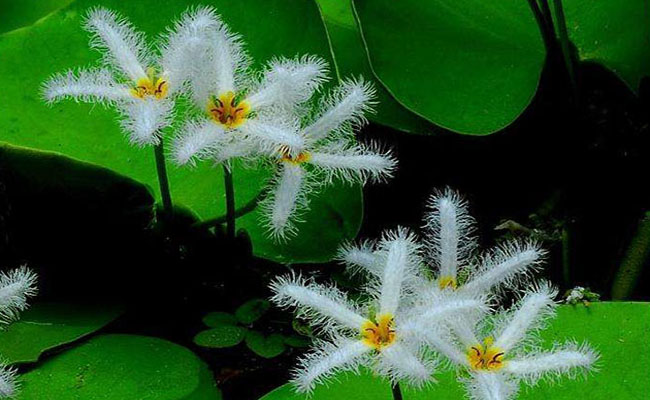
Morphological characteristics of Nymphoides indica
Nymphoides indica is a perennial aquatic herb. The stem is cylindrical, unbranched, resembling a petiole, with a single leaf at the top. The leaves float, nearly leathery, broadly ovate or nearly round, 3-18 cm long, densely glandular beneath, cordate at the base, entire, with rather indistinct palmate veins, the petiole short, cylindrical, 1-2 cm long.
Flowers numerous, clustered at the nodes, 5-merous; pedicels slender, cylindrical, unequal in length, 3-5 cm long; the calyx 3-6 mm long, split nearly to the base, the lobes oblong to lanceolate, obtuse at the apex, veins indistinct; the corolla white, yellow at the base, 7-12 mm long, 6-8 mm in diameter, split nearly to the base, the tube short, with 5 bundles of long soft hairs, the lobes ovate-elliptic, obtuse at the apex, densely covered on the inner surface with fringed long soft hairs; stamens inserted on the corolla tube, regular, the filaments short, flattened, linear, 1.5-1.7 mm long, the anthers arrow-shaped, 2-2.2 mm long; the ovary sessile, conical, 2 mm long, the style stout, cylindrical, about 2.5 mm long, the stigma swollen, 2-lobed, the lobes triangular.
The capsule is elliptic, 3-5 mm long, indehiscent; the seeds are swollen, brown, nearly spherical, 1.2-1.5 mm long, smooth. Chromosome number 2n=18. Flowering and fruiting from August to October
Origin and habitat of Nymphoides indica
The origin is at altitudes of 50-1530 m, in the tropical to temperate zones of the world. Distributed in Northeast China, East China, South China, as well as Hebei and Yunnan. The type specimen was collected in eastern India. It grows in ponds, shallow lakes and waterlogged grass dams; it is widely distributed in tropical regions such as India, Cambodia, Vietnam, Indonesia and as far as Fiji. [2]
Growth habits of Nymphoides indica
It prefers a warm and humid climate. The optimum temperature for plant growth and development is 20-35°C; above 40°C or below 15°C, it does not flower or its growth stalls. It has a fairly wide range of adaptability to acidity and alkalinity. It often lives in lakes, ponds and rivers.
Propagation methods of Nymphoides indica
It is propagated by division and cuttings. For division, in March each year, divide the denser clumps into small pieces and plant them separately; cutting propagation also roots easily, since its nodal stems can all produce roots. During the growing season, take 2-4 nodes of stem and insert them in shallow water; they root after two weeks. New plants form where the petiole is attached, so it can also reproduce asexually, but seeds can also be placed in water at 22-25°C to soak and germinate for propagation.
Cultivation techniques for Nymphoides indica
Like ordinary aquatic plants, it has no special requirements; generally it is enough to keep the water fairly clean.
A water depth of about 40 cm is more suitable for ponds, while a water depth of about 10 cm is enough for pot cultivation. Use ordinary pond mud as the substrate; it should not be too fertile, otherwise the branches and leaves grow luxuriantly and flowering becomes sparse instead. If the leaves turn yellow, bury a small amount of compound fertilizer or fertilizer tablets in the pot. Keep it in full sunlight at ordinary times, and the pot must not be short of water, otherwise it also dries out very easily.
Pot cultivation of Nymphoides indica
Depending on the size of the pot and how crowded the plants are, repot by division once every 2-3 years. In winter, keep water in the pot and place it in a sheltered, sunny spot to overwinter. Winter temperatures in the north are relatively low, so overwintering treatment is needed when growing Nymphoides indica.
Fertilizing Nymphoides indica
In order to promote the growth and development of Nymphoides indica plants and improve their ornamental effect, during the growing period of the plants, weeds and debris should be removed promptly to keep the water clean, and 1-2 additional fertilizer applications should be made together with weeding.
Pest and disease control of Nymphoides indica
The main pest of Nymphoides indica is aphids; spraying with a 1000-fold dilution of 40% dimethoate emulsion can achieve control.
Landscape uses of Nymphoides indica
Nymphoides indica, also known as Indian floating heart, is a common aquatic flower in parks. Its leaves resemble those of water lilies, elliptic to cordate, leathery and smooth, blue-green, floating on the water surface; it often bears small white flowers in summer, the flower edges fringed and hairy, young and delicate, blooming among the green leaves on the blue waves. The small flowers, dotted here and there, can spread across the entire water surface; when a breeze passes, they ripple with the wind and sway gracefully, bringing a beauty of "the flower longs for stillness yet the wind will not cease, the scene has limits yet the meaning is endless." Planting Nymphoides indica in large patches on the lake surface of scenic areas or parks, in summer and autumn those small white flowers, scattered like stars, glisten silver; gazing into the distance, the pastoral scenery is a feast for the eyes.
How to grow Nymphoides cristata
Scientific name: Nymphoides cristata O. Kuntze
Aliases: silver anemone, crested floating heart.
Family and genus: Gentianaceae, Nymphoides.
Morphological characteristics: perennial floating-leaved herb. The stem is slender and long; the leaf blade is cordate-elliptic, rounded and obtuse at the apex, deeply split at the base down to the petiole, the leaf margin slightly wavy or nearly entire; the leaves are alternate, the radiate veins not very obvious. The flowers are white, with 5 petals, and a membranous longitudinal fold along the midline within each petal; the umbel is axillary at the stem nodes. The capsule is ovate, the seeds small, flattened-round. It flowers from April to December.
Origin and distribution: distributed in South China, East China, Taiwan, China and various countries of Southeast Asia.
Living habits: the same as Nymphoides indica.
Propagation method: roots grow at the petiole and form new individuals, so it can reproduce asexually. Artificially, seeds are soaked to promote germination and raise seedlings.
Cultivation management: pick off the new plants on the stem or at the petiole, first plant them in a shallow water pot filled with mud to raise seedlings, then transplant them into a pond. Pest and disease control and weed removal must be done well.
Landscape uses: dotting the water surface in gardens and scenic areas, the scenery is beautiful, elegant and pleasant. A few small clumps planted in a glass jar and placed on a balcony, with little flowers here and there, exquisite and translucent, bring the beauty of nature a little closer as well.
Southern magnolia Magnolia grandiflora L. Southern magnolia illustrated guide: how to grow southern magnolia / how to propagate southern magnolia
Southern magnolia profileSouthern magnolia Magnolia grandiflora L.
Aliases: large-flowered magnolia, lotus magnolia, foreign magnolia
Classification: tree flower
Family and genus: Plantae, Spermatophyta, Dicotyledoneae, Magnoliales, Magnoliaceae, Magnolia
Full-bloom period: summer
Southern magnolia is an evergreen tree, reaching up to 30 m tall in its place of origin; the bark is light brown or gray. Because its flowers are very large and resemble lotus flowers, it is also called "lotus magnolia." Southern magnolia is native to the Americas, so some also call it "foreign magnolia." It can be used medicinally and also for roadside greening. Southern magnolia likes light and is slightly shade-tolerant when young. It likes a warm and humid climate and has a certain cold resistance. It is suitable for growing in dry, fertile, moist, well-drained slightly acidic or neutral soil; when planted in alkaline soil it tends to develop chlorosis, and it dislikes waterlogging and poor drainage. The southern magnolia has a majestic and magnificent tree form, with large leaves, dense green shade, and flowers like lotus with a rich fragrance; it is a landscaping tree species and is resistant to smoke...
Cultivation methods and precautions for southern magnolia Introduction to southern magnolia
Southern magnolia is an evergreen tree, reaching up to 30 m tall in its place of origin; the bark is light brown or gray. Because its flowers are very large and resemble lotus flowers, it is also called "lotus magnolia." Southern magnolia is native to the Americas, so some also call it "foreign magnolia." It can be used medicinally and also for roadside greening.
Southern magnolia likes light and is slightly shade-tolerant when young. It likes a warm and humid climate and has a certain cold resistance. It is suitable for growing in dry, fertile, moist, well-drained slightly acidic or neutral soil; when planted in alkaline soil it tends to develop chlorosis, and it dislikes waterlogging and poor drainage.
The southern magnolia has a majestic and magnificent tree form, with large leaves, dense green shade, and flowers like lotus with a rich fragrance; it is a landscaping tree species, resistant to smoke and wind, and has strong resistance to toxic gases such as sulfur dioxide, so it can be used to purify air and protect the environment.
Southern magnolia is the city tree of Hefei, Anhui; Zhenjiang, Jiangsu; Changzhou, Jiangsu; and Nantong, Jiangsu.
Morphological characteristics of southern magnolia
Southern magnolia is an evergreen tree, reaching up to 30 m tall in its place of origin; the bark is light brown or gray, splitting into thin scales; the branchlets are stout, with diaphragmed pith; the branchlets, buds, lower leaf surfaces and petioles are all densely covered with brown or grayish-brown short tomentum (the lower leaf surface of young trees is hairless). The leaves are thickly leathery, elliptic, oblong-elliptic or obovate-elliptic, 10-20 cm long, 4-7 (10) cm wide, obtuse or shortly obtusely acute at the apex, cuneate at the base, dark green and glossy above; lateral veins 8-10 per side; the petiole 1.5-4 cm long, without stipular scars, with a deep groove.
The flowers of southern magnolia are white, fragrant, 15-20 cm in diameter; tepals 9-12, thickly fleshy, obovate, 6-10 cm long, 5-7 cm wide; stamens about 2 cm long, the filaments flattened, purple, the anthers introrse, the connective extended into a short point; the gynoecium ellipsoid, densely covered with long tomentum; the carpels ovate, 1-1.5 cm long, the style curled. The aggregate fruit is cylindric-oblong or ovoid, 7-10 cm long, 4-5 cm in diameter, densely covered with brown or pale grayish-yellow tomentum; the follicles dehiscing along the back, rounded on the back, with a long beak on the outer side at the apex; the seeds nearly ovate or ovate, about 14 mm long, about 6 mm in diameter, the outer seed coat red, and the seed with the outer coat removed extended at the apex into a short neck.
Southern magnolia has large, white flowers shaped like lotus, fragrant, and is a beautiful ornamental tree for garden greening; it is suitable for growing in moist, fertile soil and has relatively strong resistance to toxic gases such as sulfur dioxide, chlorine and hydrogen fluoride; it is also resistant to smoke and dust. The wood is yellow-white, hard and heavy, and can be used as decorative timber. The leaves, young branches and flowers can be used to extract aromatic oil; the flowers are used to make concrete. The leaves are used medicinally to treat high blood pressure. The seeds are pressed for oil, with an oil content of 42.5%.
Southern magnolia is a large evergreen tree, 2-3 m tall. The bark is light brown or gray, splitting into thin scales. The branches and buds have rusty fine hairs. The stipules are separate from the petiole; the leaves are leathery, the blade elliptic or obovate-oblong, with brown short soft hairs beneath; 10-20 cm long, 4-10 cm wide, obtuse or gradually acute at the apex, cuneate at the base, dark green and glossy above, pale green beneath, with rusty fine hairs, lateral veins 8-9 pairs. The flowers are fragrant, white, cup-shaped, 15-20 cm in diameter, shaped like lotus when open; the pedicel is sturdy and pilose; tepals 9-12, obovate, thickly fleshy; stamens numerous, about 2 cm long, the filaments flattened, purple, the anthers introrse, the connective extended into a short pointed tip; the gynoecium elliptic, densely covered with long tomentum, the carpels ovate, 1-1.5 cm long, the style curled. The aggregate fruit is cylindric-oblong or ovoid, densely covered with brown or grayish-yellow tomentum, with a long beak at the apex. The seeds are elliptic or ovate.
The flowering period of southern magnolia is May-June, and the fruiting period is September-October.
Ecological habits of southern magnolia
Southern magnolia likes light and is slightly shade-tolerant when young. It likes a warm and humid climate and has a certain cold resistance. It is suitable for growing in dry, fertile, moist, well-drained slightly acidic or neutral soil; when planted in alkaline soil it tends to develop chlorosis, and it dislikes waterlogging and poor drainage. It has relatively strong resistance to smoke, dust and sulfur dioxide gas, and has few pests and diseases. Its root system is deep and wide, and it has strong wind resistance. In particular, seed-grown seedlings have straight trunks, a majestic tree form and strong adaptability.
Southern magnolia likes a warm and humid climate and is widely cultivated from the Yangtze River basin to the Pearl River basin in China, but it is also relatively cold-resistant; south of Beijing and Tianjin it can be planted in the open ground as long as irrigation conditions are met; it is a light-loving tree species, and seedlings are relatively shade-tolerant; it grows best in moist, well-drained acidic and neutral soil, and can also grow in mildly saline-alkaline soil; it is a fertilizer-loving tree species, so 1 application of organic fertilizer should be given before flowering in spring, and in autumn the soil can be deeply turned and well-rotted barnyard manure applied; it has very few pests and diseases and strong wind resistance.
Southern magnolia likes a warm and humid climate and requires deep, fertile, well-drained acidic soil. It likes sunlight, but young trees are quite shade-tolerant and are not tolerant of strong sunlight or west-facing exposure, otherwise the trunk is easily sunscalded. It has relatively strong resistance to smoke, dust and toxic gases. It has few pests and diseases, and its growth rate is moderate; after 3 years growth gradually speeds up, and it can grow more than 0.5 m per year. The southern magnolia has a majestic and magnificent tree form, thick glossy leaves, and large fragrant flowers, and is an important ornamental tree species for urban greening. It has relatively strong resistance to smoke, dust and sulfur dioxide gas, and has few pests and diseases. Its root system is deep and wide, and it has strong wind resistance.
Cultivation techniques for southern magnolia Cultivation management
In the south it is mostly planted in the ground, while in the north it is mostly potted. Potted plants are moved into the greenhouse before "Frost's Descent"; attention should be paid to ventilation and light, and it should not be watered too much; the pot soil should contain water and it is suitable to maintain 40-60%. Overwintering is possible if the room temperature is kept above 3°C. Spray water on the leaves once every half month to wash off dust. After "Qingming" move them out and place them in a sunny, sheltered spot, apply fertilizer water 1-2 times a week, water once a day in summer, and apply fertilizer water twice a week. In hot weather, pay attention to sprinkling water on the leaves to cool them. Repot once every 2-3 years; for ground-planted plants, water and fertilizer management can refer to potted plants, and attention should be paid to loosening the soil and weeding, and to cold protection in winter.
Seedling cultivation
1. Preparation of growing medium
The growing medium should be loose, fertile organic soil; one can choose 85% mountain topsoil, forest soil or nursery soil and 13% fully rotted compost, then add 2% superphosphate and mix well. It can also be prepared with half yellow earth and half burned soil, plus 2% superphosphate. Soil that has been used to grow vegetables and highly clayey soil should not be used.
2. Sowing
Level the ground inside the greenhouse and make a seedbed. Make container bags from newspaper, with a specification of 15 cm high, 10 cm in diameter, bottomless, cylindrical. Place the cylinders neatly on the seedbed, arranged into a width of 0.8 to 1 m, with the length depending on the site, leaving a 30 cm walkway in the middle. Fill the bags with 70-80% growing medium, place one germinated seed, cover with 1 cm of growing medium, cover with rice straw to retain moisture, and water thoroughly with a watering can. Keep the temperature inside the greenhouse at 10°C to 25°C, and remove the rice straw promptly when the seedlings emerge.
3. Watering
When fertilizing, water must be sprayed, and the water droplets should not be too large, to prevent the growing medium from splashing out of the containers. The humidity inside the greenhouse is high, so watering must be done carefully and not too much; water only when the surface is dry. When the two true leaves of the seedlings are fully unfolded, spray once with a 600-fold dilution of 50% carbendazim wettable powder. At this time, withhold water appropriately, and water again after the container walls are dry, to encourage more lateral roots. One week later, begin applying dilute fertilizer, and thereafter spray carbendazim wettable powder at a 600-fold dilution once every half month and apply dilute fertilizer once, until they leave the greenhouse.
Planting out
1. Site selection Choose a place with convenient transportation and flat terrain for the nursery. The nursery soil is best as loam, and the soil layer should be deep, to facilitate taking seedlings out of the nursery with soil. Sandy soil gives good seedling growth, but it is inconvenient to take seedlings out with soil. If the soil is too clayey and has poor aeration and drainage, it is unfavorable for seedling growth.
2. Making beds While preparing the land, apply 50 to 80 kg of potassium dihydrogen phosphate per mu. The seedbed is 1.2 m wide, 15 to 20 cm higher than the walkway, and the length is unlimited. The walkway is 30 cm wide.
Cultivation methods for southern magnolia Key maintenance points
The seeds contain oil and must not lose water; they should not be exposed to the sun or become too dry, and should be stored by stratification with moist sand. Choose a ventilated, cool house, and stack them layer by layer with one layer of moist sand and one layer of seeds; the sand should be suitable when it can be squeezed into a ball by hand and crumbles when released. The stack height should not exceed 50 cm; check frequently to prevent the seeds from becoming moldy and deteriorating, and replenish moisture appropriately after a period of time.
In mid-February, move the southern magnolia seeds and moist sand into the greenhouse, and control the temperature with one layer of film plus one layer of a small arch shed and straw curtains, not lower than 15°C at night and not higher than 25°C during the day. When the temperature is too high, ventilate and turn the seeds. Once the seeds crack and show white, they can be sown.
The natural tree form of this species is elliptic-ovate and very beautiful. It has low branching ability and poor sprouting ability, and is not tolerant of pruning, so pruning should be done cautiously; never cut off branches arbitrarily, lest the tree form be affected. In the young tree stage, to make the central leader grow well, one may pay attention to removing the lateral buds around the main branch.
Seedling purchasing channels
Because there have been relatively few southern magnolia seedlings on the market in the past two years, the price of southern magnolia seedlings has been greatly increased, and buying southern magnolia seedlings has become the biggest worry for many flower growers. Southern magnolia seedlings are mainly purchased online and on site, and for online purchasing one needs to choose a long-term trustworthy company to be more at ease and to buy reliable seedlings. I know there is one online called Wanguo Seedling Nursery that is fairly legitimate; as for other online seedling purchases, it is better to investigate them. For on-site seedling purchase, it is best to go to the northern Jiangsu area, because being farther north, northern seedlings can better adapt to the climate environment. Southern magnolia grows slowly, so only by choosing good seedlings can one sell them for a good price; therefore, when buying seedlings to plant, one should buy good seedlings and not just seek a temporary bargain.
Transplanting techniques for southern magnolia Maintenance management of newly planted southern magnolia trees
The southern magnolia has a majestic and magnificent tree form, thick glossy leaves, and large fragrant flowers, and is an important ornamental tree species for urban greening. The southern magnolia tree has a well-developed root system and is most suitable for deep, well-drained acidic sandy loam; the planting hole should be large and deep, and regardless of seedling size, they should be transplanted with a soil ball. When transplanting, the leaves should be thinned to ensure survival. Otherwise, heavy transpiration from the leaves causes the whole plant to verge on death, and in the end it has to be heavily pruned, destroying the tree form. Apply fertilizer 3-4 times a year to promote the growth and flowering of southern magnolia.
Water management Settling water
The roots of southern magnolia are fleshy and lose water extremely easily, so during digging, transport and planting, speed and timeliness are required, so as not to affect survival through excessive water loss. After transplanting southern magnolia, the first settling water should be timely, and should be watered enough and thoroughly, so that the root system is in full contact with the soil and survival is favored. For the first watering, be sure to make a large basin and water thoroughly; 10 g of dissolved rooting agent can be watered into the tree hole with the water to promote new roots. After 7 to 10 days, water a second time. About 20 days later, a third watering is enough.
Misting
After transplanting, to increase the survival rate and reduce transpiration, water should often be supplemented to the tree body; according to different conditions of temperature and humidity, water should be sprayed promptly on the crown and tree body. Within half a month after transplanting, insist on spraying the tree body, 3 to 4 times a day, but the ground must not accumulate water, so as to ensure the tree body's water needs; afterward, reduce the frequency of spraying as appropriate according to weather conditions.
Drainage
If there is excessive rainfall after transplanting, drainage ditches need to be opened, so as to prevent water accumulating at the roots and causing the southern magnolia to rot and die.
Trunk protection
The trunk and branches of this tree are most easily sunscalded by the blazing sun, causing the bark to split and decay, resulting in serious damage. For newly planted southern magnolia, after transplanting, apply whitewash, and also wrap the trunk with straw rope for about 2 m to reduce water evaporation; in drought, water can be sprayed on the straw rope to create a moist micro-environment.
Setting up supports
After planting, supports should be set up to fix the trunk and prevent swaying. If supports are not set up, the trunk will sway, so the root system cannot closely contact the soil and gaps form, making the roots extremely prone to water loss, affecting survival, and also damaging the root system and directly affecting the transplanting effect. Therefore, supports should be set up immediately after planting; this is very important work and must not be neglected. Method of setting up supports: generally driving stakes cannot play a fixing role; one can choose 3 m to 4 m long bamboo poles or tripods made of other materials with good stability for fixation, and soft material should be used as padding at the fixing points to prevent damage to the bark.
Pruning branches and removing leaves
Because its branches and leaves are luxuriant, the leaves are large, and newly planted saplings have a large amount of water transpiration, they are prone to wind damage, so when transplanting, the leaves should be thinned immediately; if the soil ball is loose or too small and the root system is rather severely damaged, some small branches or superfluous branches should also be thinned out. By pruning branches and removing leaves, water evaporation can be reduced and the water supply pressure on the injured root system eased. Pruning should remove inner branches, overlapping branches and diseased and pest-infested branches, and one should strive to maintain the integrity of the tree form; for leaf removal, it is suitable to remove 1/3 of the leaf amount of the branches; too much will make it difficult for the roots to absorb water.
Cold protection
Newly transplanted southern magnolia must be protected from cold for 3 to 4 years. After winter begins, build a sturdy windbreak, leaving an opening on the south side facing the sun to receive sunlight. In addition, cover the ground with a layer of rice straw to prevent the roots from freezing.
Maintenance management of southern magnolia trees after survival
1. Fertilizer and water management Watering
Water at the right time according to local environmental conditions.
Fertilizing: during the growing period or after flowers fade, apply dilute manure water 1 to 2 times to promote flower bud differentiation. Only in this way can the leaves be green and the flowers abundant, with larger and more fragrant flowers the next year, and the plant's disease resistance enhanced.
2. Intertillage and weeding
This is an important part of the healthy growth of the plant; loosen the soil promptly after watering, so as to favor the balance of soil water, fertilizer, air and heat.
3. Pruning
At any time, cut off dead branches, diseased branches or overly dense branches, as well as sprouting shoots on the rootstock, to concentrate nutrients for retaining buds and flowers. Pruning can also make the plant shape beautiful. After flowering, promptly remove faded buds to reduce the consumption of tree nutrients.
Survival rate
Southern magnolia is an evergreen tree of the Magnoliaceae, with thick leathery leaves and white, fragrant flowers; it likes moist, fertile soil. It is favored by people for its upright trunk form, glossy dark green leaves, and large pure white flowers. In landscaping construction, large trees often need to be transplanted, but at present transplanting large southern magnolia trees is somewhat difficult, and the survival rate is often unsatisfactory. Based on many years of southern magnolia planting experience, Hunan Hongbo Flower and Tree Base now introduces its technical key points as follows:
1. Season
Transplanting large southern magnolia trees is best in early spring, but best of all in the plum rain season. About half a month after the Spring Festival, southern magnolia is still in the dormant period, sap flow is slow, and metabolism is slow, so it can be transplanted at this time. After transplanting, when the temperature rises in late spring, the root system first begins to sprout and grow and repair; with careful management, it will basically not affect the growth of southern magnolia in that year. In addition, the plum rain season has abundant rainfall and high air humidity, so the survival rate of southern magnolia transplanted at this time is very high. However, when transplanting, note that it is best to choose cloudy or overcast weather, and try to avoid rainstorm or high-temperature weather.
2. Soil ball
The size of the soil ball is the key to the success or failure of southern magnolia transplanting. In East China, the soil ball diameter is generally 8 to 10 times the diameter at breast height of the tree, which can ensure less damage to the root system and make it easy for the tree vigor to recover. If the soil ball is too small, the root system is severely damaged, causing difficulty in water uptake and affecting tree survival. The soil ball should be dug into a spindle shape, not a plate shape or a conical shape, and the soil ball should be tied tightly with straw rope to prevent it from loosening during transport.
3. Water
The roots of southern magnolia are fleshy and lose water extremely easily, so after digging, transport and planting of large southern magnolia trees, the trunk should be wrapped with straw rope for about 1.5 m-2 m to reduce water evaporation; in drought, water can be sprayed on the straw rope to maintain a moist environment [9], so as not to affect survival through excessive water loss. After transplanting southern magnolia, the first settling water should be timely, and should be watered enough and thoroughly, so that the root system is in full contact with the soil and the survival of the large tree is favored. If there is excessive rainfall after transplanting, drainage ditches also need to be opened, so as to prevent water accumulating at the roots and causing the southern magnolia to rot and die.
4. Pruning
Leaf removal By pruning branches and removing leaves, water evaporation can be reduced and the water supply pressure on the injured root system eased. Pruning should remove inner branches, overlapping branches and diseased and pest-infested branches, and one should strive to maintain the integrity of the tree form; for leaf removal, it is suitable to remove 1/3 of the leaf amount of the branches; otherwise it will reduce the transpiration pull and cause difficulty in water uptake by the roots.
5. Application of the efficient rooting agent "Suishenggen" in transplanting large southern magnolia trees
"Suishenggen" is a new type of non-toxic, efficient, broad-spectrum plant rooting agent introduced from the United Kingdom by experts from the Zhengzhou Ping'an Landscape Plant Protection Technology Research Institute. Its content is 90% sodium salt raw powder and more than 30 active rooting ingredients. Each 20 g bag can be diluted with 2 tons of water for root irrigation of transplanted seedlings, and when diluted with 200 kg of water it can be sprayed on the leaves of transplanted seedlings, likewise achieving excellent root-promoting effects. Its specific action is the dual function of supplementing the exogenous auxin needed for plant rooting and promoting the synthesis of endogenous auxin; it can make the meristematic tissue cells of adventitious root primordia differentiate, producing clustered explosive rooting. In the process of seedling transplanting, it promotes the recovery of injured root systems and is the preferred plant growth regulator for improving the effectiveness of seedling cultivation and transplanting in arid areas. "Suishenggen" has now launched five varieties: general-purpose Suishenggen; special Suishenggen for orchids and osmanthus; special Suishenggen for pines, cypresses and firs; special Suishenggen for flowering shrubs; and special Suishenggen for walnuts. These five types can all be dissolved directly in water without alcohol or soaking aids, can be stored at room temperature, and are more broad-spectrum.
(1) About 25 days before transplanting southern magnolia, use orchid and osmanthus special Suishenggen at 2 g diluted with 20 kg of water to spray the leaves of the trees to be transplanted; this can induce a large number of new secondary roots and favor survival after transplanting.
(2) Or after transplanting southern magnolia, use orchid and osmanthus special Suishenggen at 2 g diluted with 40 kg of water for root irrigation of the transplanted trees; in 25-30 days a large number of new secondary roots can be induced.
(3) Or after transplanting southern magnolia, use orchid and osmanthus special Suishenggen at 2 g diluted with 20 kg of water to spray the leaves of the transplanted southern magnolia; the effect is the same as above.
If any one of the above measures can be adopted, the transplanting survival rate can be effectively increased.
Issues to note during use
(1) Metal containers must not be used to prepare the Suishenggen mother solution; prepare it and use it immediately, and the prepared solution must not be left standing for more than 2 hours.
(2) Orchid and osmanthus special Suishenggen can be used for root irrigation treatment of transplanted southern magnolia, and can also be sprayed on the leaves.
(3) The rapid rooting powder easily absorbs moisture and becomes paste-like, but this does not affect its effectiveness.
6. Other points to note: After transplanting a large Southern Magnolia tree, wrap the trunk with straw rope for about 2 m to reduce water evaporation. During drought, spray water onto the straw rope to create a moist micro-environment. After planting, support stakes should be set up to secure the trunk and prevent swaying that could damage the root system. Generally, driving simple stakes cannot provide adequate support; a tripod made of moso bamboo 3 m to 4 m long or other materials may be used for support. If the weather is dry after transplanting, spray the canopy or set up overhead misting to lower leaf temperature.
Propagation Methods of Southern Magnolia
Southern Magnolia is commonly propagated by seeding and grafting.
① Seeding: Because the seeds easily lose their germination capacity, they should be sown immediately after collection in October. If sowing in spring, they should be stored by stratification in moist sand to prevent the seed oil from volatilizing and affecting
the germination rate. Sow in March in spring; seedlings emerge in May. Seedling growth is slow, so sowing should be somewhat dense. After sowing, provide shade and moisture retention, and protect from cold in winter. Transplanting can be done the following year to cultivate larger seedlings.
② Grafting: Yulan Magnolia (Magnolia denudata), Purple Magnolia (Magnolia liliiflora), etc. can be used as rootstock. Cleft grafting or root grafting in spring, cut grafting in autumn, with a very high survival rate. Approach grafting can also be done in spring.
Grafting Propagation
For grafting Southern Magnolia, Magnolia (Mulan, also known as Xinyi) is commonly used as rootstock. Magnolia rootstock is propagated by cuttings or seeding, and can be used as rootstock once its trunk diameter reaches about 0.5 cm. From March to April, take healthy vigorous branches of Southern Magnolia with terminal buds as scions. The scions should be 5 to 7 cm long, with 1 to 2 axillary buds; remove the leaves and graft onto the rootstock at 3 to 5 cm above the ground using the cut grafting method. After grafting, mound soil up, leaving the top of the scion slightly exposed, to promote wound healing. The side grafting method can also be used, with the graft union at about 5 to 10 cm above the ground. In some regions, Tianmu Magnolia (Magnolia amoena), Magnolia rostrata, etc. are used as rootstock; grafted seedlings grow faster and the results are more ideal. Transplanting should be done in spring. To improve the survival rate, seedlings must be moved with a soil ball.
Seed Propagation
1. Harvesting and seed storage: The fruit of Southern Magnolia matures from September to October. When mature, the fruit splits open, revealing the red aril. It should be harvested promptly when the fruit is slightly split and the aril has just turned red-yellow. After harvesting, place the fruit in a shaded area to air for 5 to 6 days to encourage splitting. Remove the seeds with the aril and soak them in clean water for 1 to 2 days. Rub off the aril and remove shriveled seeds. Alternatively, mix with plant ash and rub to remove the aril. Mix the clean white seeds with kerosene or zinc phosphide to prevent rodent damage.
2. Sowing: There are two sowing periods: sow-as-you-collect (autumn sowing) and spring sowing. The seedbed should be fertile, loose sandy soil, deeply plowed with weeds and pests eliminated, and sufficient base fertilizer applied. After leveling the bed surface, open sowing furrows 5 cm deep, 5 cm wide, with a row spacing of about 20 cm, and sow in rows. Distribute the seeds evenly in the furrows and cover with soil, then press lightly.
3. Seedling management: When the seedlings have 2 to 3 true leaves, they can be transplanted with soil. Because growth is slow during the seedling stage, regular weeding and loosening of the soil are needed. From May to July, apply topdressing 3 times, using fully decomposed dilute manure water.
Disease Control of Southern Magnolia
Southern Magnolia has a well-developed root system and is best suited to deep, well-drained acidic sandy loam. Planting holes should be large and deep. Regardless of seedling size, transplant with a soil ball. When transplanting, thin out the leaves to ensure survival. Otherwise, excessive transpiration from the leaves may cause the whole plant to be near death, ultimately requiring heavy pruning that destroys the tree shape. Apply fertilizer 3 to 4 times a year to promote the growth and flowering of Southern Magnolia. The fertilizing periods are basically the same as for Yulan Magnolia. Watering should keep the soil moist; spray water on the leaf surface once every 15 days to keep the leaves clean and dust-free. Increase watering frequency during the dry season and ensure good drainage during the mold-rain (plum rain) season.
When planting Southern Magnolia in the open ground, trees and shrubs should be planted around it to provide lateral shade and avoid sunscald on the trunk, which would cause poor growth. Southern Magnolia branches in a regular pattern; it is usually allowed to grow freely without shaping or pruning. If it is a grafted seedling, rootstock shoots often sprout from the base of the trunk and should be cut off promptly. In early summer, the trunk of Southern Magnolia can be protected by whitewashing and wrapping with straw rope to prevent sunscald. For potted Southern Magnolia, the growing medium is a mix of 3 parts leaf mold, 2 parts sand soil, and some organic fertilizer. During the growing season, apply diluted liquid fertilizer once a week; in summer, water once a day, apply fertilizer water twice a week, and frequently spray the leaves during high temperatures to cool them. Before Frost's Descent (the 18th solar term), move it into a greenhouse; a room temperature of 3°C is sufficient for overwintering. Pay attention to ventilation and light exposure, water less, keep the soil moist, and spray the leaf surface once every 15 days to wash off dust. After Qingming Festival, it can be moved out of the greenhouse and placed in a sunny, wind-sheltered spot.
Southern Magnolia Leaf Spot Disease
Symptoms:
Occurs on Southern Magnolia leaves. Early lesions are brown round spots, which expand into circular spots with a grayish-white center and reddish-brown outer edge, with chlorosis around the spot margins; in the later stage, the lesions dry up and bear black granular bodies.
Occurrence pattern:
The pathogen overwinters on diseased host debris. The disease is severe during the rainy season and prone to occur under high temperature and dry conditions.
Control methods:
① Promptly remove diseased debris.
② Regularly spray fungicides such as carbendazim and thiophanate-methyl.
Drosicha corpulenta (giant mealybug)
Occurrence pattern: Two generations per year, parasitic on bud axils, tender shoots, leaves, and branches. Peak occurrence periods are July and September.
Optimal control periods: Early to mid-April and mid to late August.
Control pesticides: Huabao, imidacloprid, etc.
Note: Southern Magnolia is also harmed by other scale insects such as Icerya purchasi (cottony cushion scale), Ceroplastes floridensis (tortoise wax scale), Ceroplastes ceriferus (horned wax scale), and Eulecanium kuwanai (Kuwana's scale). Control pesticides can refer to those used for Drosicha corpulenta.
Taiwan, China termite (Coptotermes formosanus)
Occurrence pattern:
It is amphibious in soil and wood, with large and relatively concentrated colonies. The nest is built in concealed places; worker ants travel through ant roads to feed everywhere, and the colony spreads and reproduces through long-winged reproductive ants. The swarming of reproductive ants has relatively strict requirements for temperature, humidity, air pressure, and rainfall. May and late June to August are the peak damage periods.
Control methods:
① Place "Yike" and other bait toxins in the ant roads.
② Avoid mechanical damage to the trees.
③ Strengthen maintenance and management, and promptly fill holes in the trees.
Common pests and diseases of Southern Magnolia include anthracnose, white algae disease, dry rot, and scale insects. So how should we prevent and control them?
1. Anthracnose
The disease mostly starts from the leaf tip or leaf margin. Early lesions are water-soaked, irregular, light coffee-colored, with small black dots on the surface. In the later stage, the lesions gradually spread, with large ones reaching about 1/4 of the leaf area. It mainly harms mature or old leaves, and diseased leaves easily fall off.
Control method: Spray with 50% carbendazim wettable powder at 500 times dilution.
2. White algae disease
In the early stage of the disease, small round spots ranging from grayish-white to yellow-brown appear on the leaf surface, then gradually expand into radial or fibrous textures. The surface becomes brown, velvety, and slightly raised, and in the later stage turns into smooth grayish-white lesions.
Control method: Pay attention to ventilation and light penetration, and drain promptly after rain; after infection, spray with 50% thiophanate at 500 times dilution for control.
3. Dry rot
The disease mostly occurs on 1- to 2-year-old branches. In the early stage, the cortex becomes soft and easily falls off, and the subcutaneous tissue is reddish-brown and prone to cracking. As the disease progresses, the epidermis gradually dries and turns gray, the subcutaneous tissue becomes dark brown, and small black dots grow.
Control method: Pay attention to protecting pruning wounds and apply protectant promptly; after onset, apply 70% thiophanate at 800 times dilution for control.
4. Scale insects
Southern Magnolia is prone to scale insect damage, among which the shield scale insect is relatively serious, sometimes forming a dense layer on branches. In addition to sucking tree sap, scale insects can also cause sooty mold, leading to poor tree growth. Control method: During the scale insect hatching period, when the nymphs have not yet secreted wax, spray with pyrethroid insecticides.
Distribution Range of Southern Magnolia
Southern Magnolia is native to South America and is distributed in North America as well as the Yangtze River basin and southward in mainland China. In northern areas such as Beijing and Lanzhou, it has been introduced and cultivated artificially.
Southern Magnolia is also relatively common in Shanghai, Nanjing, and Hangzhou in the Yangtze River basin.
Uses and Ornamental Value of Southern Magnolia
The crown of Southern Magnolia is ovate-conical, and the branchlets and buds are covered with rusty tomentum. The tree is majestic and magnificent. Southern Magnolia has a beautiful tree form, large fragrant flowers, and is an excellent environmentally friendly courtyard tree. It is suitable for factory and mining area greening and is closely related to human survival.
Greening Role
Southern Magnolia is an evergreen tree of the genus Magnolia in the family Magnoliaceae. Its crown is rounded and neat, its form is beautiful, and it has a certain cold tolerance, making it a very good greening tree species.
Medicinal or Dietary Therapeutic Value of Southern Magnolia
The medical information and health dietary therapy information on Huahua Network is for reference only and cannot be used as a basis for diagnosis or medical treatment. For any health problem, consult professional medical personnel. For the treatment of any disease, please follow doctor's advice.
Ultimate flower protection task: Love yourself, start from reality, and strictly follow doctor's advice. For illness, do not be careless, do not delay, do not give up hope, face it bravely, warm the silent world with love, and care for the flower field in your heart with your heart.
Traditional Chinese Medicine Properties
Character identification: Flower buds are conical, 3.5-7 cm long, 1.5-3 cm in basal diameter, light purple or purple-brown (there are also light yellow varieties, as shown in the first image of this entry). Petals 9-12, broadly obovate, rather thick in texture, inner layers resembling lotus petals. Stamens numerous, filaments broad and relatively long, anthers yellow-brown and linear. Carpels numerous, densely covered with long tomentum. Pedicel 0.5-2 cm long, with obvious nodes. Texture hard, easily broken. Fragrant odor, bland taste.
Chemical Composition
The leaves contain partheflolide, peroxycostunolide, peroxyparthenolide, magnograndiolide, costunolide diepoxide, melanpomagnolide A and B, anonaine, and liriodenine.
The wood contains magnoflorine, candicine, magnolidin, magnolenin, magnosidin, syringin, acanthoside B, magnolenin C, and mono-O-methylhonokiol. The root bark contains magnolialide. The seeds contain magnolol, honokiol, and 3,5-diallyl-2-hydroxy-4-methoxybiphenyl (i.e., mono-O-methylhonokiol). The seed oil mainly contains hexadecanoic acid, octadecanoic acid, and β-sitosterol.
In addition, Southern Magnolia also contains 4,10-dioxo-7-aromadendrene-6-one (cyclocolorenone).
Pharmacological Effects
1. The flower buds have a slow hypotensive effect on anesthetized or non-anesthetized subjects.
Magnoflorine contained in the bark, after intravenous injection at 2 mg/kg, immediately produces a hypotensive effect in anesthetized cats, with blood pressure decreasing by 50%-60%, lasting 90-120 min. Intravenous injection at 6 mg/kg also has a significant hypotensive effect in dogs with renal hypertension.
2. Muscle relaxation and ganglion-blocking effects
Magnoflorine contained in the bark has curare-like and ganglion-blocking effects, which can be antagonized by anticholinesterase drugs such as neostigmine bromide.
3. Other effects
The phenolic components in this product also have antibacterial and antifungal effects. Magnolol contained in the bark also has an anti-ulcer effect. At 5-200 mg/kg, it has a significant preventive effect on water-immersion stress ulcers in rats.
Nature and Flavor
Pungent in flavor, warm in nature.
Meridian entry: Lung, Stomach, and Liver meridians.
Functions and indications: Dispel wind and disperse cold, promote qi circulation and relieve pain. Mainly used for exogenous wind-cold, headache and nasal congestion, abdominal distension and pain, vomiting and diarrhea, hypertension, and migraine.
Usage and dosage: Internal use: decoct in water, flowers 3-10 g; bark 6-12 g. External use: appropriate amount, pound and apply.
Landscape Uses of Southern Magnolia
Southern Magnolia has thick, glossy leaves, large fragrant flowers, and a majestic and magnificent tree form, making it one of the precious tree species. After its aggregate fruit matures, the follicles split open to reveal bright red seeds, which is also quite attractive. It is best planted singly on broad open lawns or arranged into flowering tree groups. Because its crown is large and the flowers bloom at the branch tips, it should not be planted in small courtyards when configuring the landscape, otherwise its ornamental effect cannot be fully displayed. The flowers are large and fragrant, and it can be planted as a specimen, in pairs, in clumps, or in groups, and can also be used as a street tree.
Southern Magnolia has an elegant tree form, remains evergreen through the four seasons, and has few pests and diseases, making it an excellent street tree species. It can not only provide necessary shade for pedestrians in summer but also beautifully enhance the street scene. However, when planting, try to choose somewhat larger seedlings, with a trunk diameter of 3-6 cm and a height of about 2.8 m being more suitable. If too small, it is easily damaged; if too large, the transplant survival rate is low. In road greening, planting Southern Magnolia together with color-leaf tree species can produce significant color contrast, making the street scene more vivid and rich in color. In greenbelt applications, interplanting Southern Magnolia with redleaf plum (Prunus cerasifera f. atropurpurea) and pairing it with sweet osmanthus and Pittosporum tobira balls not only creates a sense of layering in space but also brings great variation in color, breaking the monotony of the sequential space and producing a harmonious sense of rhythm, achieving very good results.
Southern Magnolia can be used in courtyards, parks, amusement parks, and cemeteries. Large trees can be planted singly in lawns or in rows along both sides of pathways; small and medium-sized ones can be planted in groups on flower terraces. Southern Magnolia has strong resistance to sulfur dioxide, chlorine gas, etc., and can be planted in areas with severe air pollution. It is especially harmonious with Western-style architecture, so it is more suitable for Western-style courtyards.
Cultural Background and Poetry of Southern Magnolia
The emerald branches, full of strength, draw the wind long; they pierce the silver flowers, jade-snow fragrance.
The elegant friend knows well the kindness of human feeling; through the curtain she lightly loosens her white rainbow garment.
This is a poem describing Southern Magnolia from "Ode to Yulan" by Shen Tong of the Qing Dynasty. It is now even praised by people as the "fragrant lotus of the land."
Cultivation History
The Southern Magnolia tree is native to the Americas and was an extremely precious tree species during the Qing Dynasty. However, in Hefei, an inland city, there are many tall Southern Magnolia trees, all over 100 years old. So why were there so many precious Southern Magnolias more than 100 years ago?
This is also related to Li Hongzhang. During the Sino-French War, the soldiers of the Huai Army bravely took the lead and defeated the enemy. Huai Army general Liu Mingchuan led troops in bloody battle in Taiwan, China, and repelled France, then known as a world-class power; famous general Wang Xiaoqi cooperated with Feng Zicai to win the great victory at Zhennanguan, while another Huai Army general, Wu Jie, personally fired a cannon while defending Zhenhai and wounded the invading army's leader Courbet. Courbet later died in Penghu from anger and wounds.
Cixi was overjoyed to hear of the victory. After the war, rewards were given according to merit, and she wanted to bestow high officials and gold, silver, and jewels on the Huai Army generals. Li Hongzhang thought to himself that too many of us Hefei people now held high office, and as the saying goes, a tall tree catches the wind; we had long aroused jealousy. To accept more rewards would be like wearing a straw raincoat to put out a fire - inviting disaster. So he quickly stepped forward and said, "As the saying goes, it takes a thousand days to maintain an army but only a moment to use it. The Huai Army soldiers eat the Qing Dynasty's salary and rice, and it is only right for them to be loyal to the country. As long as the wounded and sacrificed soldiers are compensated, no additional rewards are needed. Besides, the treasury is empty just after the war, and rewards for more than 100,000 Huai Army soldiers would not be a small sum."
Cixi said, "I can understand your loyal heart for the country, but if there is no reward at all, it would also be unfair to the Huai Army soldiers who shed blood and sacrificed."
Li Hongzhang thought this was also true. Although declining high office and generous salary could win a good reputation for the Huai Army, the soldiers had fought bloody battles, and without rewards morale would be affected, and he would have no way to explain it to the Huai Army generals when he returned. Ah, there was a way. Li Hongzhang thought of the American special envoy he had recently received and suddenly had an idea. The American special envoy had brought Southern Magnolia trees to China. The Huai Army generals had all risen from fortified villages. In Hefei there were fortified villages large and small. If Southern Magnolia trees bestowed by the Empress Dowager were planted in the fortified villages, how glorious that would be!
Once the idea was settled, Li Hongzhang said, "I have heard that the American envoy has just presented 108 Southern Magnolia trees as tribute. Our Huai Army soldiers, no matter how high their office, are loyal to the country. The rank of office is the same to them. Gold, silver, and jewels are gone once spent. It would be better for the Empress Dowager to bestow Southern Magnolia on the Huai Army. The Jianghuai region where our Huai Army is located is suitable for the growth of Southern Magnolia, and it will certainly grow more and more luxuriantly. Seeing these Southern Magnolias, they will think of the court's grace to us, and it will not be in vain that we remain loyal and serve the country."
This made Cixi even happier. She could settle the matter without spending a cent. "It is rare that you understand the national situation. Very well, approved. Come, bestow all the Southern Magnolia trees on the Huai Army."
Thus, these 108 Southern Magnolia trees were transported over a thousand miles back to Hefei, the hometown of the Huai Army. Each general who had rendered meritorious service received a Southern Magnolia and planted it in his own courtyard. These Southern Magnolias were majestic and magnificent, with thick, glossy leaves. Everyone who saw them praised them, saying the trees were beautiful, and by extension praised Grand Secretary Li for being good at handling matters.
After Li Hongzhang died, two Southern Magnolias and two pomegranates were planted in the Li Hongzhang Memorial Hall. What a coincidence. A hundred years later, the city tree of Hefei is exactly the Southern Magnolia, and the city flower is the pomegranate.
In addition, in Liu Laowei, the former residence of Liu Mingchuan, the first governor of Taiwan, China, there is a Southern Magnolia, said to have been planted personally by Liu Mingchuan. The tree is 160 years old and 18 m tall.
In Juxing Central School (Zhang Laowei) in Mingchuan Township, Feixi County, there is a Southern Magnolia with a tall trunk, luxuriant growth, and a large amount of flowers and fruit. The tree is about 160 years old and 16 m tall. Zhang Laowei was the estate of Zhang Shusheng, a Huai Army general of the Qing Dynasty, and was converted into a middle school after Liberation. This tree was a treasure tree bestowed on the Zhang family by Empress Dowager Cixi and had always been well protected, but unfortunately in the early morning of April 4, 2006, it was struck by lightning, and the main leader was split; the existing trunk is 7 m. In addition, Empress Dowager Cixi bestowed two Southern Magnolias on Zhang Laowei at that time; the other one was even thicker and died in the 1960s after being blown down by a storm, which is regrettable.
In Nongxing Middle School (Zhou Laowei) in Zipeng Town, Feixi, there is a Southern Magnolia, 160 years old and 14 m tall. It was also a treasure tree bestowed on the Zhou family by Empress Dowager Cixi and has always received special courtesy. The school has built a flower platform and put up a sign to protect it.
Spiritual Symbol
Southern Magnolia belongs to the family Magnoliaceae and is also known as Yang Yulan or Lotus Magnolia. Southern Magnolia is an evergreen tree with thick leathery leaves, large fragrant flowers, a majestic and magnificent tree form, a relatively precious tree species, and a long lifespan. The tree is relatively widely planted in Kunshan. The character "Guang" implies Kunshan's broad-mindedness and spirit of embracing all rivers and learning from many sources; the character "Yu" implies the city character of "Kunshan has jade, and the jade lies in its people"; the character "Lan" implies Kunqu Opera, the "ancestor of a hundred operas," as this "orchid of the opera garden." Moreover, these three characters basically belong to open-mouth sounds and have beautiful tones. In addition, Southern Magnolia is also the city tree of Changzhou. It was adopted on March 22, 1983, by the third session of the eighth Changzhou Municipal People's Congress, designating Southern Magnolia as the city tree of Changzhou. It symbolizes Changzhou's vigorous and upward spirit.
National Flower and City Flower Status of Southern Magnolia
Southern Magnolia is the city tree of Changzhou, Nantong, and Lianyungang in Jiangsu Province; Hefei in Anhui Province; and Yuyao in Zhejiang Province.
Flower Language of Southern Magnolia
The flower language of Southern Magnolia: endless life and passing on from generation to generation. Another saying for the flower language of Southern Magnolia: beauty, nobility, fragrance, and purity.
Southern Magnolia Images