Control methods for 4 uncommon pests and diseases in pomelo cultivation
Why do I, an old farmer, want to introduce the control of four uncommon diseases, and why not introduce some of the more common ones, such as huanglongbing and canker? Actually, I also considered introducing these, but I found that solutions and treatment methods for common diseases are already available online, so talking about them would just be repeating. Wouldn't introducing more uncommon ones be more useful to pomelo growers? So which four uncommon diseases are we introducing today?
Mainly these four: scab, gummosis, felt disease and sooty mold. Let's start with scab.
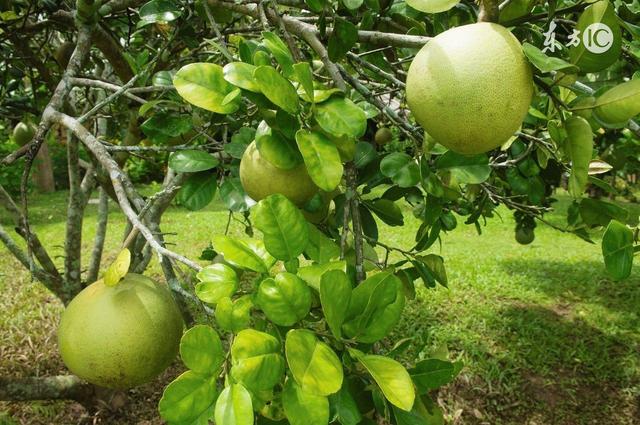
Pomelo tree
This scab mainly damages the young shoots and young fruit of pomelo. It is a fungal disease. On affected young shoot leaves, oily spots first appear, gradually developing into conical protrusions, raised on the upper leaf surface and sunken on the lower leaf surface, with the lesions mostly clustered. It causes leaf distortion to defoliation. Affected young fruit often grows tumor-like protrusions, or sunken cracks. Deformed young fruit affects appearance and quality. The control method and chemicals are the same as those for anthracnose. Apply the chemicals during the young shoot stage and young fruit stage before disease onset to achieve better results.
The second is gummosis. This is also a fungal disease, mainly damaging the trunk and main branches, causing bark splitting, gum exudation and phloem rot. It is also called "resin disease". Gum can also flow from girdling wounds, causing yellow leaves on the shoots and weakened tree vigor. When the tree lacks boron and suffers drought, it is more susceptible to infection by the pathogen.
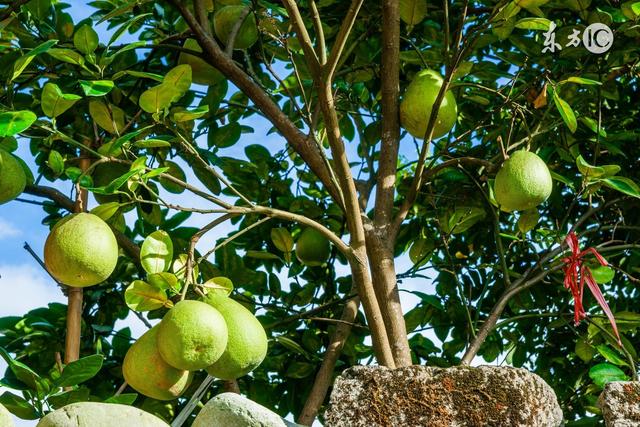
Pomelo tree
Control methods:
1. Fertilize reasonably and in a balanced way, strengthen cultivation management, and apply more "Tiandao" or "Yueda" organic microbial fertilizer. Spray pomelo trees with Jiansheng liquid boron fertilizer 3~4 times a year.
2. Scrape off the rotten bark and gum from the diseased parts, apply fruit tree wound healing agent, or apply 70% thiophanate-methyl at 20~50 times dilution to the diseased parts.
3. Spray for protection. Before the spring shoots sprout, spray the whole tree with 1:4:250 copper sulfate-pine oil-alkali solution.
The third is felt disease. This disease is also a fungal disease, damaging the trunk and branches. Brown or grayish-white velvet-like mycelial membranes, round or oblong, cling tightly to the branches, just like a plaster. Old orchards, shaded canopies, high orchard humidity, and orchards with severe scale insect outbreaks have more severe disease.
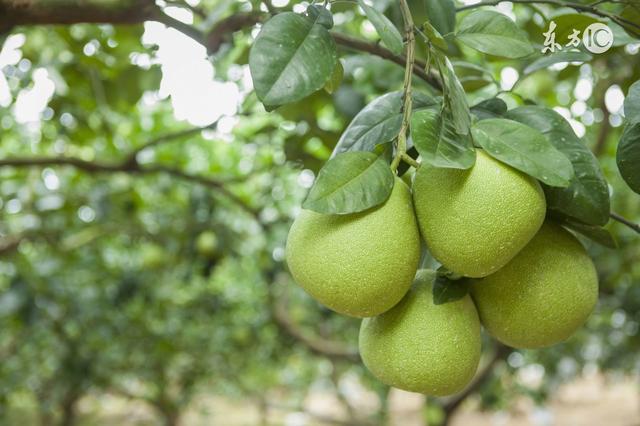
Pomelo tree
Control methods:
1. Control scale insects promptly, and add Shizuoka mycin when preventing the disease.
2. In winter, pine oil-alkali mixture can be used for control. Before spraying, first scrape off the fungal bodies with a bamboo strip or wire. A 200-times sulfur suspension concentrate can also be applied to the diseased parts.
3. Do a good job of winter and summer pruning, increase light penetration inside the canopy, and reduce shading.
The fourth is sooty mold
This disease forms a soot-like covering on the surface of leaves, branches and fruit, seriously affecting photosynthesis, causing tree decline, reduced yield and lower quality. It is a fungal disease, and it develops and spreads using the excrement of pests such as aphids, scale insects and whiteflies as a culture medium.
Control methods:
1. Reasonable Mizhi, proper pruning, and improved light penetration.
2. Promptly controlling pests such as aphids, scale insects and whiteflies is the fundamental measure to prevent the occurrence of sooty mold.
3. After disease onset, spraying pine oil-alkali mixture plus Kunsheng plant oil at 500 times dilution, or spraying mineral oil-type chemicals such as 200-times Lüying, can make the sooty mold peel off.