Fruit Tree Planting Methods and Effective Fertilization Techniques
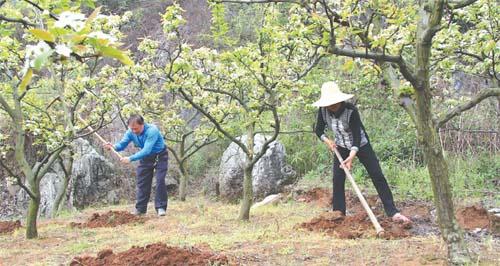
The tree disk where fruit trees are planted is equivalent to the tree's "stomach," and fertilizer is equivalent to the tree's food. Only when the "food" is sufficient and nutrient-rich can fruit trees grow vigorously and have a strong tree vigor; the root system is equivalent to the tree's absorbing organ. Only when the root system has strong absorption capacity can the fruit tree eat and drink its fill, and only then can it "work" more and bear more fruit. Improving the soil, enriching soil nutrients, and optimizing the living environment of fruit trees are important guarantees for increasing fruit tree yield, quality, and profitability.
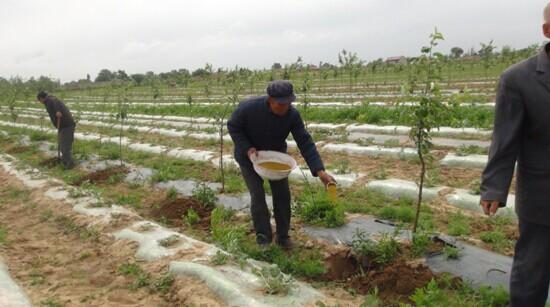
1 Distribution of the Root System and Fertilization Range
The root system of fruit trees is distributed relatively deep and wide. The depth and range of fertilization should be determined according to the type of fertilizer, fertilizer characteristics, tree age, tree species, variety, rootstock, etc. Generally, for mature fruit trees, fertilizer should be applied within a planar range extending half a meter beyond the canopy projection and half a meter away from the trunk; for the vertical range, it can be shallower for young trees and deeper for mature trees. Most fruit trees currently planted are under moderate-density cultivation, and the root system is mostly concentrated within a range of 20-50 cm, so fertilizers that are not easily mobile, such as phosphate fertilizer, multi-element compound fertilizer, and organic fertilizer, should be applied within this range to achieve good results.
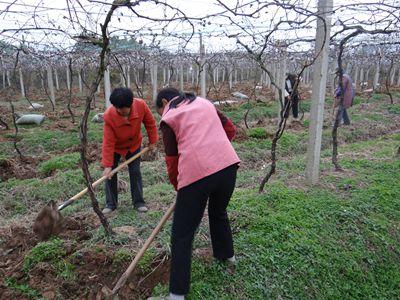
2 Key Points for Applying Organic Fertilizer
Organic fertilizer is nutrient-rich and is the fertilizer fruit trees like most. There are many types of organic fertilizer, such as human excreta, livestock manure, straw, weeds, soybean cake, cottonseed hulls, etc. Organic fertilizer must be fully decomposed before application; otherwise, the nutrients are not easily absorbed by fruit trees and it can easily cause root burn.
It is worth noting that many large-scale farms use caustic soda solution to sterilize and disinfect sheds. These liquids are washed into the manure, making it strongly alkaline, and direct application can easily burn fruit tree roots. Therefore, after purchasing this type of organic fertilizer, it must be piled and decomposed for more than 2 months before being applied to the orchard. At the time of application, it can first be tested with pH test paper. When it shows around 7, application is safe.
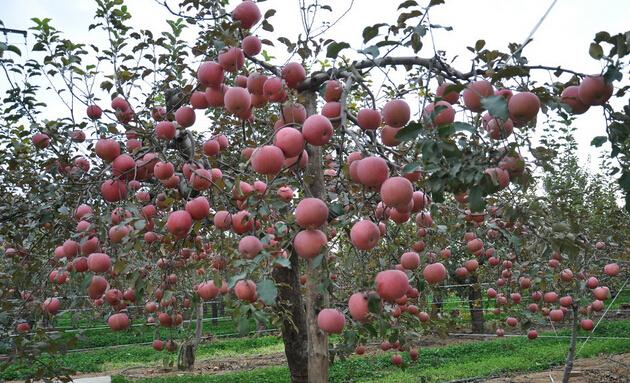
3 Key Technical Points for Applying Mineral Nutrients
Mineral nutrients, commonly known as chemical fertilizers, are essential for fruit trees. Just as humans need to eat salt, fruit trees also need "salt." There are many types of salt needed, the most important being nitrogen, phosphorus, and potassium, followed in importance by calcium, magnesium, iron, boron, zinc, copper, molybdenum, sulfur, silicon, etc. Nitrogen, phosphorus, and potassium are called macronutrients, while the latter are generally called medium and trace elements. Supplementing fruit trees with a small amount of rare earth elements is also very effective for increasing yield and improving quality. The control of fruit tree yield by these fertilizers can be explained by the "wooden barrel theory."
All the nutrients required by fruit trees are among the wooden staves that make up the barrel. The height of these staves represents the amount of nutrients the soil can provide. The level of fertilizer efficiency depends on the element present in the least amount in the soil, not the element present in the greatest amount. Only by increasing the element that fruit trees need most but that is present in the smallest amount in the soil can the barrel hold more water, which is to say, can the fruit trees achieve higher yields. Greatly increasing nitrogen, phosphorus, and potassium elements cannot improve yield and quality, and sometimes even has the opposite effect or burns fruit tree roots. Attention should be paid to balanced fertilization, mainly organic fertilizer supplemented by chemical fertilizer, in order to give full play to the greatest effect of fertilizers.
Some fruit trees show abnormalities after nutrient deficiency: a common one is yellow leaf disease, generally caused by iron deficiency, for which amino acid chelated iron can be sprayed on the tree and ferrous sulfate applied to the soil. Little leaf disease is generally caused by zinc deficiency, for which amino acid chelated zinc can be sprayed on the tree, combined with soil application of zinc sulfate. Pitted fruit surface, easily softened and rotted tips, and black spots on the fruit surface are mostly caused by calcium deficiency, for which amino acid calcium fertilizer can be sprayed during the young fruit stage. Sometimes nutrient deficiency is not obvious on the fruit tree; it simply does not like to form flowers or bear fruit. These are all caused by nutritional imbalance.
4 How to Improve the Soil Environment
This is an important guarantee for increasing the vitality of the fruit tree root system. First, increase the application of organic fertilizer. When soil organic matter is rich, the number of microorganisms is enormous, which can increase the formation of soil aggregate structure and increase root nutrition. Second, maintain both soil moisture and good aeration. Timely watering and drainage are also very important. All nutrient elements must be in a moist state to be absorbed and utilized by fruit trees.
Too much rain and prolonged water accumulation can also cause poor root aeration and lead to root death. Third, carry out scientific soil conditioning. The soil conditioner Mianshengeng has a great effect on improving soil permeability, and everyone can use it. Fourth, apply biological bacterial fertilizer. On the basis of applying large amounts of organic fertilizer, applying biological bacterial fertilizer can increase the number of beneficial bacteria in the soil, inhibit the development of harmful bacteria, and decompose elements such as potassium and phosphorus that have been fixed by the soil, with an excellent effect on enriching soil nutrients.
5 Fertilization Methods
Highly soluble fertilizers such as urea and potassium fertilizer can be applied in shallow pits, about 10-15 cm deep, or broadcast on the tree disk and turned into the soil. Organic fertilizer can use multiple methods in alternation. Pit application, trench application, and turning-in application should be carried out in rotation to ensure that the root system can utilize the applied fertilizer to the greatest extent.
6 Tree Disk Mulching
Growing grass as mulch is also a good way to increase orchard organic matter. However, it requires the row spacing in the orchard to be 1.5-2 m larger than the plant spacing. Leguminous plants are planted between rows, and after they grow tall, they are cut and placed as mulch on the tree disk. Done year after year, over time the orchard organic matter will gradually increase. Straw mulching is also a good way to increase soil organic matter, and the key is to persist year after year.
7 Preventing and Controlling Root Diseases
Open trenches and pour in medicine: copper sulfate, 40% (w) formaldehyde at 100 times, 5% (w) Junduqing at 50 times, etc.
8 Fertilization Amount
In autumn from September to November, for apple trees in full fruit period, apply 100 kg per mu of compound fertilizer containing 15% (w) each of nitrogen, phosphorus, and potassium, together with 5-8 cubic meters of decomposed organic fertilizer; in spring from March to April, apply 50 kg per mu as a topdressing; in summer from June to July, apply 50 kg per mu as a topdressing. Apply in multiple pits. For peaches and pears, the amount can be halved.