A Detailed Guide to Hydroponic Planting Methods and Care Tips for Pennywort
At present, many plants and flowers can be grown hydroponically. Not only do they look better, but care and management are also more convenient, and hydroponic care has already become a popular trend in the gardening world. Today, I will briefly introduce some tips on hydroponic care for pennywort.
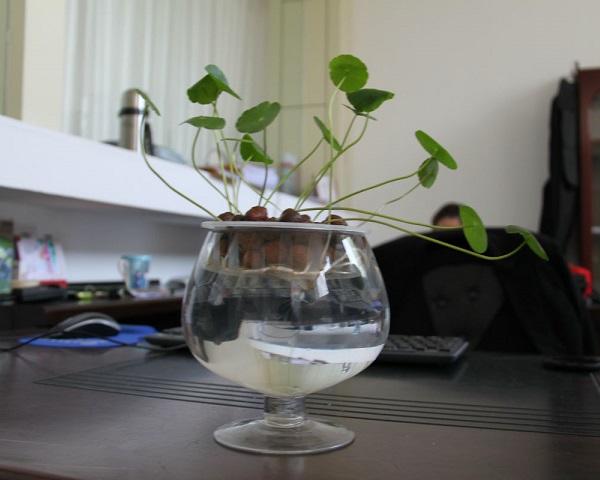
Pennywort: a perennial herbaceous plant with a trailing growth habit, also known as opposite-leaf grass and moneywort; in Hunan it is called golden flower vegetable, ground-covering lotus, and so on. It is propagated by sowing and division, spreads very strongly, and is an excellent ground-cover plant. Its shape resembles both copper coins and small lotus leaves. Pennywort likes warm and humid environments, so it is best to choose a spot with partial sun or shade for cultivation. The growing soil should preferably be well-drained, and the water temperature is best at 22-28°C. Because pennywort is shade-tolerant, moisture-tolerant, slightly drought-tolerant, and highly adaptable, it can grow both in water and on land.
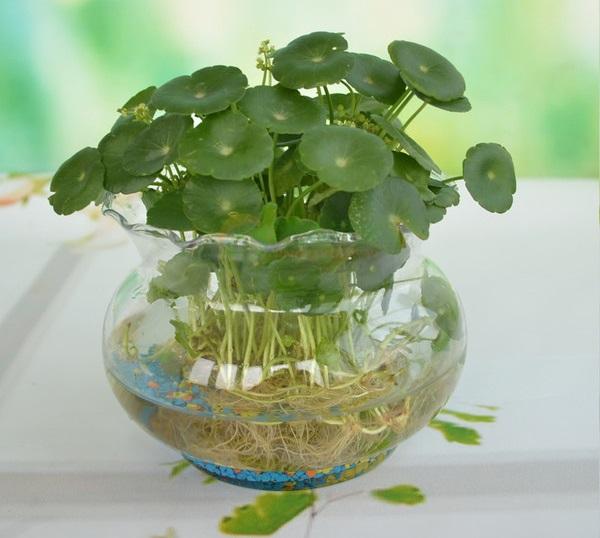
Hydroponic method: Pennywort does not have high requirements for water quality, so it is relatively easy to grow. Choose fresh water with lower hardness, and the salt content should not be too high. Keep the pH between 6-7. If using tap water, it needs to be left to settle for a period of time or used the next day. During the vigorous growth stage, the fertilizer requirement is to apply a top dressing once every 2-3 weeks; a small amount of nutrient solution can be added to the water. The roots of hydroponic pennywort will grow green algae, which is a normal phenomenon and does not need to be washed off. Hydroponic pennywort is suitable for extensive care. As long as the water quality has not deteriorated, you only need to add water.
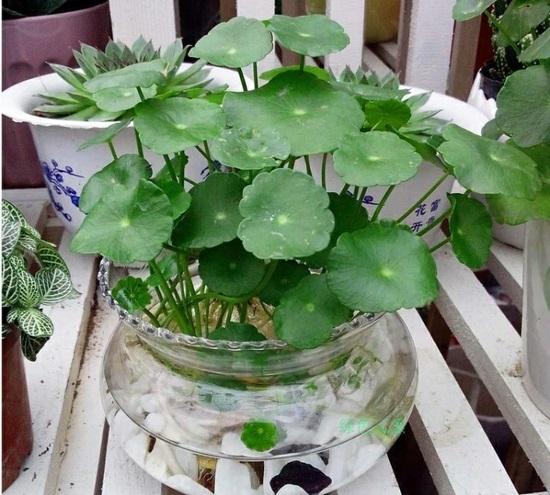
The above are the small hydroponic planting tips for pennywort shared with everyone. I hope they can be helpful to you.