6 Practical Tips for Planting Strawberries in January
Author: Strawberry Planting Alliance
After New Year's Day, January 2018 officially arrived, and recently quite a few strawberry growers have been asking how to best manage strawberries this month. Below, the editor has put together the key cultivation and management points for strawberries in January for your reference if needed.
01 Fertilizing
Calcium fertilizer and potassium fertilizer have a certain degree of antagonism, and the same is true for potassium fertilizer and phosphorus fertilizer. In the early stage, when the fruit is small, a water-soluble balanced fertilizer + calcium fertilizer can be applied. Calcium mainly improves fruit firmness and prevents stiff fruit. In the later stage, a high-potassium fertilizer is applied to promote fruit enlargement and color change. Foliar application of monopotassium phosphate, boron, magnesium fertilizer, etc. is also needed regularly to supplement nutrients in a balanced way and promote large, well-formed fruit growth.
02 Pest control
Red spider mites and thrips may also appear in some areas. Matrine spray (a biological agent) can be used for control, or chemical agents such as bifenazate can be applied before flowering. During the fruiting period, biological pesticides should be used as much as possible.
03 Control temperature and humidity
During the flowering period, it is advisable to maintain 20-25°C during the day, 8-10°C at night, and 18-20°C at ground level. If the temperature is too high, ventilation should be carried out promptly to prevent adverse effects on flower organ development; if the flowering period experiences low temperatures below 0°C, the stamens' anthers turn brown and the pistil stigma turns black, seriously affecting strawberry yield and fruit quality; during the fruit enlargement period, the daytime temperature can be maintained at 20-22°C and nighttime at 5-10°C. The temperature can be adjusted according to market demand: higher temperatures mean earlier ripening and faster coloring, but smaller fruit; lower temperatures delay ripening, but the fruit is relatively larger and of better quality.
In winter, greenhouses can effectively raise the temperature by covering with straw mats, loose straw, thermal insulation quilts, cold-proof materials, and other materials at night. Other measures such as burning charcoal, lighting stoves, and placing heaters can also be used to raise the temperature.
04 Flower and fruit thinning
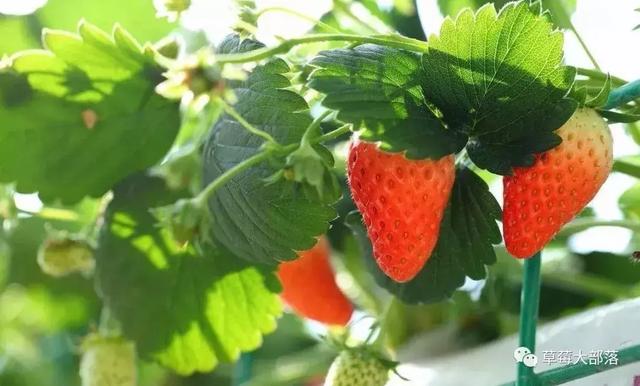
Thinning out secondary flowers and deformed small fruits can significantly reduce the rate of deformed fruit, and it also helps concentrate nutrients and increase single fruit weight or fruit quality.
05 Reduce pesticide use
Use virus-free seedlings, plastic film mulching, and other agricultural measures, and try not to use pesticides or reduce their use as much as possible. When pests and diseases are severe, pesticides should be applied before or after flowering. Spraying is strictly prohibited during the flowering period. If necessary, move the beehives out first and then treat with smoke agents.
06 Yield-increasing measures
On cloudy days, appropriately increase the light intensity inside the greenhouse. A large day-night temperature difference is beneficial for the accumulation of sugars in the fruit, making strawberries both large and sweet, but be careful to keep the temperature within the suitable range for growth!