Growing succulents demands far more from you than just this
When it comes to succulents, the varieties are endless. In the past two years, hybrid succulent varieties have been emerging one after another, with all sorts of new names popping up everywhere, and it is easy to fall behind the trend. Here are the points to pay attention to:
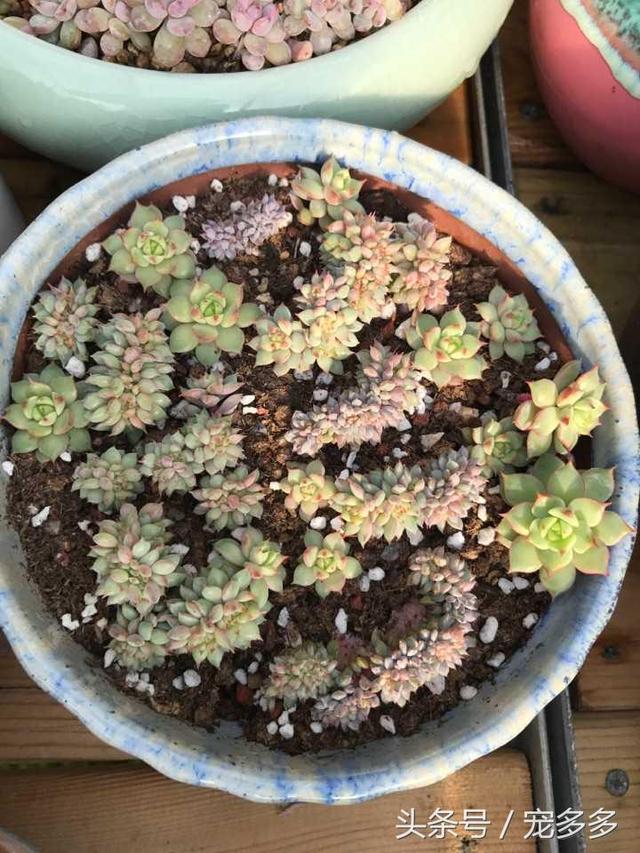
1. Don't be a variety collector; don't try to collect every variety you don't have. For example, although there are only 144 native species of Echeveria, the hybrids, varieties and subspecies are so numerous that there will always be varieties you don't have. It is better to focus on a few lines you like, such as the Moon Shadow line, the Beauty line, the Gilian line, the Fairy Cup line, the Dongyun line and so on, so that you both know the plants' characteristics well and understand their prices.
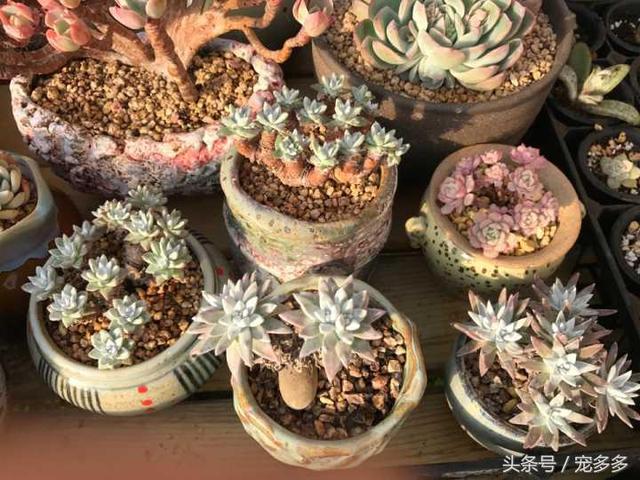
2. Don't buy just because it's cheap, because what you need to pay for a succulent is not only the cost of buying it. Direct costs include the cost of soil, the cost of pots, the cost of renting a table. Indirect costs include the time spent caring for it, sunlight resources, and even the resources for accompanying and admiring it. In fact, money is not precious; time and space are precious. You are allocating your limited resources to succulents you don't really like and only bought because you were greedy for a bargain.
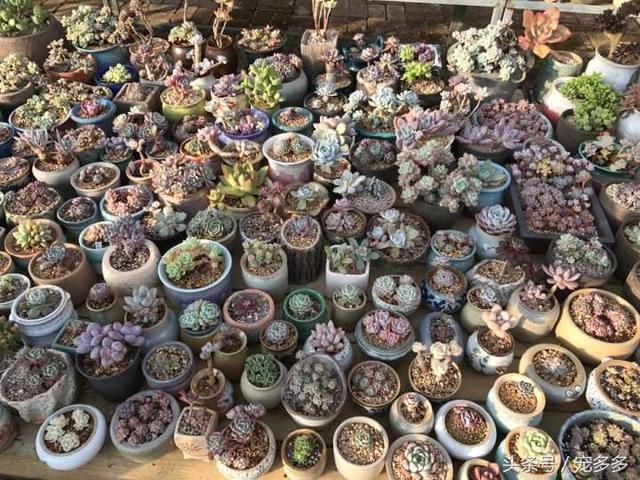
3. Many hybrid varieties, subspecies or variants are often given a name by the seller and sold under it. If you don't know its parents, you don't know what it is. You could say you don't know this succulent at all, so how can you even talk about owning it or caring for it?
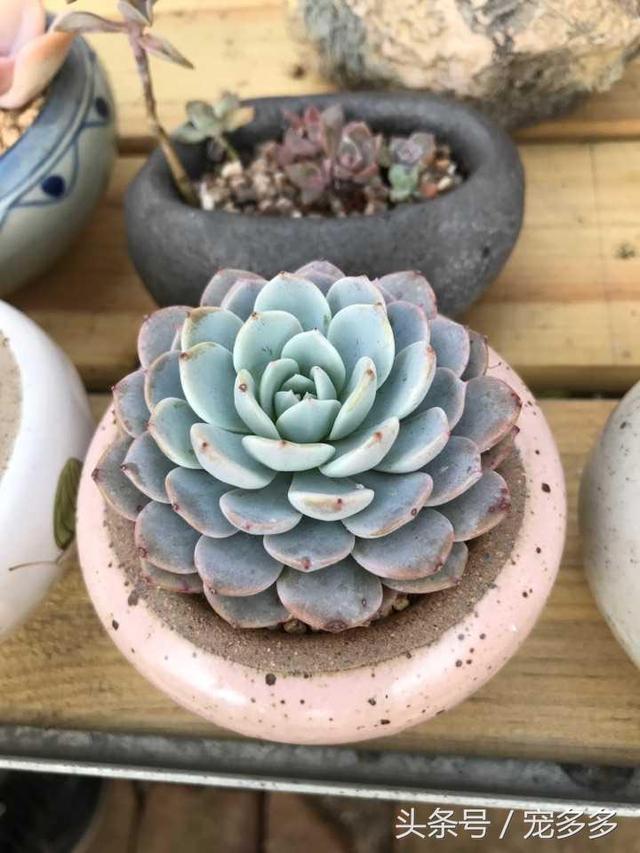
4. Try not to buy crested forms and unstable variegated forms. Cresting and variegation, to put it nicely, means the succulent has mutated; to put it bluntly, it actually means the succulent is sick. All crested and variegated forms are far weaker in vitality and health than their standard versions. When faced with environmental changes and poor care, the first to die will definitely be the crested and variegated forms. In fact, you can tell from the price too: why are these two variants expensive? Precisely because they die easily! So beginner succulent growers who haven't developed their cultivation skills, or whose environment isn't stable enough, had best buy these two variant types less often.
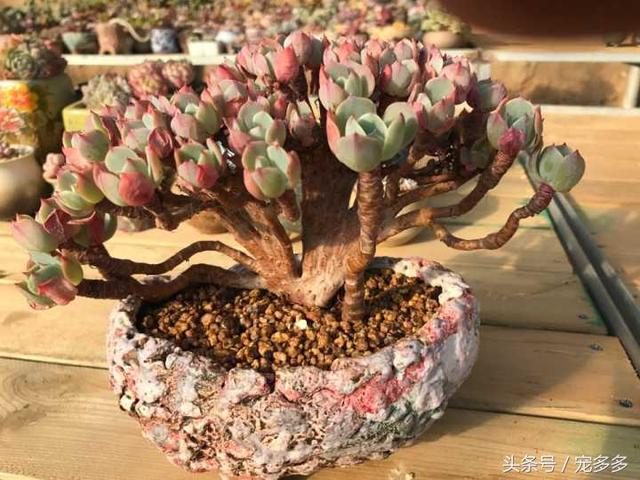
There is also the kind that was originally crested, then half of it died, and later after recovering from the illness it grew back into its normal form.
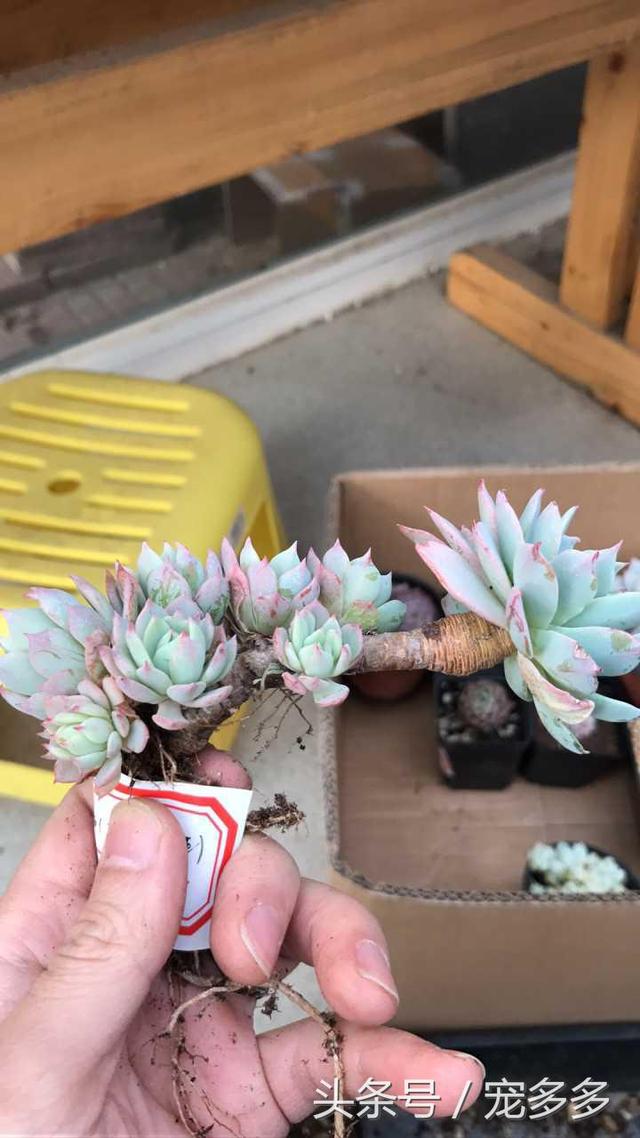
5. The saying goes, buy the trunk, not the head. Trunks are grown; heads are cut. So a trunk represents true skill and the accumulation of time. As said above, time is the most valuable thing. So when you see a succulent you like, at the same price, whether to buy a large cluster or a large trunk, I usually choose the large trunk. Of course, sellers aren't stupid either, and a large trunk and a large cluster often won't be the same price.
6. When buying succulents, think about why a certain variety is expensive. From an economics perspective, price fluctuations are certainly determined by supply and demand. So why are some succulents expensive and others cheap? It is certainly also determined by supply and demand. For example, with Echeveria 'Haleyna', when it first came out few people bought it, but even fewer grew it. Then suddenly, because of a post on Xianzhenyuan, the number of buyers surged while the number of growers didn't keep up, so the price soared. Not many days later, more people were growing it, and the price came down. So the high price of this kind of succulent is caused by a mismatch between the supply cycle and the purchase cycle. If you are a big grower and want to chase the trend, then buy as you please; otherwise, you might as well wait and see. There are also some succulents, such as Gilian and Fairy Cup, that are expensive because they are difficult to cultivate: they cannot be propagated by leaf cuttings, only by sowing, which takes time and wastes labor. As said above, time is the most expensive thing, so the increase in their supply always fails to keep up with the increase in demand. At this point they show a kind of stable expensiveness, and then I think it's fine to buy. Why don't I recommend buying succulents with unknown parents? Often because the transaction volume of such succulents is too small and a stable supply-demand relationship has not yet formed, so there is relatively large information asymmetry in the price.
7. Choose ones with well-developed roots that look healthy, not ones at peak condition that are delicate and weak. Everyone likes to buy succulents with jelly colors and in peak condition. In fact, condition is determined by the environment and cultivation methods. The condition of a succulent in a greenhouse, in Korea, in Yunnan, and one or two months after returning to your home will definitely not look the same. So paying more for a momentary state, or giving up a better choice for it, is irrational. At the same time, beauties are often short-lived. Often some succulents with especially good and especially red condition may be that way because their root system is damaged and they cannot obtain the nutrients needed for growth from the soil, so the leaves secrete large amounts of carotene, covering the chlorophyll and inhibiting their own growth to avoid consuming more nutrients.
8. All care plans for growing succulents revolve around getting through the summer. To get through the summer smoothly, it is best to give succulents more than three months of adaptation to the environment, soil and your watering habits. So March is the closing time, and completing summer survival in October is the opening time. Some people say that September is no longer hot, so you can buy. Indeed, by September the problem is not big, but succulents that have just finished summer are all in poor condition, and the ones that should be leggy are leggy. The ones that should be green are green. Do you have any desire to buy?
The whole of February is spent changing soil and repotting. Where is there time to buy succulents?Of course, everything said above is actually nonsense. As long as you have money, you can buy, buy, buy.