Detailed Guide to Growing Daffodils (Narcissus) in Pots and Points to Note
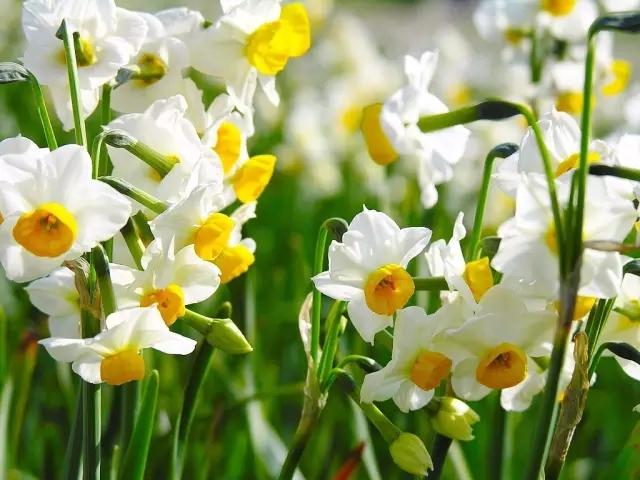
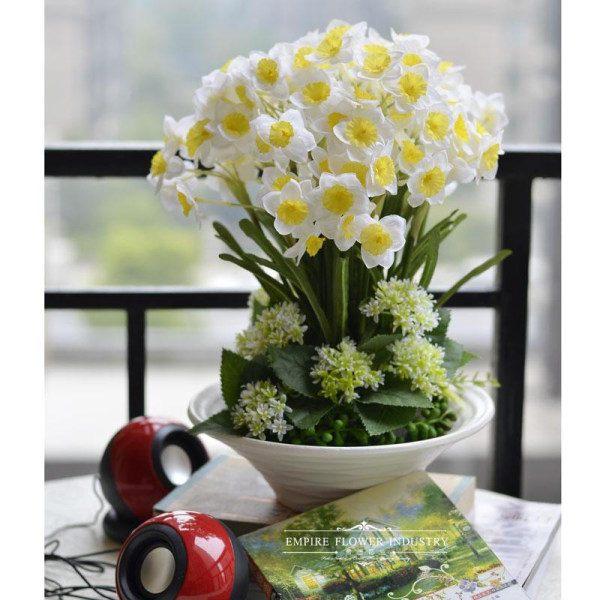
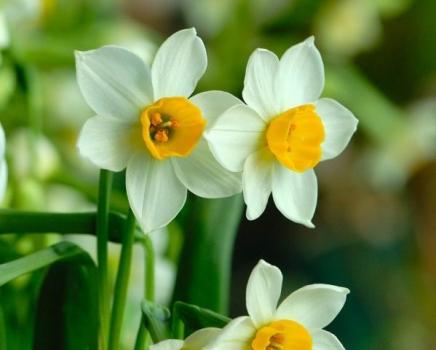
Daffodils are one of China's top ten famous flowers. They have nicknames such as the Fairy on the Waves, Jade Linglong, Gold and Silver Terrace, Heavenly Scallion, and Elegant Garlic. Daffodils have an attractive appearance, distinct curves, and the flower body gives off a unique fragrance, with very high ornamental value.
Daffodils like sunlight and warmth, require high air humidity, are not very cold-tolerant, and fear intense heat. During the vegetative growth period, they need moist but non-waterlogged sandy soil. Unlike other perennial herbaceous bulb flowers, daffodils have the characteristics of beginning growth in autumn, blooming in winter, storing nutrients in spring, and going dormant in summer.
Now let me walk you through how to grow daffodils!
I. Three Methods for Growing Daffodils
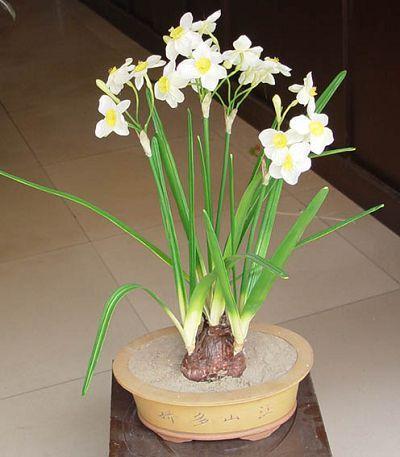
1. (Soil culture method) That is, using the cultivation method for most moisture-loving flowers to grow daffodils. Generally, it is rarely used for home cultivation. Soil-cultured daffodils require loose humus soil. Before planting, peel off the dried outer scales of the daffodil bulb and scrape off the old roots, keeping them ready for planting. Add humus soil up to about 3 cm below the pot rim, shake the pot to make it compact, then place the daffodil bulb base in and add about 1 cm more soil on top, then water thoroughly, move the pot to a cool place, and after 5 days, once the bulb has grown roots, move it to a sunny spot for growing. When growing daffodils in soil, pay attention to the dryness and moisture of the soil, and it is a rather extreme approach: water only when dry, and water thoroughly when you do. In other words, do not water if the soil is not dry, and once you water, water until it leaks from the bottom of the pot. Watering time is generally chosen in the morning and evening; watering during the day can easily damage root growth.
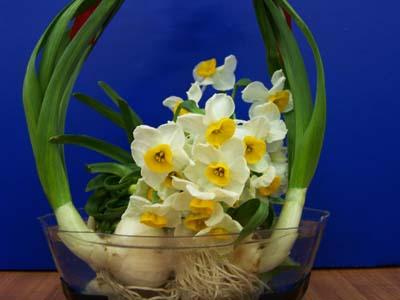
2. (Water culture method) That is, growing them by soaking in a shallow basin of water: this method is commonly used for home cultivation of daffodils. Before water-culturing daffodils, remove the dried brown outer scales of the daffodil bulb, as well as the root-protecting mud and the brown dead roots at the base (be careful not to touch the new roots). After washing the outside, stand it upright in a shallow basin without drainage holes. Pour clean water into the basin, covering the bulb to a depth of about 1 cm, then place it in a cool place, and after the bulb grows roots, place it in sunlight. For water-cultured daffodils, it is best to change the water every day; on one hand, this prevents the water from spoiling and causing root rot, and on the other hand, roots grown with daily water changes are whiter and more beautiful. The water used for changing is best tap water that has been sunned in advance, as this can kill bacteria. Keep the water level enough to soak a little less than half of the flower head; before the flowering period, switch to changing the water once every 2 to 3 days.
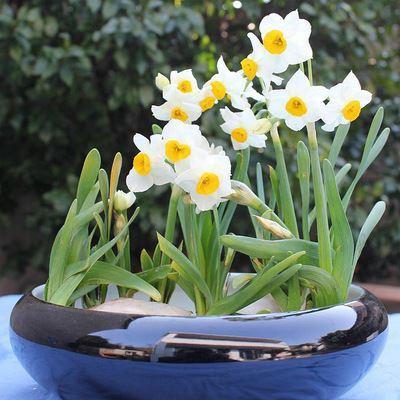
3. (Sand culture method): It is best to use clean, washed fine sand, and the pot should be a clay pot with good breathability. Before planting, put the sand into the pot up to about 3 cm below the pot rim, place the daffodil bulb with old stems and leaves removed into the pot, add about 1 cm of sand into the pot filled with fine sand, then bury the lower stem of the daffodil bulb about 1 cm into the sand, spread a little gravel on top, then water thoroughly and place in a cool place, and after 5 days move it to a sunny spot. When growing daffodils with the fine sand and gravel culture method, water every day; if watering is not timely, it can easily cause water shortage and affect the growth of the flower roots. Of course, watering should also be done in the morning and evening as much as possible.
II. Growing Requirements for Daffodils
1. Suitable temperature. First, you need to understand the growth habits of daffodils. Daffodils prefer shade in the early stage and warmth in the later stage. Generally, 18 to 20 degrees is the most suitable temperature for daffodil growth, so to grow daffodils well, you must first understand their temperature requirements for growth.
2. Soil requirements. Generally, when growing daffodils, there are certain requirements for the soil. Usually, during the growing process, daffodils need loose, fertile soil. It is best to choose sandy soil with good water retention.
3. Appropriate light. Daffodils generally belong to short-day plants. Under normal circumstances, giving about 6 hours of light per day is enough, so during the growing process you can place the daffodils on a balcony for an appropriate amount of light. If the light time is insufficient, it will result in fewer daffodil blooms.
4. Sufficient water. Daffodils generally need sufficient water during their growth and development period. During the growth and development period, daffodils need to be provided with sufficient water. The growth and development period is the period of vigorous metabolism for daffodils. Generally, during the mature period, metabolism will slow down.
5. Sufficient nutrition. Flowers, like people, need sufficient nutrition during their growth period, so during the growth and flowering period of daffodils, apply a little phosphorus fertilizer, which can make the daffodils bloom more beautifully. However, be careful not to apply too much phosphorus fertilizer, otherwise it will have an adverse effect on the daffodils.
III. Points to Note for Daffodils
(1) Cold protection: Although daffodils can tolerate a certain degree of low temperature, they also fear heavy frost and severe cold. When heavy frost occasionally appears, spray water to wash off the frost before sunrise, so as not to harm the daffodil leaves. For weather below -2°C, cold protection measures should be taken. In warmer areas, windbreaks can be planted; in the Shanghai area, plastic film can be used for cold protection. Do not let daffodils suffer from cold.
(2) Preventing root rot: First, if the water is emptied at night, the fibrous roots will not dry out. If the fibrous roots turn yellow and soft, change the water frequently. Daffodils need to keep the water clean; it is best to change the water once every 2-3 days to prevent root rot. Yellowed areas can be gently brushed with a soft toothbrush.
(3) Do not place ripe fruit beside daffodil plants: this prevents gases such as ethylene released by various fruits from accelerating flower withering and shortening the flowering period. Daffodils fear iron utensils; water culture of daffodils must not use iron utensils, but should use ceramic, glass, plastic and other containers, otherwise rusty water will cause the flower buds and the cut parts of the fibrous roots to rot and mold.
(4) They fear saline-alkaline water: Daffodils are best water-cultured with well water, rainwater, river water or stream water. If tap water is used, it should be stored in a basin or jar for 2 to 3 days in advance to settle and clarify.
(5) They fear high-temperature and low-temperature water: The growing temperature cannot be too high or too low; 4°C to 25°C is suitable, with 15°C to 18°C being the best. Too high a temperature will cause leggy leaves, dull flower color, and short flower stalks.
(6) They fear stains on the leaf surface: During water culture, the leaf surface must be kept clean, otherwise it will both affect the appearance and weaken photosynthesis. The plant should be sprayed with water every day to maintain the water balance within the plant, and also to make the leaves glossy and beautiful, which is good for photosynthesis.
IV. Are Daffodils Toxic?
First, the fragrance of daffodils is non-toxic, but the bulbs of daffodils contain lycorine, which can be used in medicine. If accidentally eaten by people, it can cause vomiting and enteritis, so daffodils must not be taken orally at will.
Daffodils can be placed anywhere in the home, and are especially suitable for placing in living rooms and bedrooms. When daffodils bloom, the whole room is filled with fragrance, making people feel delighted, and they have extremely high ornamental value.
V. How to Extend the Flowering Period of Daffodils?
When the daffodils are in full bloom, put a small amount of table salt into the basin, which can extend the flowering period of the daffodils. However, never put salt in when the daffodils are in bud, otherwise it will instead inhibit the flower buds from opening.
Article source: Gardening Class Leader (Qijia-2016)
Some works come from the Internet. The true source cannot be verified. If infringement is involved, please contact the editor directly for removal. Thank you!