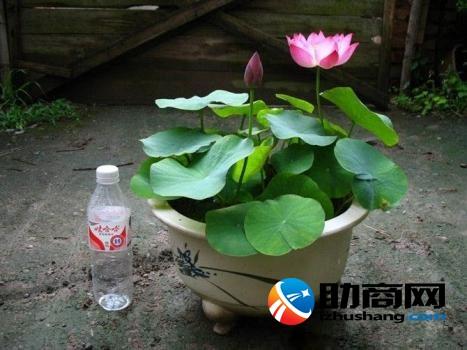
A Complete Guide to the Characteristics and Growing Techniques of the Lotus
"It emerges from the mud unsoiled, and is rinsed in clear ripples without being coquettish." Everyone knows this line of poetry, and what it praises is the lotus. When lotus is mentioned, everyone has seen it and has also eaten lotus seeds and lotus root, and moreover the lotus leaves, lotus flowers, lotus seeds, rhizomes, lotus nodes, and seed embryos can all be used as medicine. Many friends are still not too familiar with growing lotus, so let us take a look together at this plant that is a treasure from top to bottom!
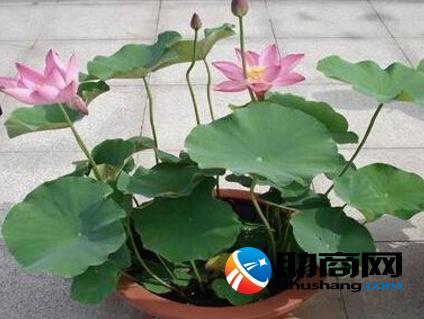
What are the characteristics of the lotus
The lotus is a perennial herbaceous emergent aquatic plant of the genus Nelumbo in the family Nelumbonaceae.
The lotus root and lotus seeds can be eaten, and lotus seeds, rhizomes, lotus nodes, lotus leaves, flowers, and seed embryos can all be used as medicine. It is a perennial aquatic herb; the rhizome grows horizontally, is thick and fleshy, with swollen internodes that contain numerous longitudinal air channels inside, and constricted nodes, with black scale leaves growing above and fibrous adventitious roots growing below.
The leaves are round, peltate, 25-90 cm in diameter, dark green on the surface and covered with a waxy white powder, grayish green on the underside, with entire margins that are slightly wavy. Flower colors vary among white, pink, deep red, light purple, or mixed colors, and inside the obconical spongy receptacle, the surface of the receptacle has numerous scattered honeycomb-like holes; after fertilization it gradually swells and is called a lotus pod, with a small nut (lotus seed) growing inside each hole. The flowering period is from June to September, with the flowers opening in the morning and closing in the evening each day. The fruit ripening period is from September to October.
The lotus root is the enlarged underground stem that the lotus grows horizontally in the mud. The cross-section of the lotus root has many holes of varying sizes, which are air cavities that the lotus has formed to adapt to life in water. It naturally prefers relatively stable, calm shallow water, lakes and marshes, marshy land, and ponds, which are its suitable habitats.
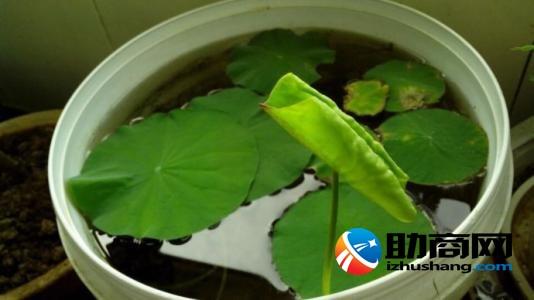
What techniques are there for growing potted lotus
(1) Requirements for light and temperature. The lotus loves strong light, and receiving 7-8 hours of light each day can increase its flower buds and keep it blooming continuously. It should not be cultivated in shady places; the lotus is best displayed in the open air, and when grown in pots at home, the lotus must be placed on a balcony or in a courtyard. The lotus has strict temperature requirements: generally it begins to sprout at 8-10°C, the lotus runners begin to elongate at 14°C, and 25-30°C is the most suitable temperature for the growth and development of the lotus; weather with alternating rain and sunshine is especially favorable for plant growth. At 18-21°C, it begins to produce standing leaves. Flowering requires high temperatures. New lotus roots grow at 25°C, and most cultivated varieties enter the stage of lotus root formation when the temperature drops around the Beginning of Autumn.
(2) Cultivation management. To grow lotus, choose a sheltered, sunny, and flat location. For container cultivation, the flower vat is generally 40-50 cm tall, with a mouth diameter of 60-70 cm and a bottom diameter of 40-50 cm. Wide, shallow pots are preferable. When arranging the vats and pots in the growing area, consider both the growth needs of the lotus and convenience of operation and economical use of land; the vat spacing is generally 70 cm x 70 cm, with walkways of about 100 cm; the pot spacing is 50 cm x 50 cm, with walkways of about 80 cm.
The lotus requires fertile loamy soil rich in humus, with a pH of 6.5-7.5 being suitable. In the vat or pot for planting lotus, first put in 3/5 lake or pond sludge, then add a small amount of water and mix it into a thin mud. Cut a section of 3 nodes as one piece, keeping the seed lotus root with its terminal bud, middle bud, and tail bud intact and undamaged. Generally, planting 2 seed lotus roots per vat (pot) is suitable. After planting, there is no need to add water to the pot or vat for 3-5 days; only when the mud surface shows cracking may a small amount of water be added, so that the seed lotus root is firmly held in the mud and can sprout easily. As floating leaves appear and standing leaves grow, gradually deepen the water layer in the pot or vat until it reaches the rim.
For lotus grown in pots and vats, fertilize according to container size, generally using 200-500 grams of chicken manure, pig manure, cow manure, or human excrement and urine as base fertilizer (chicken manure is best). 30 days after planting, apply once a rotted bean cake water or human excrement and urine liquid fertilizer at a concentration of 10%. After the standing leaves emerge, apply additional fertilizer 1-2 times, and during the flowering period apply superphosphate and potassium sulfate once every 7 days. In summer, when temperatures are high, the lotus easily loses water; at this time, vat-grown lotus should be watered once every 1-2 days; potted lotus should be watered 1-2 times each day, and the water temperature in the vat or pot should be kept roughly consistent, while the water quality should be kept clean. In late autumn and early winter, the lotus enters its dormant period, so it does not need frequent watering; keeping only shallow water in the vat or pot is sufficient.
For potted lotus, in the Yangtze River basin it can overwinter in the open ground, but it needs to be buried in soil. In the north, it should overwinter in a greenhouse.
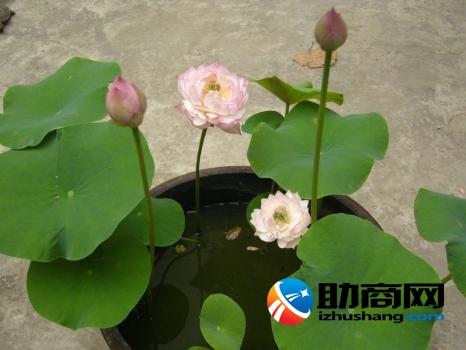
What effects does the lotus have
Lotus stamens (flower stamens), lotus pods (receptacles), lotus petioles (leaf stalks), lotus stems (stems), lotus seeds (fruits), lotus plumules (embryos in the fruit), lotus root, and lotus nodes (underground stems) can all be used as medicine. Among them, lotus seeds have the effect of tonifying the spleen and benefiting the kidneys, and nourishing the heart and calming the mind; lotus plumules have the effect of clearing the heart and calming the mind; lotus root has the effect of clearing heat and promoting fluid production, and cooling the blood and dispersing stasis, and the lotus root starch processed from lotus root is a nourishing food for the elderly, young children, postpartum women, and those weakened after illness, being rich in nutrients, easy to digest, and also having the effect of stimulating the appetite and strengthening the spleen; lotus nodes have the effect of stopping bleeding and dispersing stasis, and are often used to treat hematemesis, hemoptysis, epistaxis, and abnormal uterine bleeding; lotus pods have the effect of dispersing stasis and stopping bleeding, and can be used to treat bleeding disorders such as abnormal uterine bleeding and blood in the urine; lotus stamens have the effect of securing the kidneys and astringing essence, and can be used to treat seminal emission and frequent urination; lotus stems have the effect of regulating qi and broadening the chest, harmonizing the stomach, preventing miscarriage, and promoting lactation, and are often used for vomiting during pregnancy, restless fetal movement, and blocked milk flow. The specific methods of use are: lotus seeds can be cooked into porridge; lotus plumules can be drunk as a tea substitute or decocted in water; lotus pods can be decocted in water; lotus stamens and lotus stems can either be decocted in water or drunk as a tea substitute.
The lotus mainly suffers from rot disease and leaf blight, but neither is very serious. If found, spray with a 1000-fold dilution of 50% thiophanate-methyl wettable powder. The insect pests of the lotus include slug moths, aphids, snails, and others, which can be removed by hand or controlled with pesticides such as trichlorfon, dimethoate, and fenvalerate. For growing a small amount of lotus at home, pesticides such as Quanwudi can be sprayed to kill the pests. The editor has introduced so much, and I believe everyone must have gained some understanding; I hope the editor can help more friends.