Are dental implants really as good as people say?
Doctors and patients have always shared the same desire to "pursue perfection," but the "lack" of common knowledge on both sides has made dental implants, at present, prone to frequent drawbacks, though one hopes the flaws do not obscure the merits.But life is unsatisfactory eight or nine times out of ten. Today let's talk about knowledge, let's talk about common sense. The editor will try to use plain language to help you with your confusion about "dental implants."
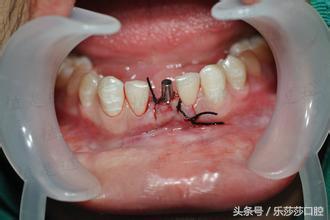
What are dental implants?
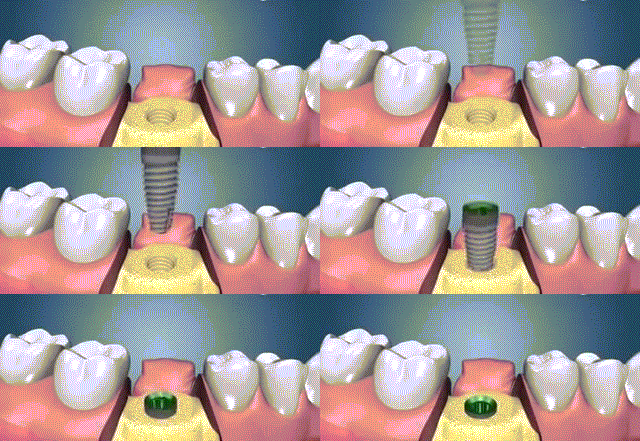
In plain terms, a dental implant is a "surgical procedure" in which an "implant" made of "artificial material" is embedded into the alveolar bone to replace the tooth root. After a period of time, the artificial root and the alveolar bone integrate into one whole, and then a crown is placed on the artificial root.
Are dental implants good?
Whether dental implants are good depends on the individual; it can only be said that the currently best method of restoring missing teeth is dental implants.
First, our traditional dentures rest on our gums, which causes discomfort, offers poor stability, and over time may cause gum recession. We often see reports in the news such as "elderly person accidentally swallows dentures," and this is also caused by traditional removable dentures.
If your tooth crown can no longer be used but the tooth root can still be used, you can consider a porcelain-fused-to-metal crown; you just need to install the porcelain crown on the root and wear it.
If the tooth roots can no longer be used, then dental implants are suitable. Because dental implants have an "artificial tooth root," they better match the original "structure and chewing principles" of our teeth. Dental implants are almost the same as natural teeth in function and appearance, comfortable and convenient, aesthetically pleasing, and able to withstand normal chewing force.
PS: However, dental implants also have certain contraindications, and some people are not suitable for them, such as: severe bleeding disorders, difficult-to-control high blood pressure, certain heart diseases, malignant tumors... So whether dental implants are good depends on the individual.
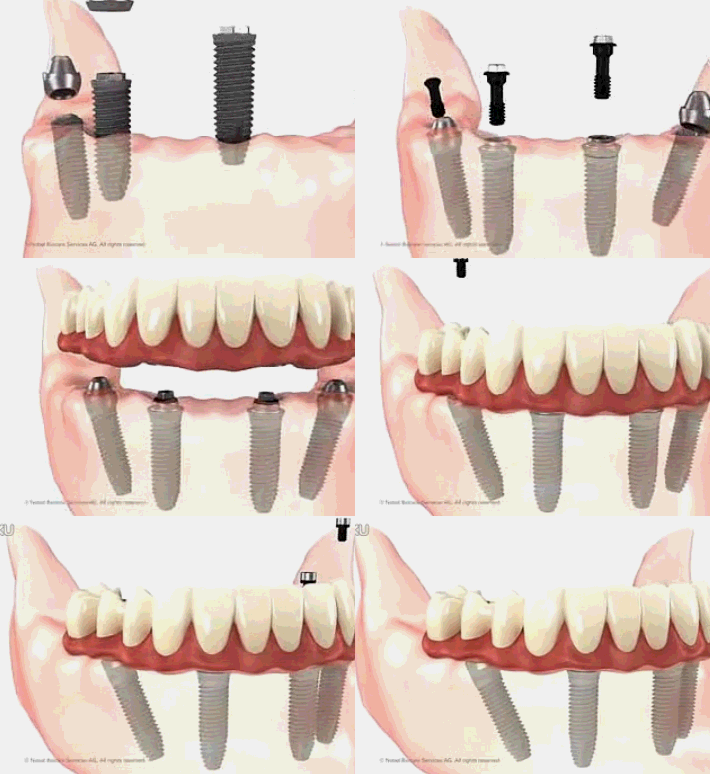
What are the disadvantages of dental implants?
Dental implants are relatively expensive (expensive is normal; cheap ones are instead easily suspected);
The treatment course is long: generally half a year to a year (though many new methods have now shortened this, the number of postoperative follow-up visits is still high).
High precision required in technician processing: implants have no periodontal ligament, so if something is uncomfortable, you cannot just adapt to it after a while. I have seen too many stress fractures of implants or central screws, and I have also seen many patients with occlusion and joint problems. Never choose those technician labs that use cheap abutments to pair with brand-name implants.
Difficult to treat when inflamed: there is no sensation until it develops to a certain degree, so it is highly concealed.
Heavy reliance on the doctor's skill: dental implants involve many risk factors. If you encounter a doctor who knows nothing and blindly implants, the losses caused by failure, in terms of time, money, body and spirit, are all very great.
Dental implants are like a double-edged sword: used well, they are humanity's third set of teeth; used poorly, they are trouble-makers in the mouth.
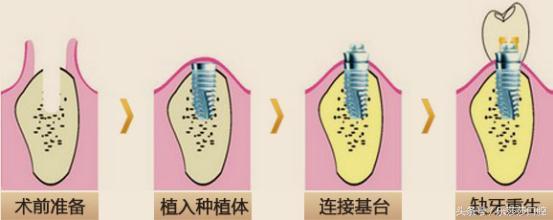
What is the whole process of dental implants?
(1)Preoperative examination and treatment: tooth extraction, treatment of residual roots, cavities, and periodontal disease, and correction of poor occlusal relationships, etc. The time required at this stage varies depending on the individual's treatment situation, ranging from as little as one or two days to as much as two or three months.
(2) Implant surgery stage: generally divided into two steps.
The 1st time: implant the artificial tooth root (the time to implant one implant is generally 30-60 minutes).
The 2nd time: place the denture on the artificial tooth root (after implanting the artificial tooth root, you cannot wear a temporary denture before the stitches are removed; after removing the stitches in 7-10 days, decide whether to wear one based on whether modifications are needed).
(3) After implant surgery: 4-6months after surgery, replace or install the permanent crown or denture. The permanent crown is generally made of porcelain material, with excellent texture, realistic color, comfort and beauty, satisfactory restored function, and durability.
(4) Follow-up visits: generally at 1, 3, 6, and 12 months.
How long can dental implants last?
If the doctor's operation is fine and the patient maintains them well, the lifespan will be relatively long. But if maintenance is poor, problems will arise. A normal doctor cannot possibly guarantee you how long the teeth you get will last, because there are many uncertain factors, and no one can say for sure about the later situation.