How to grow giant spider lily (Crinum lily)? Detailed guide to cultivation methods and precautions
Growth habits of giant spider lily
The giant spider lily is native to Indonesia, Sumatra and other places, and is cultivated in tropical and subtropical provinces of southern China, but especially abundantly in Xishuangbanna, Yunnan Province. It prefers warm, humid, well-lit, fertile sandy loam environments, is not cold-tolerant, tolerates saline-alkaline soil, but dislikes strong direct sunlight during the seedling stage. The optimal growing temperature is 15-20°C. During the winter bulb dormancy period, the suitable storage temperature is around 8°C.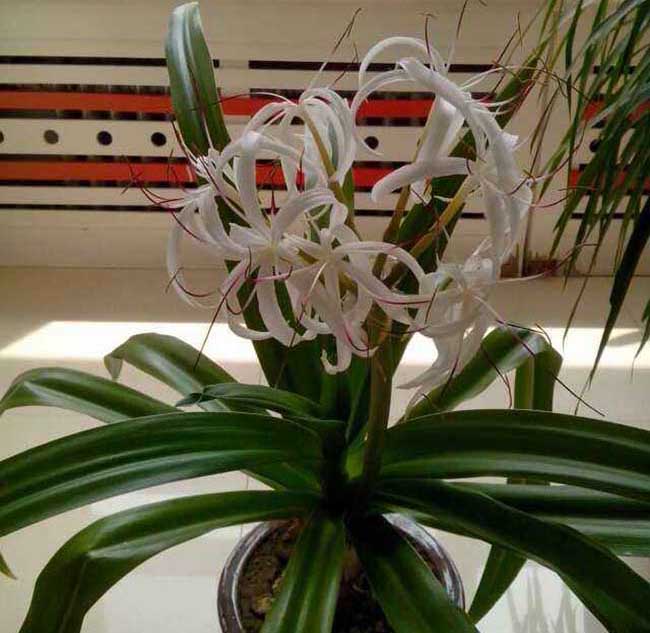
Propagation methods for giant spider lily
1. Division:
Division of the giant spider lily can be done in spring or autumn, preferably in spring when repotting. Take the mother plant out of the pot, peel off the surrounding bulbs and plant them separately.
2. Sowing:
Sowing of the giant spider lily is best done in March to April. Use a shallow pot for spot sowing, cover with about 2 cm of soil, water thoroughly, and keep at 16-22°C with moderate moisture, not too wet. Germination occurs in about 2 weeks.
Cultivation methods for giant spider lily
1. Soil:
The giant spider lily is not demanding about soil and tolerates saline-alkaline conditions. It grows best in soil rich in humus, loose and fertile, with good drainage.
2. Watering:
During the growing season, the giant spider lily needs plenty of water. Keep the soil consistently moist, but not waterlogged. Reduce watering after autumn.
3. Sunlight:
To keep the leaves green, attractive and neat without affecting light exposure, provide appropriate shade during the hottest summer months.
4. Temperature:
The giant spider lily prefers warmth and is not cold-tolerant. The optimal growing temperature is 15-20°C. In winter, it needs to overwinter indoors at no less than 5°C.
5. Fertilizing:
The giant spider lily likes fertilizer. Apply manure fertilizer 2-3 times per month, and add phosphorus fertilizer twice more before and after flowering to encourage more blooms and a longer flowering period.
6. Pruning:
After flowering, if seeds are not wanted, cut off the flower stalk. Old yellowed leaves should also be removed at the same time.
Precautions for giant spider lily
1. In the hot summer, the giant spider lily fears the scorching sun most. When this season arrives, move the plant to a shady area or a north-facing balcony for care. Keep the ground moisture sufficient at all times to maintain a dry, moist and cool environment.
2. The giant spider lily likes fertilizer, so pay attention to frequent fertilizing during cultivation. During the growing season, fertilize frequently with dilute fertilizer. In spring, mainly use nitrogen fertilizer; during the bud stage, switch to phosphorus and potassium fertilizer; in autumn, switch to cake fertilizer, about once every two weeks in a cycle.
3. Pay attention to watering during the growing season of the giant spider lily. The watering method differs across spring, summer, autumn and winter. In spring, water almost once a day; in summer, water once every evening; from early autumn, reduce watering; in winter, strictly control watering, about once every two weeks.
4. Pay attention to keeping the giant spider lily warm. In northern regions, this is around October, while in southern regions it is relatively later, in November the plant needs to be moved indoors, placed in a sunny spot, and kept at around 10°C for overwintering.
Key management points for giant spider lily
1. Large pot, deep planting
To meet the nutrient needs of the giant spider lily during its growing period, choose a larger flower pot and plant deeply during cultivation to help retain water and soil and support root development.
2. Water and fertilizer management
During the normal growing period of the giant spider lily, from May to September, water appropriately every day, watering when dry. Apply fertilizer water made from oil cake residue and black vitriol (ferrous sulfate) once every 7 to 10 days. The concentration should go from dilute to concentrated, and stop applying in winter.
3. Remove suckers
During the vigorous growth period, the giant spider lily always produces suckers around the rhizome. To ensure an upright plant shape, neat rhizome and normal growth of the whole plant, remove the suckers promptly.
4. Sunlight and shading
To keep the leaves green, attractive and neat without affecting light exposure, provide appropriate shade for the giant spider lily during the hottest summer months. From 7 AM to 12 PM, it should receive full sun; from 12 PM to 3 PM, set up a shade net for shading.
Indoor management for giant spider lily
In northern China, the giant spider lily is always grown in pots. In early September or late October, when the temperature drops to 8°C, move the potted plant indoors and place it in a dry spot at around 10°C. Do not water and stop fertilizing. Once damaged by cold, it is very difficult to recover. If the room temperature is below 6°C and the potting soil is too wet, it will rot from the ground level and die. Therefore, when bringing it indoors, place it in a bright spot, keep the potting soil not too wet, and if the air humidity is too low, spray water to wash the leaves and improve air humidity.
Care methods for giant spider lily
① Cool down and increase humidity in summer
The giant spider lily fears scorching sun exposure in summer. Therefore, after summer arrives, move the plant to a shade shed or a north-facing balcony for care, and frequently sprinkle water on the ground to create a cool and humid micro-environment.
② Water frequently during the growing season
In spring, water once every 1-2 days; in summer, water once every evening; after autumn arrives, reduce watering; in winter, strictly control watering (generally water once every 2 weeks or so).
③ Keep warm in winter
In northern regions, move the plant indoors in early October; in southern regions, in early November. Place it in a sunny spot and keep the temperature between 8-10°C for overwintering.
Introduction to giant spider lily cultivation methods and precautions
The giant spider lily is also known as Wenzhu lan, Luoqun dai, Wenlan shu, etc. Its flowers and leaves are both beautiful and it has high ornamental value. It can be used as a decorative accent for green spaces in scenic areas, campuses and institutions, and lawns in residential communities. It can also be used as a courtyard ornamental flower, and as a hedge around buildings. In pots, it can be placed at the entrance of solemn conference halls, luxurious hotels and banquet halls. Let's take a look at the cultivation methods of the giant spider lily!
Growth habits of the giant spider lily
The giant spider lily is native to Indonesia, Sumatra and other places, and is cultivated in tropical and subtropical provinces of southern China, but especially abundantly in Xishuangbanna, Yunnan Province. It prefers warm, humid, well-lit, fertile sandy loam environments, is not cold-tolerant, tolerates saline-alkaline soil, but dislikes strong direct sunlight during the seedling stage. The optimal growing temperature is 15-20°C. During the winter bulb dormancy period, the suitable storage temperature is around 8°C.
Propagation methods for the giant spider lily
1. Division: Division of the giant spider lily can be done in spring or autumn, preferably in spring when repotting. Take the mother plant out of the pot, peel off the surrounding bulbs and plant them separately.
2. Sowing: Sowing of the giant spider lily is best done in March to April. Use a shallow pot for spot sowing, cover with about 2 cm of soil, water thoroughly, and keep at 16-22°C with moderate moisture, not too wet. Germination occurs in about 2 weeks.
Cultivation methods for the giant spider lily
1. Soil: The giant spider lily is not demanding about soil and tolerates saline-alkaline conditions. It grows best in soil rich in humus, loose and fertile, with good drainage.
2. Watering: During the growing season, the giant spider lily needs plenty of water. Keep the soil consistently moist, but not waterlogged. Reduce watering after autumn.
3. Sunlight: To keep the leaves green, attractive and neat without affecting light exposure, provide appropriate shade during the hottest summer months.
4. Temperature: The giant spider lily prefers warmth and is not cold-tolerant. The optimal growing temperature is 15-20°C. In winter, it needs to overwinter indoors at no less than 5°C.
5. Fertilizing: The giant spider lily likes fertilizer. Apply manure fertilizer 2-3 times per month, and add phosphorus fertilizer twice more before and after flowering to encourage more blooms and a longer flowering period.
6. Pruning: After flowering, if seeds are not wanted, cut off the flower stalk. Old yellowed leaves should also be removed at the same time.
Precautions for the giant spider lily
1. In the hot summer, the giant spider lily fears the scorching sun most. When this season arrives, move the plant to a shady area or a north-facing balcony for care. Keep the ground moisture sufficient at all times to maintain a dry, moist and cool environment.
2. The giant spider lily likes fertilizer, so pay attention to frequent fertilizing during cultivation. During the growing season, fertilize frequently with dilute fertilizer. In spring, mainly use nitrogen fertilizer; during the bud stage, switch to phosphorus and potassium fertilizer; in autumn, switch to cake fertilizer, about once every two weeks in a cycle.
3. Pay attention to watering during the growing season of the giant spider lily. The watering method differs across spring, summer, autumn and winter. In spring, water almost once a day; in summer, water once every evening; from early autumn, reduce watering; in winter, strictly control watering, about once every two weeks.
4. Pay attention to keeping the giant spider lily warm. In northern regions, this is around October, while in southern regions it is relatively later, in November the plant needs to be moved indoors, placed in a sunny spot, and kept at around 10°C for overwintering.
Cultivation methods and precautions for the giant spider lily
[Common questions] Cultivation methods and precautions for the giant spider lily
[Expert answers]
Image: Giant spider lily
● Cultivation methods for the giant spider lily
1. Soil: The giant spider lily is not demanding about soil and tolerates saline-alkaline conditions. It grows best in soil rich in humus, loose and fertile, with good drainage.
2. Watering: During the growing season, the giant spider lily needs plenty of water. Keep the soil consistently moist, but not waterlogged. Reduce watering after autumn.
3. Sunlight: To keep the leaves green, attractive and neat without affecting light exposure, provide appropriate shade for the giant spider lily during the hottest summer months. From 7 AM to 12 PM, it should receive full sun; from 12 PM to 3 PM, set up a shade net for shading.
4. Temperature: The giant spider lily prefers warmth and is not cold-tolerant. The optimal growing temperature is 15-20°C. In winter, it needs to overwinter indoors at no less than 5°C.
5. Fertilizing: The giant spider lily likes fertilizer. Apply manure fertilizer 2-3 times per month, and add phosphorus fertilizer twice more before and after flowering to encourage more blooms and a longer flowering period.
6. Pruning: After flowering, if seeds are not wanted, cut off the flower stalk. Old yellowed leaves should also be removed at the same time.
● Precautions for the giant spider lily
① Cool down and increase humidity in summer. The giant spider lily fears scorching sun exposure in summer. Therefore, after summer arrives, move the plant to a shade shed or a north-facing balcony for care, and frequently sprinkle water on the ground to create a cool and humid micro-environment.
② Fertilize frequently during the growing season. During the growing season, apply dilute fertilizer frequently. In spring, apply dilute fertilizer mainly of nitrogen; during the scape emergence and bud stage, apply liquid fertilizer mainly of phosphorus and potassium; in autumn, apply decomposed cake fertilizer. The interval between fertilizing is 2 weeks.
③ Water frequently during the growing season. In spring, water once every 1-2 days; in summer, water once every evening; after autumn arrives, reduce watering; in winter, strictly control watering.
④ Keep warm in winter. In northern regions, move the plant indoors in early October; in southern regions, in early November. Place it in a sunny spot and keep the temperature between 8-10°C for overwintering.
[Editor's summary]
The giant spider lily is also called Shiba Xueshi, Wenzhu lan, and white-flowered stone garlic (white spider lily). It is a fragrant-flowered plant with elegant form and simple, graceful flowers, and is a common potted flower. The editor of First Agricultural Economy has introduced the cultivation methods and precautions for the giant spider lily in this article, and hopes it is helpful to you.