What are the cultivation methods and precautions for the variegated spider plant 'Silver Heart'?
Morphological characteristics of the variegated spider plant 'Silver Heart'
The variegated spider plant 'Silver Heart', also known as the middle-striped spider plant, is a perennial herbaceous plant with clustered cylindrical fleshy roots and short rhizomes. The leaves are basal, linear to long lanceolate, with entire or slightly wavy margins. The flower scape emerges from the leaf axils, 30-50 cm long, curving and drooping to form new stolons. It has a racemose inflorescence with small white flowers, blooming in spring and summer, and can also bloom indoors in winter. The underground part has rhizomes that are fleshy and short, creeping horizontally or growing obliquely. The leaves are slender, linear-lanceolate, with a yellow-white longitudinal stripe in the center, clasping at the base, bright green. Stolons emerge from the leaf axils, extending out of the plant clump, curving outward, with small plantlets bearing aerial roots at the tips. The flowers are white with 6 tepals, blooming in spring and summer.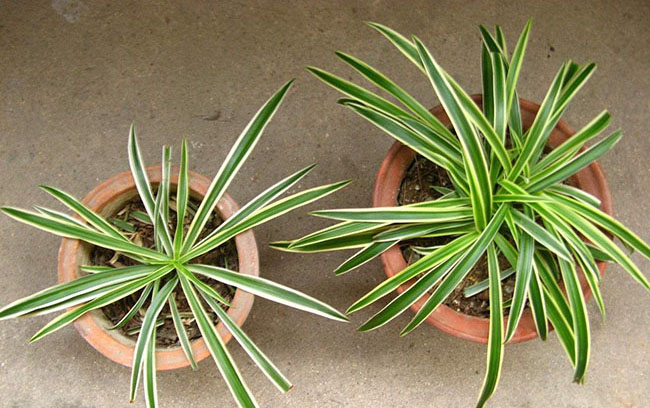
Cultivation methods for the variegated spider plant 'Silver Heart'
The cultivation and propagation of the variegated spider plant 'Silver Heart' requires the same substrate, water, fertilization, temperature, and light conditions as general spider plants. Propagation can be done by cuttings, division, or sowing. Pest and disease control and protection share the characteristics of general spider plants.
Characteristics of cultivation conditions
Substrate:
The variegated spider plant 'Silver Heart' has strong adaptability to various soils and is easy to cultivate. It can be grown in fertile sandy loam, humus soil, peat soil, or fine sand with base fertilizer, and can also be grown hydroponically.
Propagation:
Usually propagated by division, which can be done in any season except winter when temperatures are too low. Small plantlets with roots on the flower stems can also be cut off and potted.
Watering:
It prefers a moist environment, and the potting soil should be kept moist regularly. However, the plant's fleshy roots can store a large amount of water, giving it strong drought resistance, and it will not dry out and die even without watering for several days. In winter, when temperatures are below 5°C, water less, and do not let the potting soil become too wet, otherwise the leaves tend to turn yellow.
Fertilization:
Apply liquid fertilizer once every 2 weeks during the growing season. Variegated varieties should receive less nitrogen fertilizer, otherwise the yellow-white markings on the leaves will become less distinct. Stop fertilizing when the ambient temperature is below 4°C.
Light:
The plant prefers a semi-shaded environment and can be grown year-round in a bright indoor location. When grown outdoors, the variegated spider plant 'Silver Heart' can also grow well under strong direct sunlight in summer. However, plants grown indoors for a long time should avoid strong direct sunlight and need 50%-70% shade.
Temperature:
It is tolerant of high temperatures. The suitable temperature is above 15°C, not lower than 10°C, and the overwintering temperature in winter should be above 4°C.
Humidity:
It prefers a moist environment. To keep the spider plant fresh and green, you can frequently spray water on the leaves to clean them. An air humidity above 75% is ideal, and it should not be below 50%.
Pruning:
Regularly remove yellow leaves at any time. Repot once every year in March, trimming off old roots, rotten roots, and excess fibrous roots. In early to mid-May, trim some of the old leaves of the spider plant to encourage more new leaves and small plantlets to grow.
Propagation methods for the variegated spider plant 'Silver Heart'
The variegated spider plant 'Silver Heart' can be propagated by cuttings, division, or sowing. Cuttings and division can be done anytime from spring to autumn. The variegated spider plant 'Silver Heart' has strong adaptability and a high survival rate, and is generally very easy to propagate. For cuttings, simply take a 5-10 cm stolon with new buds and insert it into the soil; roots will form in about 1 week, and after about 20 days it can be transplanted into a pot, watered thoroughly, and placed in a cool shaded place for care.
Division propagation
Remove the spider plant from the pot, clear away old soil and dead roots, cut apart the old roots so that each divided plant has 3 stems, then transplant and grow them separately. You can also cut off the clustered stems and leaves on the spider plant's stolons (which are actually young new plantlets with leaves above and aerial roots below) and plant them directly into flower pots to grow.
Seed propagation
This can be done in March each year. Because the seeds are small, the soil covering them after sowing should not be thick, generally 0.5 cm is sufficient. At a temperature of 15°C, the seeds will sprout in about 2 weeks, and after the seedlings take shape, transplant them for growing. When seed propagation is used for varieties with leaf variegation, the offspring will revert to all-green varieties. Any water-holding container can be used to grow spider plants hydroponically; it is best to use a transparent container so you can enjoy the dazzling white roots in the water. Glass wine glasses, teacups, and mineral water bottles around you are all economical and attractive containers for hydroponic spider plants.
Precautions for the variegated spider plant 'Silver Heart'
1. Spider plants are fertilizer-tolerant plants. Insufficient nutrients will cause leaves to turn yellow, and the tips easily scorch and age.
2. In spring and autumn, semi-shade is preferable. In summer, it is best to receive light in the morning and evening, with shade at noon, avoiding direct sun exposure. In winter, provide more sunlight. During the growing season, keep the potting soil moist but not waterlogged.
3. Repot once every spring (mid-to-late March). After mid-October, hang the flower pot indoors in a position close to the sunlight and convenient for viewing. In winter, water after the top approximately 1 cm of potting soil has dried.
4. When the climate is dry in summer and autumn, increase the air humidity around the plant by misting water and other measures. In winter, keep the potting soil on the dry side; too moist potting soil can trigger gray mold and cause leaf rot. Avoid pouring water into the center of the plant, otherwise the tender leaves can easily rot.
Cultivation methods and precautions for the variegated spider plant 'Silver Heart'
Preferences of the variegated spider plant 'Silver Heart'
Only by fully understanding the preferences and habits of the variegated spider plant 'Silver Heart' can you cater to what it likes, thereby allowing it to grow most vigorously and reach its strongest state of vitality. The variegated spider plant 'Silver Heart' does not like exposure to strong sunlight and prefers cool, shaded places. Unlike some spider plants, the variegated spider plant 'Silver Heart' prefers a moist environment, whereas many spider plants prefer a drier environment in this respect. The variegated spider plant 'Silver Heart' prefers more moisture and grows rapidly. Its optimal growing temperature is between 15 and 20°C, and even in the severe cold of winter, it must never be placed outdoors in an environment below 5°C.
Light requirements for growing the variegated spider plant 'Silver Heart'
The variegated spider plant 'Silver Heart' likes sunlight, but it should also avoid direct exposure to harsh sunlight. Generally, if the sunlight is mild, 6 to 8 hours of exposure per day is sufficient. When the weather is relatively cold in winter, try to avoid placing it outdoors at night to prevent the soil from freezing. However, when it is hot in summer, appropriate shading treatment is needed to avoid prolonged sunlight during the day.
Precautions for growing the variegated spider plant 'Silver Heart'
There are actually many precautions for growing the variegated spider plant 'Silver Heart'. Regarding light, we have already mentioned one point in the article: avoid direct sunlight in summer and provide appropriate shade; in winter, avoid placing it outdoors at night, especially in the cold weather of the north. In addition, note that the temperature is best kept between 15 and 20°C, and the lowest temperature should not fall below 5°C, to ensure the normal growth of the variegated spider plant 'Silver Heart'.
Green Home - Cultivation methods and precautions for the variegated spider plant 'Silver Heart'
The variegated spider plant 'Silver Heart' is a variety of spider plant. Because of its attractive appearance and air-purifying effect, quite a few people grow it. But when growing the variegated spider plant 'Silver Heart', attention must be paid to methods and precautions. So what are the cultivation methods and precautions for the variegated spider plant 'Silver Heart'?
The variegated spider plant 'Silver Heart' is a type of spider plant. It is named 'Silver Heart' because, unlike other spider plants, it has a distinctive feature: the middle part of every green leaf has a silvery-white stripe about 1 cm wide.
Cultivation methods
1. Substrate: Spider plants have strong adaptability to various soils and are easy to cultivate. Fertile sandy loam, humus soil, peat soil, or fine sandy soil with a small amount of base fertilizer can be used as potting soil.
2. Propagation: Usually propagated by division, which can be done in any season except winter when temperatures are too low for division. Small plantlets with aerial roots on the flower stems can also be cut off and potted separately.
3. Watering: Spider plants prefer a moist environment, and the potting soil should be kept moist regularly. However, the fleshy roots of spider plants can store a large amount of water, giving them strong drought resistance, and they will not dry out and die even without watering for several days. In winter, when temperatures are below 5°C, water less, and do not let the potting soil become too wet, otherwise the leaves tend to turn yellow.
4. Fertilization: Apply liquid fertilizer once every 2-3 weeks during the growing season. Variegated varieties should receive less nitrogen fertilizer, otherwise the white or yellow markings on the leaves will become less distinct. Stop fertilizing when the ambient temperature is below 10°C.
5. Light: Spider plants prefer a semi-shaded environment and can be grown year-round in a bright indoor location. Spider plants grown indoors for a long time should avoid strong direct sunlight and need 50-70% shade. Only in this way can they grow luxuriantly with beautiful leaves.
6. Temperature: Spider plants are tolerant of high temperatures. The suitable growing temperature is between 15-30°C, and the overwintering temperature in winter is best above 10°C.
7. Humidity: They prefer a moist environment. To keep spider plants fresh and green, you can frequently spray water on the leaves to clean them.
8. Pruning: Regularly remove yellow leaves at any time. Repot once every year in March, trimming off old roots, rotten roots, and excess fibrous roots. In early to mid-May, trim some of the old leaves of the spider plant to encourage more new leaves and small plantlets to grow.
Precautions
Excessive fertilization exceeds the plant's needs. At first the leaves become glossy and uneven, then the root system rots and the leaves turn yellow. Stop fertilizing, water generously with clean water, or repot by cleaning the roots and replacing the soil with fresh soil.
If repotting and soil replacement have not been done for a long time, the various nutrient elements in the potting soil will have been exhausted, and the three major elements nitrogen, phosphorus, and potassium have not been replenished in time. The plant lacks nutrients, and the leaves become yellow and thin. Promptly replace with fertile loam and water with alum fertilizer water.
Although spider plants are semi-shade flowers, they still need at least four hours of diffused light every day, otherwise chlorophyll decreases and the leaves turn yellow.
If the potting soil has poor air permeability and water permeability, and the potting soil retains water without drying for a long time, root respiration becomes difficult, causing the leaves to turn yellow. Promptly loosen the soil and control watering. Fifth, long-term watering that does not penetrate thoroughly. The roots of the spider plant lose water, and the lower old leaves turn yellow. Water thoroughly and keep the potting soil warm and moist.
These are the cultivation methods and precautions for the variegated spider plant 'Silver Heart'. At present, the variegated spider plant 'Silver Heart' has entered many people's homes as a potted plant. Especially just after a house has been renovated, placing one or two pots of the variegated spider plant 'Silver Heart' has a good effect on improving the air.