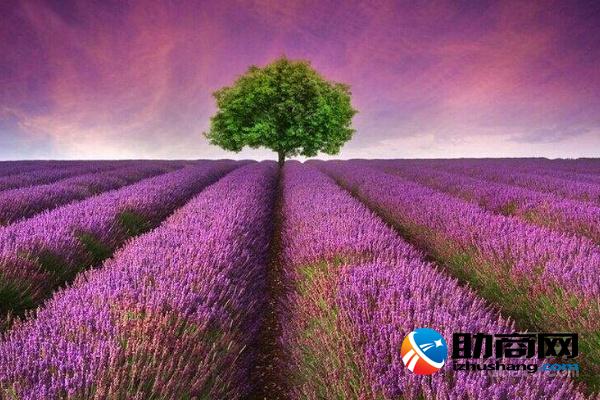
A Detailed Explanation of Lavender's Benefits and Cultivation Methods
Lavender. The British have always regarded lavender as a symbol of purity, cleanliness, protection, gratitude and peace. Lavender's homeland is France, and it has also been introduced to Hokkaido, Japan. Lavender represents the source of happiness, and joy arises from happiness. If you want to embrace the joy of this plant known as the "tranquil perfume plant," you only need to visit the Million Sunflower Garden in Panyu, Guangzhou, to enjoy that luxurious beauty. "Lavender represents true love" is the most representative lyric poem of the Elizabethan era.
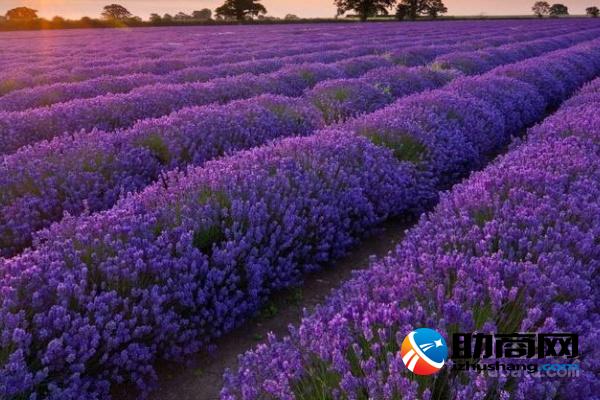
Lavender is also called perfume plant, spirit fragrance herb, fragrant herb, yellow fragrant herb. Lavender. It belongs to the Lamiaceae family, Lavandula genus, and is a small shrub. The stems are erect, covered with stellate hairs; old branches are grayish-brown with strip-like peeling bark. Leaves are linear or lanceolate-linear, covered with sparse or dense gray stellate hairs, grayish-white or olive-green when dry, with entire and revolute margins. Verticillasters aggregate at the branch tips into interrupted or nearly continuous spikes; bracts are rhombic-ovate, bracteoles inconspicuous; the calyx is ovate-tubular or nearly tubular; the corolla is about twice as long as the calyx, the tube straight, with glandular hairs inside at the throat. Nutlets are elliptical and smooth. It is native to the Mediterranean coast, various parts of Europe and the islands of Oceania, and was later widely cultivated in the United Kingdom and Yugoslavia. Its leaf shape and flower color are elegant and graceful, and its blue-purple inflorescences are tall and beautiful. It is a new perennial cold-resistant flower for courtyards, suitable for group planting or row planting along flower borders, and can also be grown in pots for ornamental purposes.
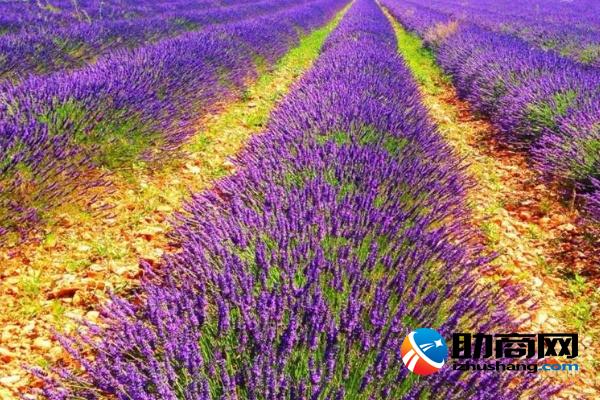
Lavender Seedling Cultivation
Lavender cannot tolerate heat and humidity. If waterlogged for a long time, the roots rot and the plant dies. When planting outdoors, be careful not to let rain fall directly on the plants. After May, it should be moved to a place without direct sunlight, and ventilation should be increased to lower the ambient temperature and keep it cool, so that it can safely pass through the hot summer. Pay attention to sunlight, water, temperature and patience.
(1) Soil: Suitable for slightly alkaline or neutral sandy soil. Special attention must be paid to choosing a well-drained medium. You can use 1/3 perlite, 1/3 vermiculite and 1/3 peat moss mixed together. If cultivating in open ground, pay attention to soil drainage. You can pile the soil up into raised beds before planting.
(2) Watering: Lavender does not like water to remain around its roots for long. After one thorough watering, water again only when the soil is dry, with the surface growing medium dry and the interior moist as the standard, and slight leaf wilting as the main indicator. Water in the morning, avoid sunlight, and do not splash water on the leaves or flowers, otherwise they are prone to rot and pests and diseases. A continuously humid environment will prevent the roots from getting enough air to breathe, leading to poor growth or even sudden death of the whole plant. This is often the reason why lavender cultivation fails.
(3) Light: Lavender is a full-sun plant and needs plenty of sunlight and a suitably humid environment. An environment with full sun is better; it can also grow with half-day sun, but it will bloom less. In summer, at least 50% of the sunlight should be blocked, and ventilation should be increased to lower the ambient temperature. Although growth will weaken in this way, the plant will not die. In winter, lavender can grow well on flat ground and should be cultivated under full sun.
(4) Temperature: Lavender is semi-heat-tolerant, prefers coolness, and likes warm winters and cool summers. The suitable growth temperature is 15-25°C, and it can grow at 5-30°C. Limiting temperature: above 35°C; long-term exposure above 38-40°C causes the top stems and leaves to wither and turn yellow. In northern winters, it begins dormancy when temperatures remain below 0°C for a long time. During dormancy, mature seedlings can withstand low temperatures of -20 to -25°C.
(5) Fertilizing: For fertilization, bone meal can be placed in the potting soil as a base fertilizer (use once every three months). Seedlings can be given Hyponex No. 2 (20-20-20), and after the plant matures, apply a fertilizer higher in phosphorus such as Hyponex No. 3 (20-30-20). Apply dilute fertilizer.
(6) Pruning: Lavender flowers have the richest essential oil content. When using it, the flowers or inflorescences are the main part. To make harvesting easier, in the early stage of cultivation some small inflorescences may as well be leveled off entirely with large scissors. The newly grown inflorescences will then be uniform in height, which is convenient for harvesting all at once. Some varieties can reach 90 cm in height. This method can also be used to keep the plant low and promote more branching and flowering, increasing the harvest. After flowering, pruning must be carried out. The plant can be pruned to 2/3 of its original size; the plant shape will become more compact and this is beneficial to growth. Pruning should be done in cool seasons such as spring and autumn. Generally, prune in spring; pruning in autumn will affect cold resistance. When pruning, be careful not to cut into the lignified parts, so as to avoid weakening and death of the plant.
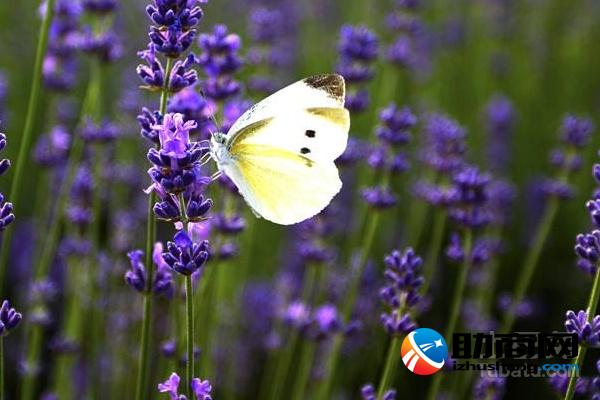
What benefits does lavender have?
1. Calming and sedative effect
Lavender is recognized as the plant with the strongest calming, soothing and hypnotic effects. It can relieve tension, calm the mind and soothe the spirit. Abroad, some hospitals use the volatile oil extracted from lavender to improve sleep in elderly people. In Xinjiang, many Uyghur hospitals also use preparations made from the whole lavender plant to treat neurasthenia and insomnia.
2. Antibacterial
Research has found that lavender has an obvious antibacterial effect. The linalool contained in lavender is the main antibacterial component of lavender. It can inhibit the growth of 17 kinds of bacteria (including Gram-negative bacteria and Gram-positive bacteria) and 10 kinds of fungi.
3. Anti-inflammatory and antioxidant
Applying lavender essential oil to inflamed affected areas can be found to speed up healing and also clearly reduce swelling. At the same time, experiments have also shown that a 50% methanol extract of Lavandula angustifolia can inhibit lipid peroxidation, among which the phenolic compound rosmarinic acid is the antioxidant active substance.
4. Antispasmodic and analgesic effects
In China's book "New Materia Medica," when discussing the uses of lavender, it says: "This oil has carminative power; taken internally, the oil or its alcoholic solution may be dropped on sugar to treat bloating and colic." At the same time, lavender also has an antispasmodic effect on ileal and uterine smooth muscle. Its antispasmodic effect does not act through adrenergic and cholinergic receptors, nor does it act on calcium ion channels, but rather by raising the level of cyclic adenosine monophosphate within cells.
5. Lipid-lowering and blood pressure-lowering effects
Some studies have found that lavender extract has an obvious effect in breaking down fat. At the same time, lavender essential oil can also lower the average arterial pressure through the sense of smell.