What to Do About Food Trapping After Dental Implants? Go to Him to Solve It
What to Do About Food Trapping After Dental Implants? Go to Him!
Why does food get trapped after dental implants? Why can't even the most famous dental experts I've consulted fix my food trapping problem after dental implants? Why is food trapping after dental implants so hard to deal with... In short, who can solve the "food trapping" problem caused by neglecting maintenance after implant surgery?
Thanks to their unique advantages, dental implants are increasingly favored by middle-aged and elderly people with missing teeth, earning the reputation of "humanity's third set of teeth." However, many people still have misconceptions about dental implants, resulting in the same problem after implant surgery as with natural teeth - food trapping. So what should be done about food trapping?
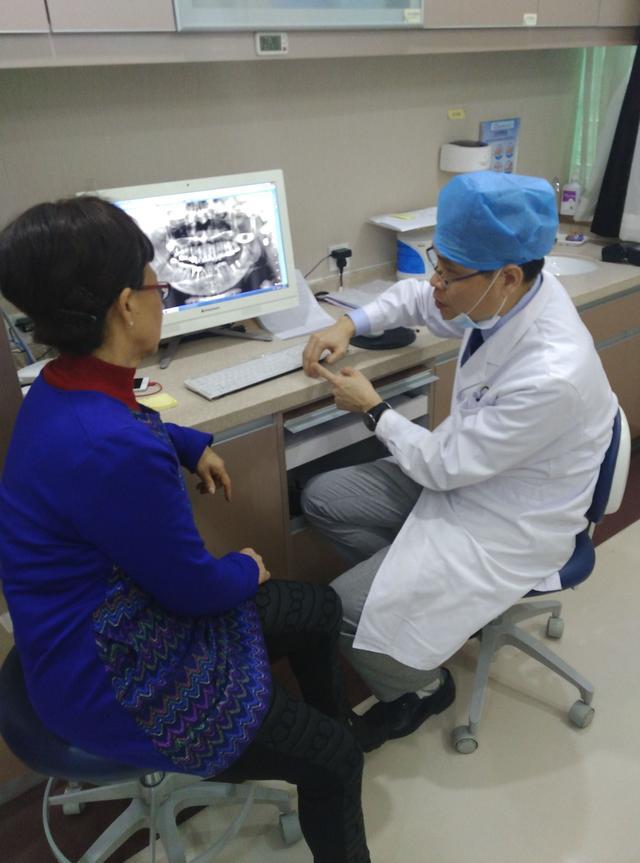
Dr. Zhao Qingtong Analyzes the Causes of Food Trapping for Auntie Wei
Let's first hear what several elderly implant patients have to say!
"In our residential community, someone had dental implants on the same day as me. He constantly gets food trapped, while I have no problems at all!" said Old Li, who once served as a Party committee secretary at a certain work unit. He had his teeth implanted at Jinan University Suihua and now even serves as a social supervisor at this hospital!
"I used to get food trapped with my dental implants too. I went to Dr. Zhao Qingtong at Jinan University Suihua to have it dealt with. Now there's no problem!" said Auntie Wei from Panyu.

A Satisfied Photo Taken with Dr. Zhao
"Why Do Dental Implants Constantly Trap Food?" Many People Are Asking Online!
Hello, dental implants have very strict requirements for both the doctor and the equipment. Placing the implant is simple, but achieving a seamless fit close to that of a natural tooth is not so easy, is it?
Our hospital uses CT 3D maxillofacial scanning for precise positioning, then uses high-end imported German equipment to assist with design and fabrication, and many of our doctors have studied in Germany. Only teeth implanted this way can guarantee quality and quantity, and satisfy patients. Dental implantation is a highly demanding procedure - attitude alone is not enough.

Looking Better and Better After Dental Implants
The above are some answers seen online.
Auntie Wei from Panyu said, "I had three teeth implanted. At first, food would get trapped even during ordinary meals, especially when eating foods high in fiber like green vegetables. After food got trapped, I felt extremely uncomfortable. Later I found Dr. Zhao Qingtong at Jinan University Suihua Dental Hospital. Not only does he have a good attitude, but his skills are also excellent. After he treated it, no more food gets trapped when I eat. I feel that going to him for dental implants is the most reliable choice - the key is that the teeth he implants don't trap food."

Became a Social Supervisor at Jinan University Suihua Dental Hospital
Regarding this, our editor conducted a dedicated interview with Dr. Zhao Qingtong of Jinan University Suihua Dental Hospital.
Dr. Zhao Qingtong points out: Whether artificial dentures or natural teeth, food trapping problems cannot be completely avoided, because as long as there is a gap - even one invisible to the naked eye - food can find a place to hide. Moreover, the smaller the gap, the more troublesome it is to deal with after food gets trapped. If food remains impacted for a long time, it will not only widen the gap between teeth but also breed oral bacteria, forming dental plaque and tartar, thereby triggering various periodontal diseases.
For a very small gap between teeth, if you forcefully pick at it with a toothpick after food gets trapped, it may gradually destroy and widen the gap. Also, unlike natural teeth, dental implants do not have self-recovery ability. Once damage occurs, or if the porcelain crown cracks, it can easily harm oral health and may even need to be replaced entirely.
So what should be done about food trapping after dental implants are installed? You can use mouthwash, dental floss, and other tools to clean between the teeth. Mastering techniques when brushing can also basically clean all oral debris. When choosing a toothbrush, do not choose one with a large head, because such a toothbrush cannot reach deep into the oral cavity and the area closest to the base of the tongue - which are precisely the places most prone to tartar formation.
In addition to daily cleaning, you can also opt for professional teeth cleaning. For dental implant patients, you can ask a periodontal care specialist to check at regular intervals and use special tools to help clean the implants, thus ensuring the health of the entire oral cavity.
Of course, when getting dental implants, it is best to do so when the gum condition is relatively good. Don't wait until the gums have receded and the basic conditions have deteriorated before thinking about dental implants. But dental implants are also prone to problems - why? It's like a river embankment: once the soil is gone, no matter how many piles you drive, it will still leak. Regarding this, Dr. Zhao suggests: middle-aged and elderly people who want dental implants after losing teeth must get them promptly when the jawbone condition is good and before the gums have receded. This way, the implants will last longer and be more durable.