What month is water spinach sown, and can it be grown on a balcony?
Water spinach, also called weng cai, is known as kongxin cai in Fujian, Guangxi, Guizhou and Sichuan; in Fujian it is called tongcai weng or wengcai, in Jiangsu and Sichuan it is called tengteng cai, and in Guangdong it is called tongcai. Besides being eaten as a vegetable, it can also be used medicinally, so what month is water spinach sown? Can it be grown on a balcony?
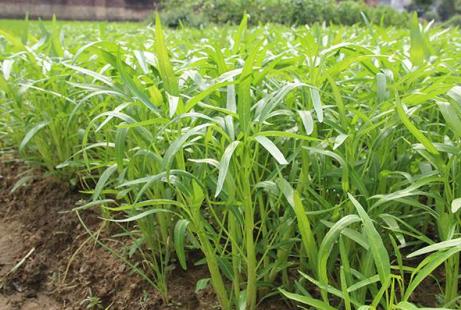
1. What month is water spinach sown?
Water spinach is generally sown successively around mid-April and can continue all the way to August. If protective facilities are used, the sowing period can be brought forward.
2. Can water spinach be grown on a balcony?
Water spinach can be grown on a balcony; the specific method is as follows:
1. Sowing: broadcast directly or sow in holes. Scatter the soaked seeds directly on the soil surface and cover with a thin layer of soil. Or dig several holes 2-3 cm deep and plant the seeds in them. Then water.
2. Germination: after 4 days the seeds can germinate. After germination, fertilize in time by scattering a layer of organic fertilizer on the soil surface to promote growth. Be careful not to sprinkle it on the tender sprouts when fertilizing.
3. Planting out: when the plants grow to about 12 cm, begin thinning and planting out; the weak seedlings can be pulled out and used. The strong seedlings are selected and planted directly into pots. In fact, for home vegetable growing they can simply be left in the original pot and do not need repotting.
4. Management: it likes moisture and is not afraid of waterlogging, and is extremely suitable for hydroponics; drought will affect the taste, so in principle the soil should be kept moist to encourage it to sprout more adventitious roots. Potted plants need watering every day; in hydroponics, after planting out the water depth is about 2-3 cm, and as growth progresses and the temperature rises the water depth should gradually be increased to about 10 cm; when the temperature is low the water depth must be reduced. If conditions are limited, it can also be grown directly in water, adding an appropriate amount of nitrogen fertilizer to the water, and growth will still be good. It likes fertilizer and is also fairly tolerant of it, so it is best to apply plenty of base fertilizer. During the growing period the fertilizer requirement is large, mainly nitrogen fertilizer, and the concentration of fertilizer applied increases as growth becomes more vigorous; generally apply well-rotted organic fertilizer once about every 10 days, or top-dress once 2-3 days after each harvest.
5. Harvesting: generally it can be harvested when the seedlings are about 25-35 cm tall; when picking, leave 2-3 nodes at the base and pinch off the tender shoots by hand.