There are also subsidies for growing medicinal herbs; growers should not miss out
The Chinese medicinal herb industry is a sunrise industry. In recent years, as our country's agricultural planting structure has been continuously adjusted, especially after joining the WTO, market competition for agricultural products has become fierce, and a "herb-growing craze" has sprung up in many places. Because the traditional Chinese medicine industry caters to the international trend of green consumption, and has found the right direction in industrialization and scaling up, it has achieved development speed and benefit levels surpassing those of other industries.
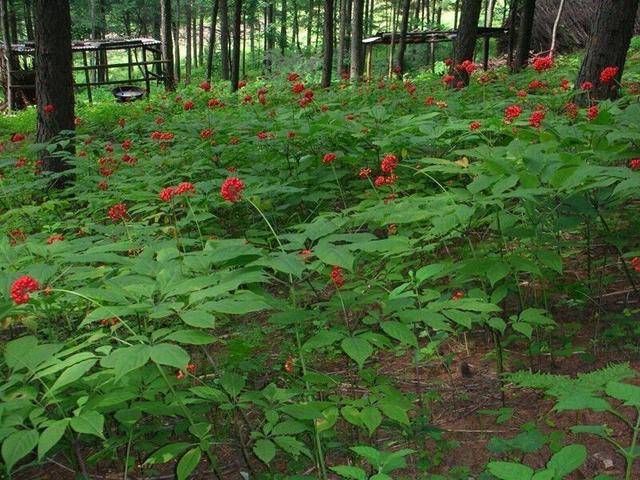
As the state increases its agricultural subsidies, many Chinese medicinal herb growers are asking: are there subsidies for growing medicinal herbs?
At present, subsidies specifically for growing medicinal herbs are still few, but they are not nonexistent; most are local subsidies, issued as special subsidies for growing them as a characteristic crop.In 2015, the State Forestry Administration launched a pilot program for subsidies for growing Chinese medicinal herbs under forest, carrying out pilots in Guangdong, Jiangxi, Heilongjiang, Sichuan and other provinces. This year, quite a few farmers growing medicinal herbs have already received this subsidy.
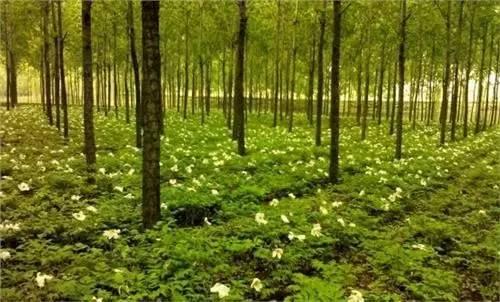
The central government's financial subsidy pilot funds for growing Chinese medicinal herbs under forest amount to 380 million yuan. In various places, the subsidy standards for growing medicinal herbs under forest are all different, basically between 100-500 yuan/mu.
Among them, Henan Province's standards for subsidies for growing medicinal herbs under forest are as follows:
Targets of support: farmers' forestry professional cooperatives, family forest farms, and state-owned forest farms registered for more than 2 years, and engaged in under-forest Chinese medicinal herbs and other planting for more than 2 years. The scale of the under-forest planting base shall be no less than 300 mu, and the number of farming households driven shall be no less than 30.
Subsidy funds: the amount of provincial financial subsidy funds applied for by each project shall not exceed 200,000 yuan.
Guangxi Province's standards for subsidies for growing medicinal herbs under forest are as follows:
Targets of support: large specialized households engaged in under-forest economy, family farms (forest farms), farmers' professional cooperatives, leading enterprises in agricultural (forestry) industrialization, forest farm enterprises, improved seed breeding farms (stations), and relevant scientific research units.
Subsidy standard: subsidize after construction. For projects, no more than 40% of the approved reasonable investment amount, with the total amount not exceeding 800,000 yuan.
New projects: no more than 30% of the approved reasonable investment amount or actual investment amount, with the total amount not exceeding 500,000 yuan.
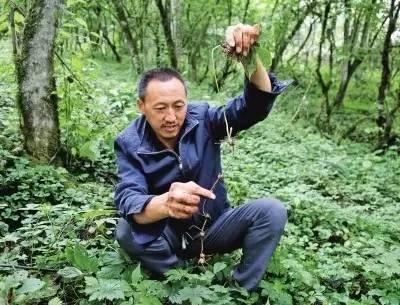
Gansu Province's standards for subsidies for growing medicinal herbs under forest are as follows:
Targets of support: new-type forestry management demonstration entities and farming households engaged in under-forest economic development, such as forestry cooperatives, family forest farms, leading forestry enterprises, and large specialized households (households implementing projects must apply through the township or village).
Scope of support: including under-forest planting, under-forest breeding, collection and processing of forest products, and forest landscape utilization and other under-forest economic development.
Subsidy standard: the provincial financial funds declared for each project shall not exceed 300,000.
END
In Danong Circle (WeChat public account: nydsc889), there are large-scale farming and breeding households who work the land themselves, as well as entrepreneurs who understand the market; there are well-connected industry brokers, as well as high-profile brand planners; there are professors who study agriculture, as well as officials who formulate policy; and also village officials, investors, e-commerce experts... This circle gives you not only market information, but also a large number of valuable agricultural friends.