Konjac cultivation 100 Q&A, all common questions answered
Hello, do you have konjac seeds?
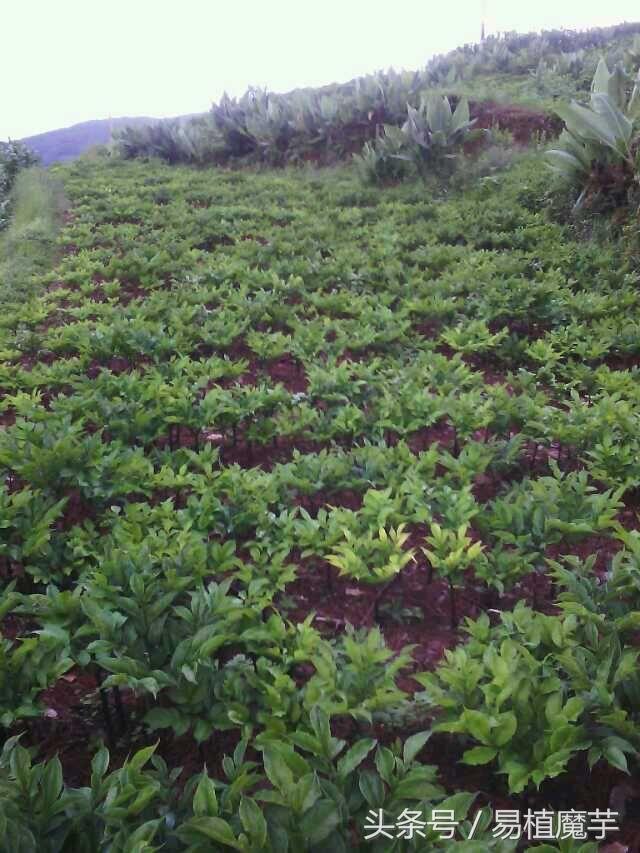
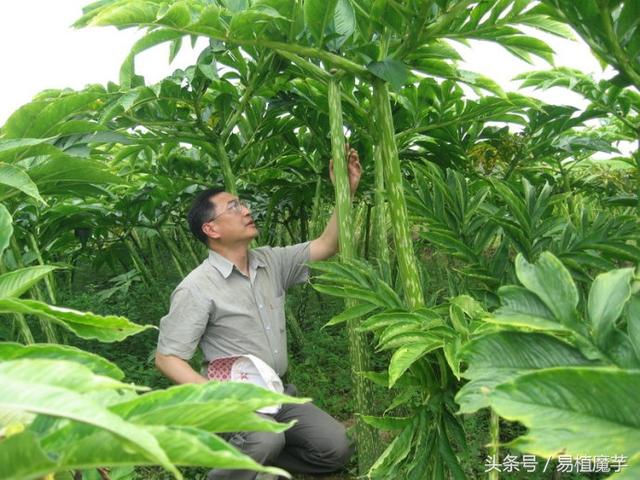
Answer: Yes, we do. Our seeds include several varieties: Amorphophallus konjac (flower konjac), Amorphophallus albus (white konjac), and Amorphophallus bulbifer (bulb-bearing konjac).
2. Which konjac variety is better?
Answer: In most parts of the country, Amorphophallus konjac (flower konjac) is grown. This variety is suitable for areas at an altitude within 800-2700 m. Amorphophallus albus (white konjac) is suitable for areas below 800 m in altitude, and based on current growing conditions, it is best suited to the areas along the Jinsha River. Amorphophallus bulbifer (bulb-bearing konjac) is still in the experimental stage, with trial plantings in many places across the country. Because this variety's seeds form on the leaves and do not touch the soil, it has fewer diseases and strong disease resistance.
3. How big are your company's konjac seeds?
Answer: Our Amorphophallus konjac (flower konjac) is divided into four grades of seed. Specification 1. First-generation seed (5g-25g per piece, about 110-130 pieces per kg) Specification 2. Small second-generation seed (30-50g per piece; 35-40 per kg) 3. Standard seed (50-150g per piece, 5-10 per kg) 4. Large second-generation seed (150-250g per piece, 2-3 per kg)
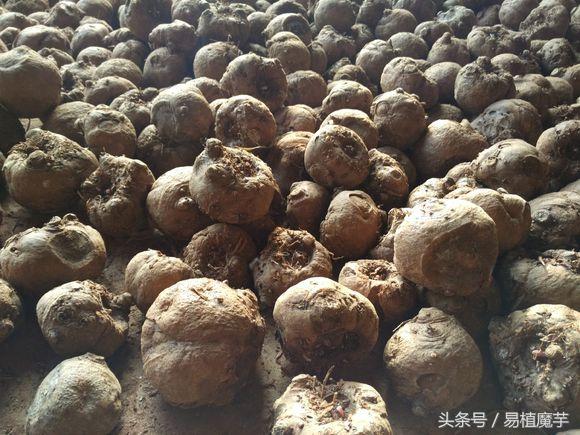
Standard second-generation seed
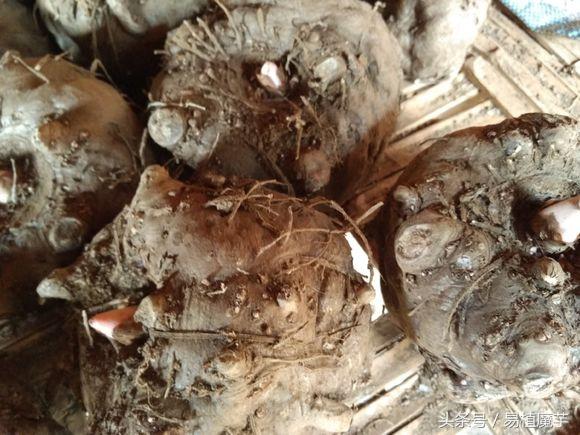
Large second-generation seed
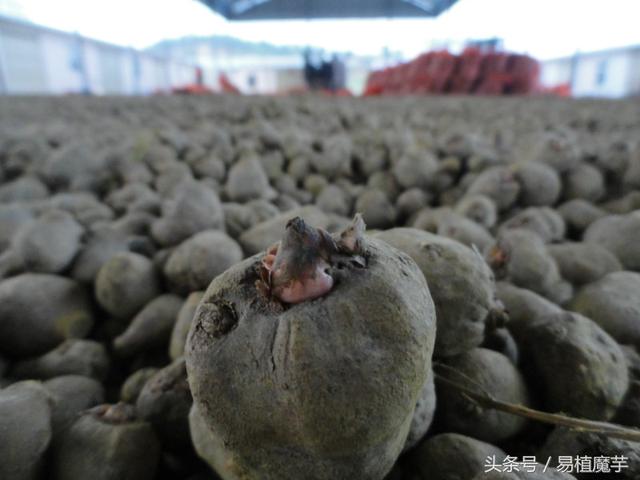
First-generation seed
4. So konjac seeds come in all these specifications. Which specification should I choose for planting?
Answer: Make your choice based on your own situation. If you want to harvest commercial konjac in the same year, you should choose seeds of 150g or more, that is, large second-generation seed. But large seeds have a relatively lower sprouting rate and suffer more damage in long-distance transport. Because the smaller the konjac seed, the higher the sprouting rate, and the larger the seed, the higher its water content, so it is more easily damaged in transit. If you are not in a hurry to see returns in the same year, then plant small second-generation seed or first-generation seed. If your planting area is large, more than 40 mu, it is recommended to plant half small seeds and half large seeds, so that in the same year you can harvest the large ones as commercial konjac and keep the small ones as high-quality reserve seed for producing commercial konjac the following year.
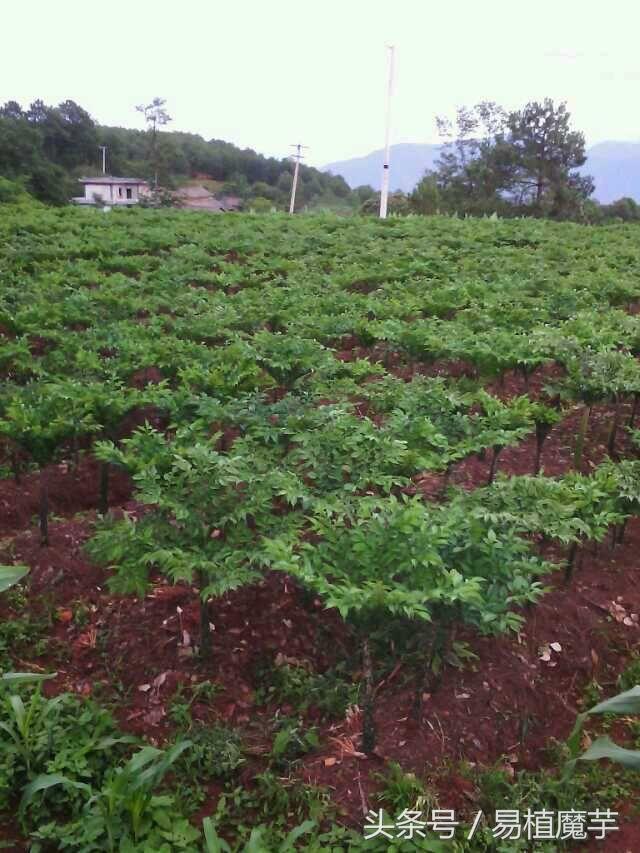
5. Between first-generation seed and second-generation seed, which has a higher sprouting rate, and which grows faster?
Answer: The sprouting rate of first-generation seed can reach more than 85%, and the sprouting rate of second-generation seed can reach more than 75%. The expansion coefficient of first-generation seed is 13-15 times. The expansion coefficient of second-generation seed is 8-11 times. The specific parameters depend on your cultivation level and how suitable the local climate is.
6. Is it true that the larger the seed, the stronger its disease resistance?
Answer: No. The larger the seed, the weaker its disease resistance, because small konjac seeds have a high organic matter content and low water content, are not easily scratched, and are not easily infected.
7. How many jin of seed are needed per mu of land?
Answer: The amount of first-generation seed used is about 300 jin per mu, the amount of small second-generation seed is about 400 jin per mu, standard second-generation seed is 800 jin per mu; large second-generation seed is 1200 jin per mu. If intercropped with corn, reduce by 10% per mu. If intercropped under economic forest trees or fruit trees, then adjust appropriately according to the height of your trees and the spacing.
8. What planting distance is suitable for konjac, and how deep should it be planted?
Answer: The plant spacing is 6 times the seed diameter (the simplest method is to line up 6 seeds of the same size in a row and remove the 4 in the middle to get the distance), and the row spacing is 4 times the seed diameter. According to the land conditions, where the soil fertility is sufficient, enlarge the distance a little; otherwise, reduce it a little. Konjac is a shallow-rooted crop and should not be planted too deep. First-generation seed is generally covered with about 3-4 cm of soil, and second-generation seed with 5-6 cm.
9. What fertilizer should be used for konjac cultivation?
Answer: Konjac cultivation generally uses decomposed farmyard manure, or bio-organic fertilizer, or special-purpose konjac fertilizer. Konjac is a crop that likes potassium and fears chlorine, so more potassium fertilizer should be applied, and fertilizers containing chlorine are strictly prohibited. When buying potassium fertilizer, be sure to note that it is potassium sulfate and not potassium chloride. Farmyard manure must be decomposed. The method of decomposition is very simple: maintain a certain humidity, cover with plastic film, and pile it outdoors for about one month before use.
10. I want to rent land for planting. What kind of land should I look for?
Answer: The high-yield areas for Amorphophallus konjac (flower konjac) are areas at an altitude of 800-1500 m, with sufficient soil fertility, loose and well-aerated sloped land. For soil, black sandy loam, red-brown loam, and yellow-brown loam are best. Clay is not suitable for growing konjac, because konjac's root system has poor aeration, so it is not suitable for growing under conditions of poor drainage; swamps and low-lying land that cannot be drained are strictly prohibited for planting. The higher the altitude, the lower the temperature, and the less prone to disease, but the yield will decrease as altitude increases. The maximum altitude must not exceed 2700 m.
11. If I buy konjac seeds from your company, do you provide technical guidance?
Answer: Friends who buy seeds from our company all receive free technical guidance, with (books, WeChat public account articles, QQ groups, Tieba, WeChat group training and learning, remote classroom learning, live-stream learning; for farmers whose planting reaches a certain scale, on-site guidance on the day of sowing), and for planting areas reaching more than 50 mu, seedling-stage management guidance is provided.
12. If I buy konjac seeds from your company, do you sign a buyback contract?
Answer: For all konjac seeds purchased from our company, a minimum protected-price buyback contract is signed. For a sample contract, please contact us and we will send it to you by email for your reference, or you can search Baidu for Yizhi konjac buyback contract, and you can find the relevant materials.
13. How much is your company's konjac seed per kg?
Answer: The seed price depends on your purchase quantity and the time of purchase. Today is December 17, 2016. Over the next week, our konjac seed price reference is: first-generation konjac seed 12000 yuan/ton, second-generation seed (large, medium and small second-generation) at the same price of 6500 yuan/ton. Later, when the overall national market fluctuates greatly, we will also make adjustments.
14. How is your company's konjac seed yield?
Answer: The yield of konjac varies according to your cultivation level and the specifications sown. Generally, when first-generation seed is planted, it can produce 3500-4000 jin of second-generation seed. Note that the output is second-generation seed, not commercial konjac. When second-generation seed is planted, it produces about 5000-8000 jin. For specifics, please search Baidu Wenku for the article "Yizhi konjac cultivation cost accounting"; or follow our WeChat public subscription account "Yizhi Konjac Cultivation Service Center".15. What are the economic benefits of konjac cultivation, and how much is the investment per mu?Answer: The economic benefits are greatly related to individual management level and how suitable the local environment is. In some places the benefit per mu is more than 20000, and in some it is more than 10000. Of course, most people's benefit per mu is around seven or eight thousand. As for investment cost, seed prices fluctuate greatly from year to year, and the investment is generally 3000-4000 yuan per mu. The cost of planting first-generation seed is lower, and that of second-generation seed is higher.
16. How can I learn more about your related information?
Answer: You can search our company's name, the term Yizhi konjac, on Baidu, 360, Sogou or any browser or search engine. There are related articles about our company and our Tieba. You can also search our QQ group, search our videos, and search our WeChat articles. There is our official website, our WeChat public account subscription account: "Yizhi Konjac Cultivation Service Center", and our service account: Sichuan Yizhi Konjac. You can also call our hotline at any time: 0834-2595176 15181544399 for consultation.