How to Grow Foxtail Millet? Detailed Guide to Sowing and Harvest Times, Yield per Mu, and Market Prospects
As people's living standards improve, they gradually pay more attention to the importance of health preservation, shifting from always eating rice in the past to now often eating some foxtail millet. So how is foxtail millet grown? In which month is it planted and in which month is it harvested? What is the yield per mu? What are the market prospects? The details are organized below, hoping to help you.
In Which Month Is Foxtail Millet Planted and in Which Month Is It Harvested
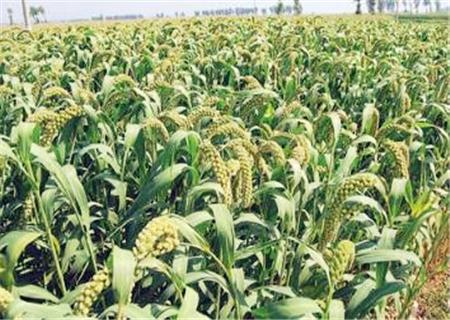
Foxtail millet (millet), when spring-sown after the last frost (after Grain Rain in the Central Plains region), takes about 135 days from sowing to harvest; when summer-sown in early to mid-June, it takes about 100 days from sowing to harvest. Among early-, mid-, and late-maturing varieties, the time difference is about 10 days.
What Is the Yield of Foxtail Millet per Mu
The yield of common foxtail millet varieties is 300-400 kg, with a milling rate of 70-75%. Some reports say that hybrid foxtail millet reaches a maximum yield of 972 kg per mu, and 800 kg over large areas.
Foxtail Millet Planting Prospects and Benefits
Market Forecast
Foxtail millet is a traditional staple crop in China, and after processing and dehulling it becomes millet. Millet is sweet in nature and slightly cold, with effects such as strengthening the spleen, removing dampness, and calming the mind. It can be made into porridge or rice and is one of the coarse grains consumers enjoy eating. As people's health awareness strengthens, consuming coarse grains has become a fashion, and millet, as a coarse grain, has seen continuously increasing consumption in recent years, so the market prospects for growing foxtail millet are promising.
Benefit Analysis
Foxtail millet yields used to be relatively low, at 75-125 kg per 667 sq m, and for a long time it was called a low-yield crop. In recent years, due to breakthroughs in breeding and cultivation techniques, the yield per 667 sq m has increased to 350-400 kg, and high-yield fields have exceeded 500 kg. The price of millet on the market is now relatively high, at 1.4-1.5 yuan per 500 g, so growing foxtail millet brings an income of more than 1000 yuan per 667 sq m. Because foxtail millet is drought-resistant, tolerant of barren soil, and resistant to disasters, it is especially suitable for growing in arid and semi-arid regions, and growing foxtail millet is a good way for these regions to develop their economies. Foxtail millet has a relatively short growth period; summer millet generally has a growth period of 85-90 days, and it is planted after the wheat harvest in most parts of northern China, making it a fairly ideal succeeding crop.
Development Directions
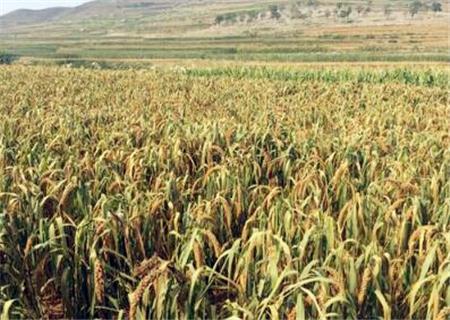
As a coarse grain, foxtail millet should first develop in the direction of high quality and high yield. Solving the problem of high foxtail millet yields is the prerequisite for improving economic benefits, and this point is very important for improving local famous and superior varieties. The average protein content of millet is 11.42%, of which lysine content is 1.16%-3.65% of the protein content; increasing protein content and lysine content is the development direction for future cultivation and breeding work. The unsaturated fatty acid linoleic acid contained in millet is 2.54%-5.85%, and increasing the linoleic acid content is a future development direction.
Second, the color of millet should develop in the direction of golden yellow; golden-yellow millet has promising market prospects, and large-grain millet fetches a higher market price.
Cultivation Techniques
1. Select good varieties. Varieties commonly grown in northern regions include the Jigu series from Hebei, the Yugu series from Henan, and the Jingu series and Lugu series from Shandong.
2. Cultivation season and crop rotation. Foxtail millet is divided into spring cultivation and summer cultivation. For spring cultivation, the sowing time in the Huang-Huai region is early April, and the harvest time is mid-to-late July; the succeeding crop can only be a late-autumn crop with a relatively short growth period. For summer cultivation, the sowing period is mid-to-late June after the wheat harvest, and as long as management is good, delaying sowing until early to mid-July can still achieve a good harvest. At present, foxtail millet cultivation is mainly summer cultivation, while spring cultivation is mostly in northern single-season cultivation areas.
Foxtail millet should not be continuously cropped; continuous cropping leads to severe disease, many foxtail weeds, and poor growth and development. For spring millet, the preceding crops of soybean and sweet potato are better, while for summer millet, wheat is better.
3. Land preparation and sowing. Foxtail millet has a well-developed root system and strong fertilizer uptake capacity, so applying sufficient base fertilizer has a significant yield-increasing effect. Before plowing, apply 2500-3000 kg of organic fertilizer, 40-50 kg of superphosphate, and 10-15 kg of urea per 667 sq m. After fertilizing, plow and prepare the land; land preparation should be fine, level, and firm, which helps conserve soil moisture and lays the foundation for full emergence in one sowing.
There are two sowing methods: broadcasting and drilling. High-yield fields mainly use drilling, while arid areas in the west mainly use broadcasting. For broadcasting, the sowing rate is 1000-1500 g per 667 sq m, and for drilling, the sowing rate is 1000 g per 667 sq m.
4. Field management. After full emergence and 3 leaves, field management must seize the time and manage intensively for half a month, carrying out 2 thinnings and 2 clearings of the seedlings, and 3 rounds of intertillage and hoeing. Seedling retention should be carried out on the basis of thinning, adopting small-clump close planting, parallel clump retention, and triangular seedling retention; when seedlings are 6-8 cm tall, final thinning should be carried out, retaining about 40,000 plants per 667 sq m.
After final thinning, carry out multiple intertillage and weedings to prevent weeds from growing, while promoting roots to grow downward, achieving the goal of nourishing roots, strengthening plants, and controlling stems. Before the large leaves spread out, apply 15-20 kg of urea per 667 sq m as topdressing, and water promptly if drought occurs. In the later period, pay attention to protecting leaves and promoting full grains.
Risk Warning
Growing foxtail millet is a good project for farmers in arid regions and underdeveloped areas to get rich, and it has even more development prospects for some economically backward areas, so it is worth promoting and planting in arid and semi-arid regions of China.
Wealth-Building Case
A rural uncle grows millet and earns 3 million yuan a year through emotional selling
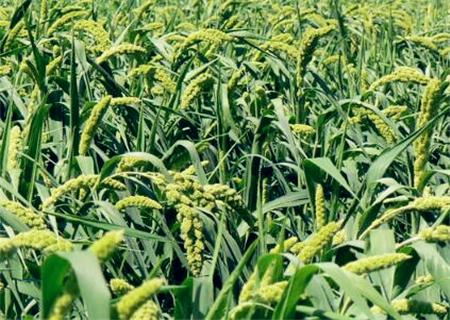
Mr. Luo from the countryside saw a business opportunity. If he grew millet himself and processed it himself, the market prospects would certainly be very good. He acted at once, and Mr. Luo went all out. But when he brought his products to market, he discovered that his products were not well known, did not have much more distinctive character than others, and few people bought them.
Just when Mr. Luo was worried, a friend came to visit and told him: when we were kids, the rice ground with stone at home was fragrant and delicious. These words immediately awakened the dreamer. Mr. Luo instantly found his unique point: the selling point.
But grinding by hand was really unrealistic, and if there was no machine on the market, what could be done? Mr. Luo decided to develop a rice-grinding machine himself.
In this way, Mr. Luo instantly opened up sales channels with the taste of childhood memories, and he kept improving, grinding millet together with other coarse grains. It was deeply loved by the public, and the current annual income can reach 3 million yuan.
Now people of different ages and different preferences all buy Mr. Luo's millet products!