Is black goji berry cultivation a scam? He achieved prosperity through his growing techniques
Many people thinkblack goji berry cultivation is a scam, but actually everyone misunderstood, because for a period of time there was news of consumers buying fake "black goji berries" that looked like black goji berries but tasted like raisins. If that's the case, can you grow black goji berries with peace of mind?Is the profit from growing them actually good? What growing techniques do you need to master?Let's take a look at how the village Party secretary led the people to prosperity relying on this "black gold."
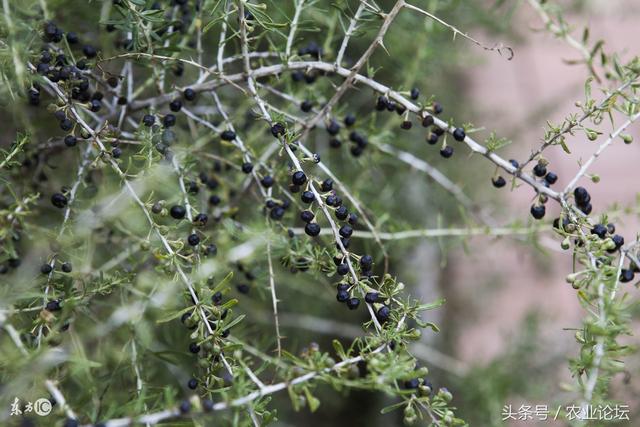
Before 2014, Gao was still a veterinarian, often going to farmers' homes to treat poultry and livestock. Some people's families were extremely poor, relying only on growing a few dozen mu of grain as their source of income, and still depending on the weather. In a year of drought or flood, their income would be very small, and there was no income channel that could truly support the family. He saw all of this. It was in 2014 that he was elected village Party secretary, and he resolved to lead the people quickly onto the road to prosperity.
Because at that time the county proposed the industrial layout of "goji berries in the north of the county, apples in the south of the county, and grass, livestock, and miscellaneous grains across the county," and Ningxia was also a neighboring area, he resolved to go there to investigate the goji berry industry. Through research he found that the area grew large quantities of red goji berries, and the income from one mu of red goji berries could reach several thousand or even over ten thousand yuan. He thought this was a very good idea. Just as he was becoming excited, a casual remark from someone around him changed his resolve. A villager said that red goji berries sell for 30-40 yuan, but black goji berries are far more expensive than that, even several times higher.
He took that remark to heart at the time. After returning home, he began searching online for information related to black goji berries and found that black goji berries are expensive not only because their calcium, iron, and nicotinic acid content is higher than that of red goji berries, but also because their rich black fruit pigment (natural anthocyanins) is something red goji berries do not have, with content even exceeding that of blueberries. This greatly boosted his confidence. He continued looking up black goji berry growing methods, prices, yield and income, and found that if calculated at 200-300 yuan per jin, with one mu reaching 60 jin during the production period, then the income would be considerable.
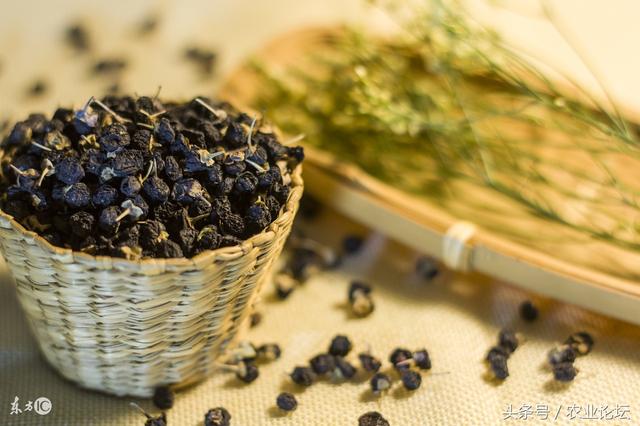
So he went to Ningxia again to reserve black goji berry seedlings, preparing to trial-plant them in his own field. More than 30 mu of black goji berries were planted in the field, and he carefully tended them every day. After some time, they finally bore fruit. He picked part of them for local fellow villagers to taste and led them to visit and learn in his goji berry orchard. He also noticed the role of publicity and gave part to friends in the county town, letting them spread the word about the benefits of black goji berries. Because the black goji berry growing results were good, the local township government actively helped him transfer land to expand the planting scale and also set up a specialized cooperative. By 2016, 500 mu of black goji berries had been planted, and by 2017 they had all borne fruit.
Seeing that black goji berries had begun to take shape, he also designed packaging and registered a trademark, planning to use e-commerce to expand sales channels. At the same time, he would also lead the people to join the cooperative, striving to make the village's black goji berry planting reach about 2,000 mu, so that the people could become prosperous relying on this "black gold."
Black goji berry growing techniques
1. Seed collection and storage
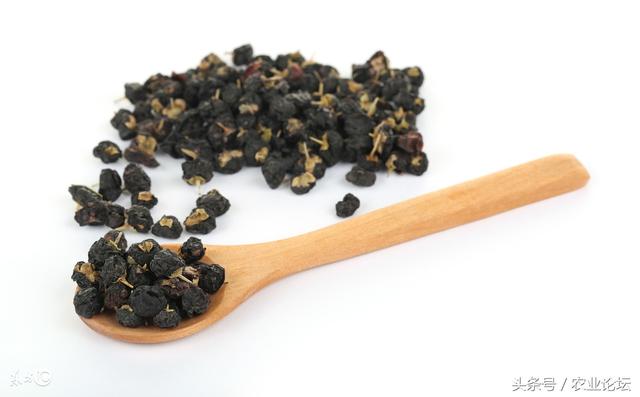
In the Qinghai region, the mature fruit-picking period for organic black goji berries is August-September. When the fruit turns deep purple and the berries are plump, they can be picked. If not picked in time, the fruit will naturally dry on the branch and will not fall off. Fruit after September is not suitable as seed fruit, because the growth period is insufficient and the seeds have not fully developed. When collecting seeds, put the berries into clean water, soak them, then use a pulping machine to break the berries, wash away the pulp adhering to the seeds, remove impurities, filter out the seeds, dry them, select the best ones, and store them in a breathable woven bag. It is best to sow the seeds in the same year.
2. Raising seedlings: There are three methods of raising seedlings: seed propagation, cuttings, and root suckers.
Seedlings can be raised in spring and autumn. The nursery site should be chosen in a place with flat terrain, good drainage, irrigation conditions, convenient transportation, and deep sandy loam soil as the seedling-raising site. Cuttings can also be done before spring sprouting and in autumn. Select one-year-old vigorous shoots or thick branches with plump buds from superior individual plants, cut them into 18-20 cm long cuttings, insert the cuttings diagonally into the prepared seedbed, press them firmly and tamp them down. Be careful to water frequently to keep the soil moist; the general survival rate is about 85%. In addition, organic black goji berries have a well-developed root system and strong root-suckering ability. By cutting off the main root, many new seedlings can sprout around the main root, and new seedlings can be cultivated after tillering.
3. Planting density
After research, the most reasonable planting density for organic black goji berries is 440-700 plants per mu. They can be reasonably planted at a row spacing of 1.5 (or 1.2) m and a plant spacing of 1 (or 0.8) m, which neither affects the growth of organic black goji berries and fruit picking nor wastes land resources.
4. Field management
Throughout the year, combine weeding with timely loosening of the soil, and water appropriately according to the land conditions. Apply sufficient base fertilizer every year in March, and carry out scientific topdressing in June and at the end of August. In the early stage, mainly use nitrogen fertilizer; in the later stage, apply more phosphorus fertilizer and potassium fertilizer.
5. Shaping and pruning:
Organic black goji berries bear fruit in three years and enter the full fruiting period in five years. Their shaping must be completed within the first three years after planting.
6. Harvesting and processing:
The harvesting of organic black goji berries should be between Grain in Ear and the Autumn Equinox. Pick ripe fruit in time, dry them in the shade or in the sun. Be careful not to rub them with your hands or expose them to the blazing sun, so as not to affect quality. During the dog days of summer when there is a lot of rain, they can be dried with warm fire.