Cherry tomatoes producing few fruits? Get the growing details right, and small tomatoes will hang all over the branches
Anyone who has grown cherry tomatoes or seen them at a pick-your-own vegetable farm will truly be amazed. Cherry tomatoes have such strong fruiting ability that, if grown well, a single plant can bear four to five hundred fruits. So many people think about growing a few at home, but the harvest always ends up being not that plentiful. Their growing method is still different from that of growing large tomatoes.
1. Variety selection
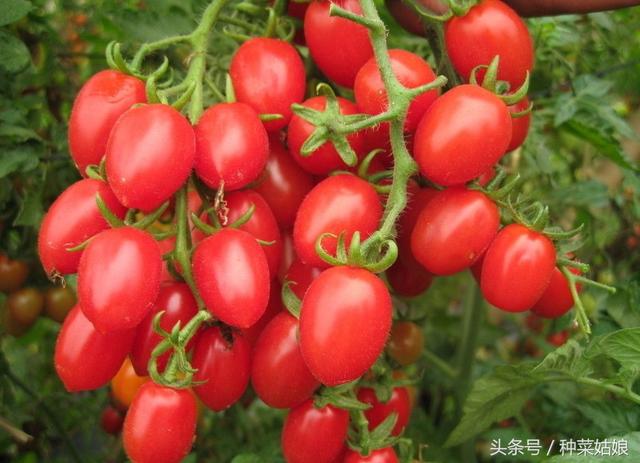
Cherry tomatoes themselves have very strong growth vigor and fruiting ability, a long growth cycle, and high yield. The ones we grow more of are Shengnvguo, Qianxi, Cupid, Venus, and others. These cherry tomatoes can each set thirty to forty fruits per truss, and with sufficient nutrients, the plants grow indefinitely. When buying seeds for these cherry tomatoes, be sure to go to a reputable supplier, and absolutely do not buy fake seeds.
2. Land preparation and fertilization
Cherry tomatoes have a strong root system that spreads widely, and they grow better on loose, fertile, well-aerated sandy loam, so choosing the right land is very important when growing cherry tomatoes. Before transplanting, plow the land at least twice and apply sufficient base fertilizer: per mu, apply 3 tonnes of decomposed manure, 200 jin of cake fertilizer, 100 jin of compound fertilizer, and 40 jin of superphosphate. When growing tomatoes, you must apply calcium fertilizer, so the tomato plants grow vigorously and are especially less prone to fruit cracking.
3. Routine management
Raising seedlings: For solanaceous vegetables, whether in commercial production or home growing, seedlings are raised first and then transplanted. In production, seedling trays are used for raising seedlings; at home, disposable paper cups are the simplest way to raise seedlings. The tomato seedling stage is generally about 35 days, so you can determine the sowing time according to the transplanting time. Before sowing tomatoes, it is best to soak the seeds to promote germination, that is, soak the seeds in clean water for 6-8 hours, then wrap them in gauze. We place them in the greenhouse to promote germination, where the temperature is just right, and they can be sown as soon as they show white.
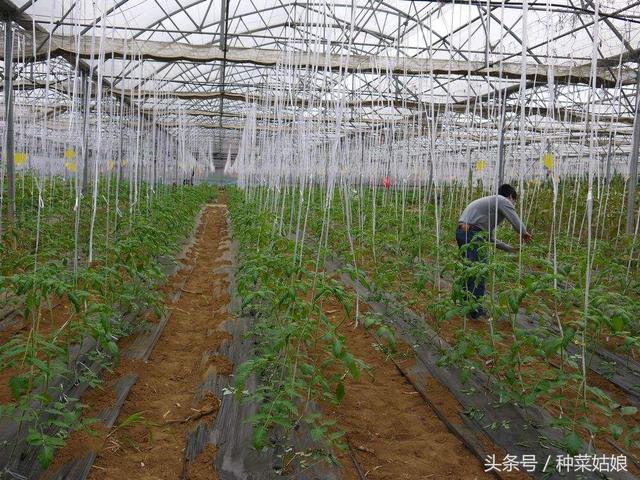
Transplanting: Cherry tomatoes can be grown in solar greenhouses for early spring, late autumn, or a large overwintering crop; in arched sheds, the early spring crop is generally grown, with transplanting at the end of March and the beginning of April; for open-field cherry tomato growing, here we transplant at the end of April.
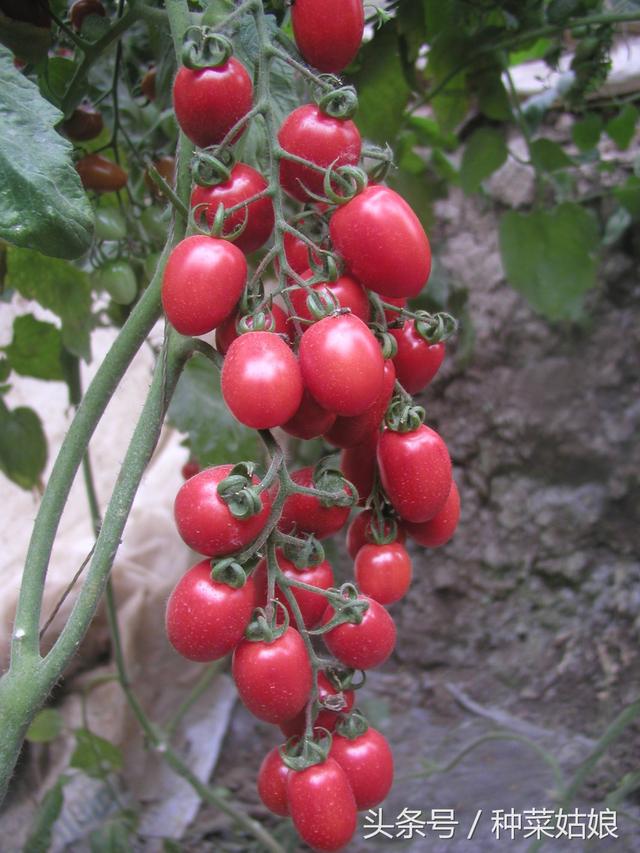
Cherry tomatoes are planted at 1800 plants per mu. In production, they are cultivated in wide and narrow rows of 90 cm and 70 cm, with a plant spacing of 30 cm. After transplanting, water with the transplanting water, and until the first truss sets fruit, do not water if the soil is not especially dry. For solanaceous vegetables, be sure to prevent excessive vegetative growth during the fruiting period; only with slightly weaker early growth can they set more fruit. After the first truss has set fruit steadily, keep the soil at a moisture level of alternating dry and wet. You can apply fertilizer about once every 10 days, applying 20 kg of decomposed cake fertilizer and 10 kg of nitrogen-phosphorus-potassium compound fertilizer per mu.
Pruning and removing side shoots: Cherry tomatoes need to be trained on strings or supported with stakes, using single-stem pruning. Do not pinch the main stem, and pinch side shoots after leaving two leaves. When the tomatoes begin to turn red, start removing the old and diseased leaves at the bottom to help with light penetration and ventilation. Whichever truss the fruits are harvested up to, remove the old leaves from the bottom up to the position of that truss.
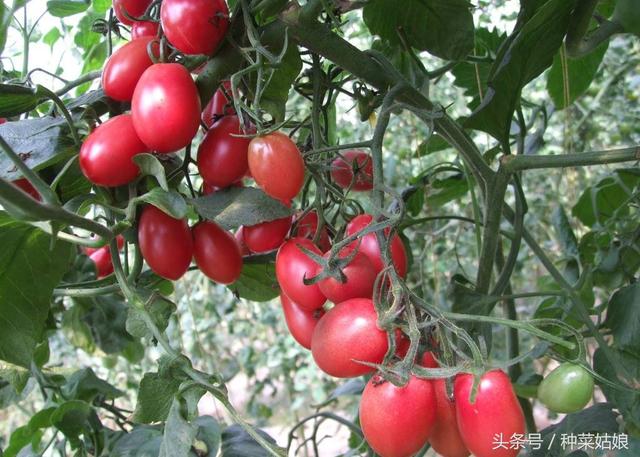
Hand pollination: Cherry tomatoes themselves have very strong fruiting ability. If grown in open fields, no pollination is needed. If in a greenhouse, bumblebee pollination or manual flower spraying can be used as a supplement.
When growing cherry tomatoes, we must buy seeds from a reputable supplier. This is the foundation for good growth and abundant fruiting. Then, cherry tomatoes have relatively high soil requirements and grow better in sandy loam. I think many people can probably grow tomatoes, and by correcting some of the details according to what is said above, they can grow cherry tomatoes like others do, with a single plant bearing four to five hundred fruits.