Planting ryegrass in rural areas next year: how promising is the profit potential for forage grass?
Ryegrass is an important forage grass in the south. Compared with some other forage grasses, ryegrass is better suited to the warm, humid climate of the south. With the development of the southern breeding industry, the planting area of ryegrass has also been continuously expanding, but generally speaking it is mostly planted by farmers themselves for their own livestock. So, will planting ryegrass make money next year? What are the prospects and benefits of planting ryegrass? If you plant it next year, what techniques are needed?
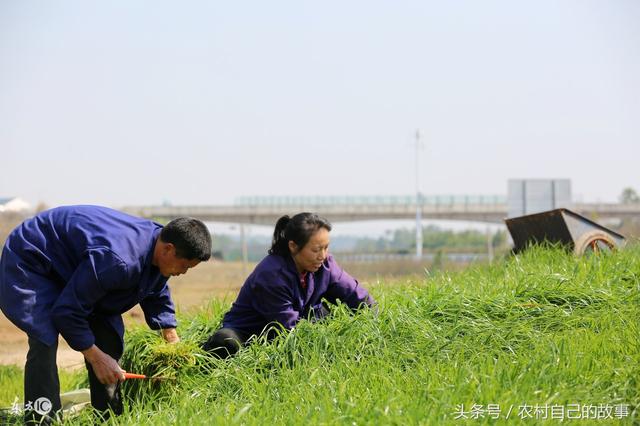
Will planting ryegrass make money next year?
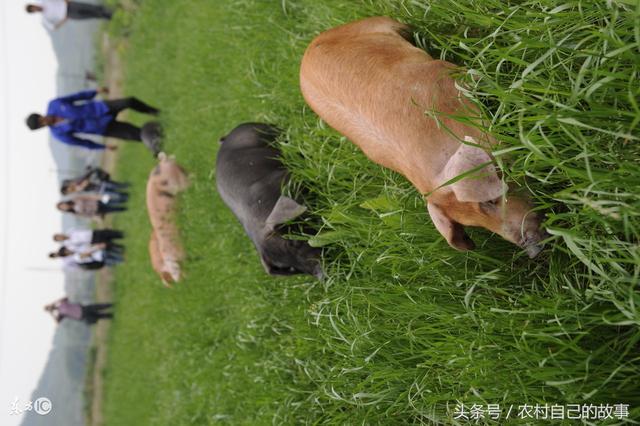
Ryegrass is a grass family plant. It grows luxuriantly in spring and autumn. Its grass quality is tender and juicy, with good palatability, and it is good feed for cattle, sheep, rabbits, pigs, chickens, geese, and fish. The grass supply period is from October to May of the following year, and it cannot grow in summer. Ryegrass characteristics: plants of the genus Lolium in the grass family Poaceae, about 10 species, including forage grasses and pasture grasses of the temperate regions of Eurasia as well as some poisonous weeds. It is an important component of the grass seeds harvested from pastures and grasslands. In China's south, where the breeding industry is developing, planting ryegrass is a very good choice.
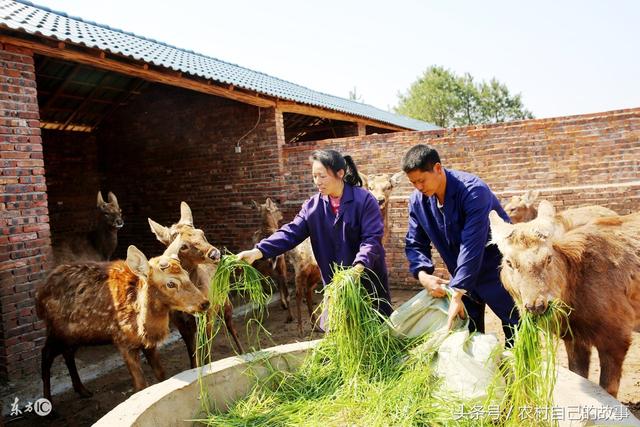
What are the benefits of planting ryegrass next year?
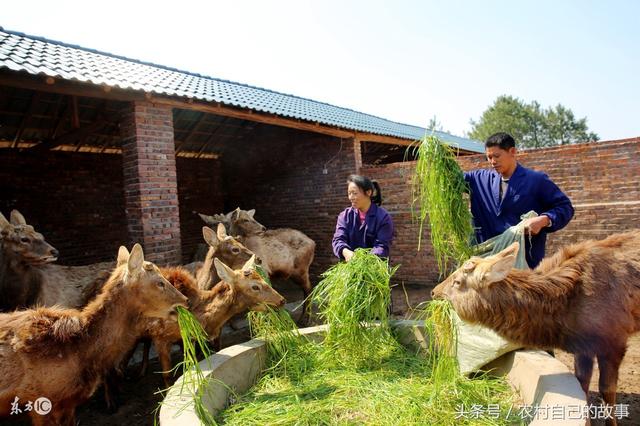
Ryegrass planting methods and suitable cutting periods: for green feeding, the booting stage or heading stage; for making hay or silage, the full flowering stage; grazing should be carried out when the plant height is 25-30 cm. For harvesting and utilization, the first cutting is done 1.5 months after sowing, when the grass height is 40-50 cm. After that, cut once every 20-30 days. Each time, leave a stubble of 5-6 cm to facilitate regrowth. The cut green grass can be used directly to feed livestock and poultry (cattle, sheep, rabbits, pigs, ducks, geese, chickens) and fish. Unused fresh grass can be ensiled, or made into dried grass powder for use. Ryegrass planting methods: within a growth period of 4-5 months, it can be cut 4-5 times, and each mu can produce more than 10,000 kg of fresh grass, supporting 150 geese or 10 sheep.
What techniques are needed for planting ryegrass?
1. Land preparation and fertilization: perennial ryegrass seeds are small, the seedlings are slender, and their ability to push through the soil is weak. The planting land should be deep-plowed and loosened with harrowing, soil clods crushed, the ground leveled, and water stored to preserve soil moisture, so that the soil is loose on top and firm below, creating good soil conditions for seed emergence. Combined with plowing, apply sufficient base fertilizer according to soil fertility. Generally, apply 1000-1500 kg of organic fertilizer per mu, or 25-30 kg of compound chemical fertilizer.
2. Seeds and sowing: for seed fields, sow seeds of national standard grade I; for grass harvesting fields, sowing seeds of national standard grades I-III is acceptable. Whether self-produced or purchased, seeds must be tested for quality before sowing, their grade determined, and the actual sowing rate calculated. Sowing can be done in spring, summer, or autumn, and can be determined according to specific local conditions. Generally, for seed harvesting, sowing can be done in autumn, making it convenient to plow and plant other crops after harvesting the seed the following year. Seed fields use single sowing; grass harvesting fields can use single sowing or mixed sowing. For row spacing in drilling, seed fields should be wider at 35-40 cm, and grass harvesting fields should be narrower at 20-30 cm. When broadcasting, the seeds should fall evenly. The soil covering should be uniform in depth to avoid affecting emergence. For seed harvesting, sow 0.75-1.0 kg per mu; for grass harvesting, sow 1.0-1.25 kg per mu. When mixed sowing with white clover, red clover, and bird's-foot trefoil, the mixing ratio depends on the purpose of grassland use. For grazing-based grassland, perennial ryegrass accounts for 50-60%. For cutting-based grassland, perennial ryegrass should account for 60-70%. Sowing depth is 2-3 cm.
3. Field management: if it rains after sowing and before emergence, a hardened layer forms on the soil surface. Attention should be paid to breaking this hardened layer in time to facilitate emergence and ensure full stands. During the seedling stage, weeds should be removed in time, and attention should be paid to preventing and controlling insect pests. Because the root system is well developed, there are many tillers, and regrowth is fast, nitrogen fertilizer should be applied in time after each cutting, 5-10 kg per mu. If the soil is acidic, phosphate fertilizer can be added at 10-15 kg per mu.
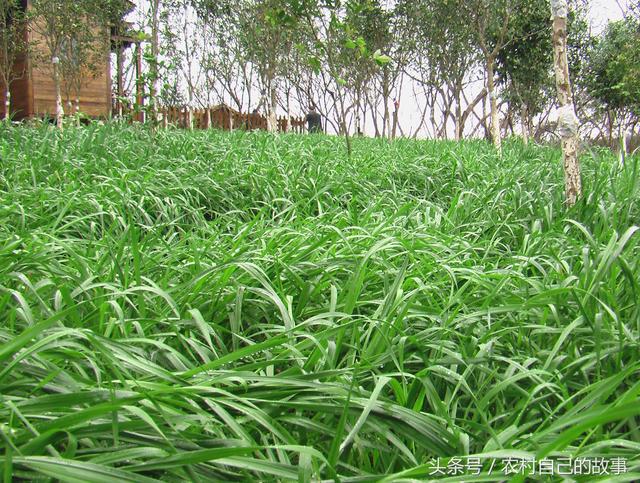
4. Harvest and utilization: for grass harvesting, it is best to do it from the heading stage to the milk-ripe stage; grazing is best done when the plant height is 15-20 cm. Whether grazing or cutting, the stubble height must not be lower than 7 cm. Too high wastes forage grass, and too low affects forage grass regrowth. When perennial ryegrass grows too fast in mixed-sowing grassland and suppresses the growth of legume forage, it can be suppressed by cutting or grazing to protect the normal growth of legume forage. Because perennial ryegrass heads unevenly, seeds mature at different times, and it sheds easily on its own, it should be harvested in time when 70% of the seed heads in the whole field turn yellow-white, then transported for drying, threshing, and storage. To extend the service life of the grassland, special attention should be paid in management to timely and appropriate irrigation and fertilization.
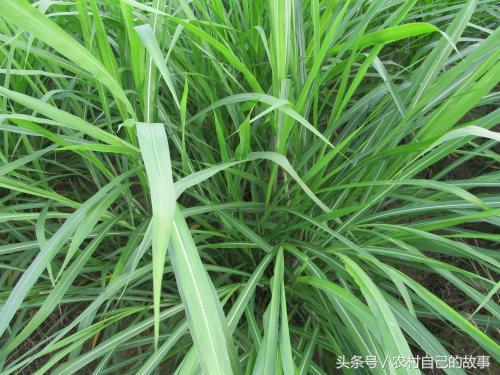
For farmers developing livestock production, planting ryegrass themselves can save costs on the one hand, and on the other hand also realizes the combination of planting and breeding. It is a highly commendable mode of agricultural development. Compared with pure planting and pure breeding, the combination of planting and breeding is more ecological and environmentally friendly, and it is also a mode that conforms to national development requirements.