Planting and Fertilizer-Water Management Methods for Tomato Trees in the North
Planting Methods for Tomato Trees in the North
1. Timely sowing: For winter organic tomatoes, the seedling age should be about 45 days. If you plan to transplant around November 1, then sow around September 15.
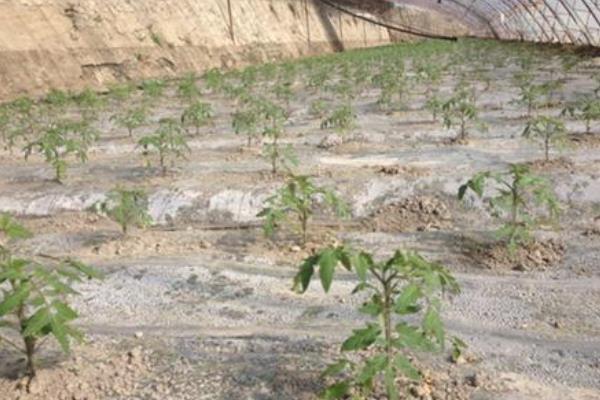
2. Timely temporary planting: When the seedlings have 4 true leaves, carry out temporary planting, with a plant-to-row spacing of 10×10 cm or 15×15 cm. After the plants are established, fertilize and water promptly to promote strong root and seedling growth.
3. Preparation of the transplanting area. Plow and sun the soil for organic tomatoes in good time to ensure the soil is loose, which helps rooting. Apply sufficient base fertilizer. For organic tomatoes, pig and cattle manure, plant ash, and phosphorus-potassium fertilizer are mainly used. Tomatoes have a relatively high demand for potassium fertilizer. Generally, apply 10000 kg of pig manure, 20 kg of phosphate fertilizer, and 10 kg of potassium fertilizer per mu as base fertilizer.
4. Use hormones to preserve flowers and fruits. To ensure early maturity of organic tomatoes, aim for early fruit setting. If fruit setting occurs under low temperature (below 15°C) or insufficient light, whenever hormones are used to preserve flowers and fruits, fertilizer and water must be sufficient; otherwise deformed fruits are likely to appear.
5. Timely topping. In winter, temperatures are low and organic tomato plants grow relatively slowly, so appropriate close planting should be used. A plant-to-row spacing of 24×66 cm and about 3600 plants per mu is suitable. Leave 3 fruit trusses per plant and then top. Generally, use double-stem pruning: leave 3 fruit trusses on the main stem and 2 fruit trusses on the side stem. Leave 2 leaves above the fruit truss, then remove the terminal bud. Other pruning and bud removal should be done conventionally.
Fertilizer and Water Management for Growing Tomato Trees in the North
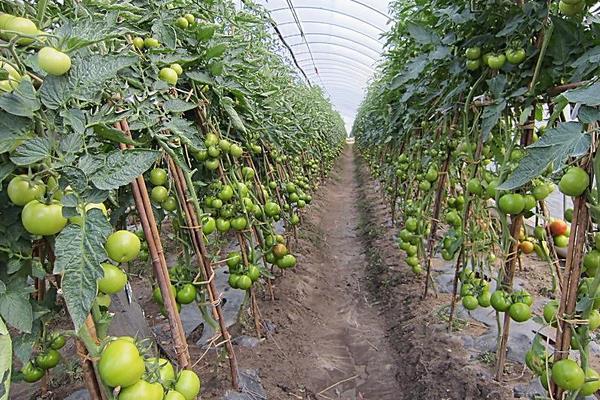
1. Formula fertilization. For low-trellis cultivation with 2-3 fruit trusses retained, topdress once when each fruit truss is the size of a ping-pong ball. For high-trellis cultivation with many fruit trusses retained, topdress once when the first, third, fifth, and seventh fruit trusses are each the size of a ping-pong ball. Combined with watering, apply 1000 kg of decomposed manure, or 50 kg of decomposed cake fertilizer, or 100 kg of plant ash, or 25 kg of potassium sulfate, or 25 kg of calcium magnesium phosphate fertilizer per mu each time. It is best to use the above fertilizers alternately. Use a 0.2% potassium dihydrogen phosphate and 0.3% urea solution, and a 3-5% calcium chloride solution, sprayed on the leaves once every 10-15 days. For protected cultivation, apply carbon dioxide gas fertilizer at a concentration of 800-1200 milliliters per cubic meter.
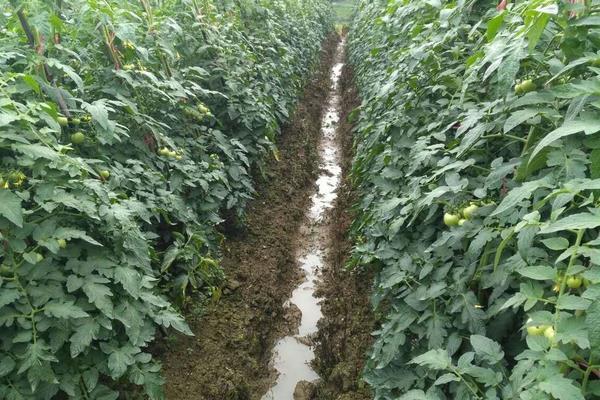
2. Water management. Water thoroughly at transplanting, and cultivate and loosen the soil frequently. Water once 5-7 days later to help the seedlings recover, then cultivate continuously 2-3 times. According to the variety, seedling age, soil texture, soil moisture, and seedling growth, carry out appropriate seedling hardening. For self-topping early-maturing varieties, older seedlings, aged seedlings, dry soil, and sandy soil, the seedling hardening period should be short, ending when the first fruit truss is the size of a pea. Conversely, it should be longer, ending when the first fruit truss is the size of a ping-pong ball.
Although tomato trees can be grown in the north, planting in the north generally allows them to survive and grow well. However, if tomato trees are to survive the northern winter, they must overwinter in a greenhouse, with temperature, humidity, and light well regulated inside. Otherwise, it is very difficult for them to survive.