Detailed Explanation of Efficient Bagging Techniques and Methods for Grape Cultivation
Grape is one of the oldest fruit trees in the world, widely cultivated around the globe. In recent years, with the rise of the wine market, the grape planting area has been continuously expanding, and strict requirements have also been placed on grape quality. In the process of grape cultivation, in order to produce pollution-free green fruit, bagging is a very important step, as it can reduce pest and disease damage during the fruit growth period, reduce sunburn and bird damage, reduce pollution from pesticides and dust, and thereby improve economic benefits. So, how do you bag grapes in cultivation? The efficient bagging techniques for grape cultivation are introduced below.
I. Correctly Choose Paper Bags
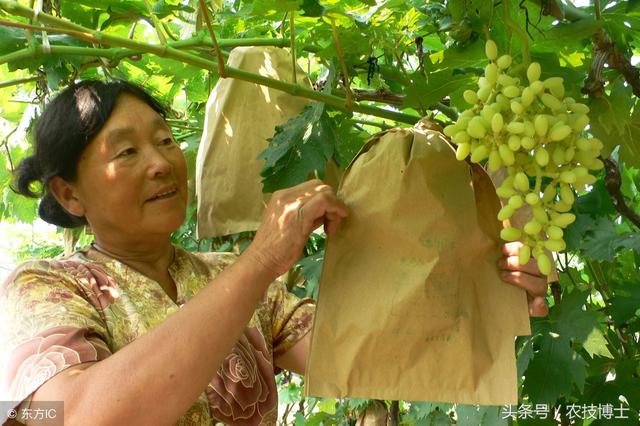
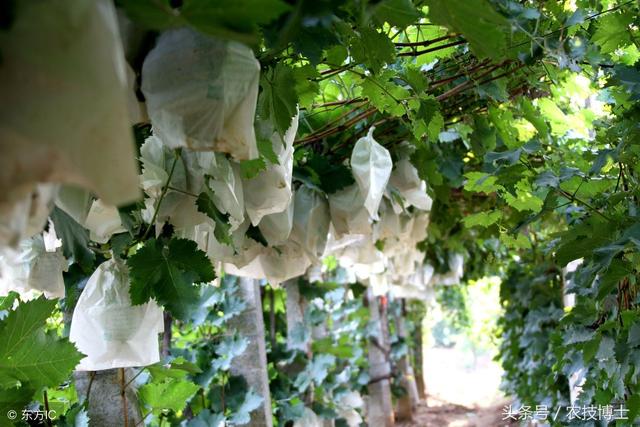
In production, many fruit growers choose fruit bags made from ordinary decorative paper, newspaper, etc. to save expenses. Such fruit bags have poor hydrophobicity and poor tensile strength, with a high breakage rate; because the paper has not undergone disinfection or antibacterial treatment, dominant bacteria and pests easily form inside the bag, thereby aggravating the occurrence of fruit diseases; the improvement in the appearance quality of fruit using these paper bags is not obvious, and some may even cause contamination, affecting appearance quality. The choice of fruit bags should be based on the influence of the micro-environment on the formation of fruit appearance and internal quality, and bags with strong wind and rain resistance, good air permeability, high light transmittance, high hydrophobicity, and antibacterial properties should be selected according to the variety. For example, green and white varieties emphasize antibacterial properties and smooth fruit surface, and the requirements for color spectrum are not so strict; while colored varieties have certain requirements for the light transmittance and color spectrum of the fruit bag. In addition, fruit bags should be selected according to the cluster shape and size of the variety.
II. Do a Good Job in Management Before Bagging
1. Fertilize according to the soil:Before bud break, mainly use quick-acting nitrogen, generally applying 30 kg of urea per mu; before flowering, topdress with appropriate phosphate fertilizer, applying 30 kg of diammonium phosphate per mu; 10 days after flowering, apply 45% compound fertilizer, 0.25 kg per plant. In addition to some routine fertilization, bagged plants must also be given additional calcium fertilizer. Besides applying calcium fertilizer when applying base fertilizer, from after flower drop to before bagging, spray 3 to 4 times with 800-1000 times dilution of ammonium calcium and amino acid calcium.
2. Irrigate at the right time:Before bagging, the orchard must be thoroughly irrigated once. Bagging can begin once the ground is dry, which can significantly reduce or even avoid sunburn after bagging. Orchards with the conditions should preferably implement micro-irrigation, which can not only alleviate the contradiction of water resource scarcity, but also supply water evenly and maintain good soil structure.
3. Sterilize before bagging:Before bagging, spray a fungicide once according to local disease conditions and medication experience. Use 70% thiophanate-methyl at 800 times plus 40% Wenjianjun at 800 times to carefully and thoroughly spray the entire tree. Bagging can begin after the solution dries. If rain occurs during the bagging period, a fungicide should be reapplied after the rain. Note to choose water-soluble fungicides, not emulsions, otherwise spots are likely to remain on the fruit surface.
4. Control yield:For varieties such as "Red Globe", "Manicure Finger", and "Ruby Seedless" that have entered the full production period, the yield in the Central Plains region should be controlled at 1000-1500 kg/mu. The "Kyoho" series and European-American hybrid varieties can have a slightly higher yield, but generally not more than 1800 kg/mu.
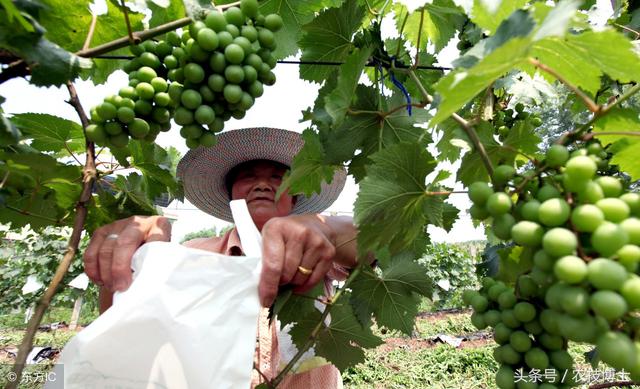
5. Cluster trimming and fruit thinning:In order to improve grape quality, stabilize tree vigor, reasonably adjust the load, and make the fruit clusters neat and attractive in appearance, fruit clusters should be selected and retained according to tree vigor, variety, management level, cluster type and size, and yield requirements. Before flowering, remove excess clusters; weak shoots should not retain fruit, and moderate or strong fruiting shoots should retain one cluster. The total number of retained clusters should be 10-15% more than the expected yield. The retained clusters should be trimmed before flowering to ensure uniform cluster shape, reasonable distribution, and attractive appearance. For each cluster, from top to bottom, remove one branch every two branches, retaining 10-15 branches per cluster. Before bagging, the clusters must be organized, removing small berries, diseased berries, deformed berries, and berries protruding inward or outward. Fruit clusters borne by strong trees with a reasonable tree structure should be selected and bagged only after fruit thinning and cluster trimming, which is conducive to producing high-quality fruit.
III. Bag at the Right Time
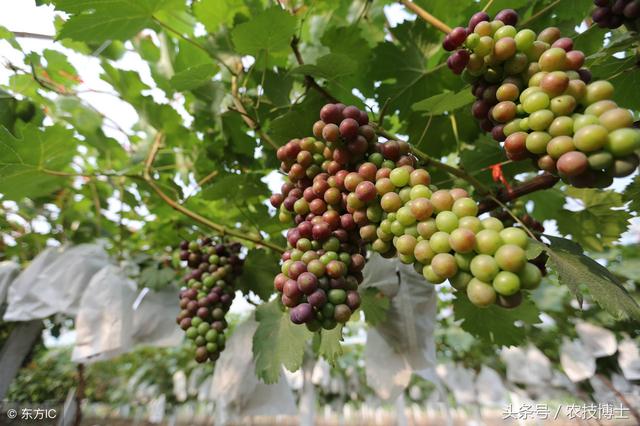
The timing of bagging also directly affects the bagging effect. Bagging too early is not conducive to fruit thinning, and bagging too late allows diseases to infect the clusters. The best time for bagging in the Central Plains region is about 10-15 days after flower drop, or when the berries grow to the size of soybean grains. If bagging is too late, after mid-June the clusters are susceptible to infection by pathogens, especially white rot, anthracnose, sour rot, gray mold, etc. After continuous rainy days followed by sudden clear weather, do not bag immediately, because it will aggravate sunburn. Wait one or two days until the fruit has slightly adapted to the high-temperature environment before bagging. Bagging is best done before 10 a.m. or after 4 p.m., which can reduce sunburn. If dipping in fungicide or fruit elongation agent, clusters dipped that day should be bagged completely that same day. In the Central Plains region, bagging should be completed before June 10.
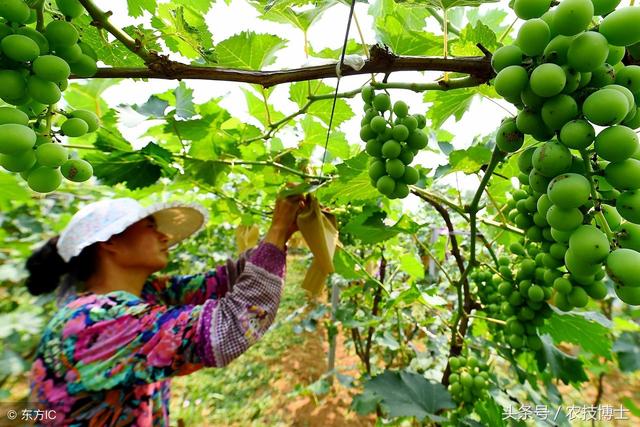
The correct bagging method is to use the right hand to open the bag mouth, making the fruit bag puff up completely, use the left hand to support the bottom of the bag, make the ventilation and drainage openings on both sides of the bag bottom open, let the bag body expand, pull the bag up from below, place the fruit stem at the cut opening at the top of the bag, and position the cluster in the center of the bag. Then tie the bag mouth tightly with wire to prevent rainwater from flowing in. Be careful not to grab the cluster or berries with your hands, let the cluster sit naturally in the center of the bag. After bagging, gently place the fruit bag under a leaf and cover it with the leaf to prevent sunburn. It is also worth noting that if the bagged fruit has no leaf shade, an additional paper cone should be placed over the cluster on the west or south side of the grapevine to reduce sunburn. If high-temperature weather (above 38°C) occurs after bagging, the bottom opening of the bag should be opened for ventilation to lower the temperature inside the bag. Bagging work should preferably be completed within 7-10 days.
IV. Management After Bagging
1. Do a good job in summer pruning:During the growing season, tie vines and pinch tips promptly. Improve ventilation and light conditions, and prevent strong winds from breaking new shoots. On each fruiting shoot, leave 10 leaves above the inflorescence and pinch the tip. On fruiting shoots, all secondary shoots below the cluster should be removed entirely; secondary shoots above the cluster should retain one or two leaves and be repeatedly pinched. At the top of the fruiting shoot, leave one secondary shoot to extend growth, retaining five leaves and repeatedly pinching. Vegetative shoots generally retain 10 leaves and are pinched, and their secondary shoots retain one or two leaves and are pinched. At the top of vegetative shoots, leave one secondary shoot to extend growth, retaining five leaves and repeatedly pinching.
2. Pest and disease control:After bagging, focus on controlling pests and diseases on new shoots and leaves, with special attention to controlling black pox, downy mildew, white rot, and anthracnose. Within 3-5 days after bagging, spray 80% Bibei at 400 times plus 40% Wenjianjun at 700 times plus 0.5 potassium dihydrogen phosphate to prevent the occurrence of pests and diseases. Frequently check whether fruit bags are damaged or fallen off; if so, replace them or tie them tightly again in time. To control downy mildew, spray protective agents in advance. Bordeaux mixture at 1:0.5:200 times or 1:1:200 times can be selected, sprayed once every 10 days, 3-5 times during the growing season.
If downy mildew damage is found, 90% fosetyl-aluminum wettable powder at 500 times can be selected for one spray, then 25% metalaxyl at 600 times for spraying. Note that the same pesticide can be used twice consecutively, but preferably not more than three times, otherwise resistance will develop. July to September is the peak period of disease occurrence. Use 50% dimethomorph wettable powder (trade names Keke, Qisen Shuangwei) 1 bag mixed with 15 kg of water for spraying; after 3 hours the white fungal bodies can be seen turning black, and after 8 hours the lesions heal. When grapes are approaching maturity, their sweetness attracts insects, especially hornets, scarab beetles, and other insects that damage grape berries. Control method: hang wide-mouth bottles or discarded water buckets filled with pesticide solution on the grape trellis to trap and kill adults. Generally, a mixture of brown sugar, honey, water (ratio 1:1:5) and a small amount of trichlorfon is used as the attractant. When there are many insects and the area is large, broad-spectrum fungicides can be used.
V. Bag Removal and Subsequent Management
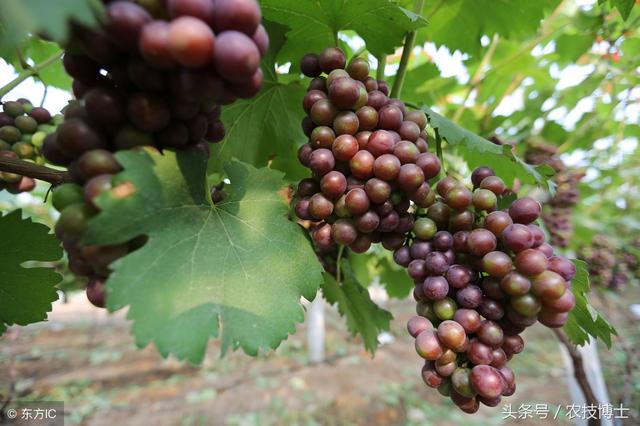
For green grapes, the bags may not be removed. Red, purple-black, and black varieties should have bags removed 10-15 days before harvest. For clusters with good-quality paper bags, strong light transmittance, and berries that color well in the bag, the bags can simply be removed at harvest. To prevent bird and insect damage and air pollution, the fruit bags do not have to be removed all at once; first open the bottom, prop it up, and form an umbrella shape. At harvest, remove them completely, or sell with the bags on. From bag removal to harvest, the main goal is to let the berries color. After removing the bags, remove old leaves, diseased leaves, and residual leaves around the clusters, cut off excess branches and secondary shoots, and remove leaves within 20 cm around the clusters. Based on the sieve-like light shadows under the trellis surface, retain some appropriately to shade the clusters and prevent berry sunburn. At the same time, turn the clusters promptly to ensure light exposure and allow the clusters to color quickly.
[Editor's Conclusion]Doing a good job in bagging for grape cultivation plays an important role in improving the yield and benefits of grape cultivation, and should be given attention. The above has introduced efficient bagging techniques for grape cultivation, hoping it can help everyone!