Grape pest damage should not be overlooked; growers need to master control methods
There are relatively few species of grape pests. Apart from a few pests such as grape bud mite (Colomerus vitis) and green plant bug (Apolygus lucorum) that occur fairly commonly, most grape pests are occasional occurrences. If pest damage occurs in grapes, how should grape growers carry out control? Let's see what Teacher Fu has to say.
Grape bud mite (Colomerus vitis)
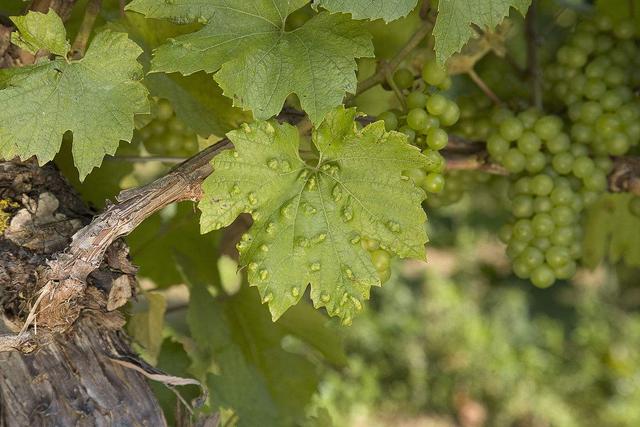
Grape bud mite (Colomerus vitis)
Growers can spray 3-5 degrees Baumé lime sulfur after grape buds break in early spring and before leaf expansion; 0.5% laundry powder can be added to the spray solution to improve the spraying effect. After the grapes leaf out, if infested grape leaves are found, growers should remove them immediately and spray for control. Pesticides for control can use 0.2-0.3 degrees Baumé lime sulfur, or 1.8% abamectin emulsifiable concentrate at 3000-4000 times dilution, or 20% clofentezine suspension concentrate at 1000 times dilution, etc. Do not use dicofol on grapes to control mite pests, because these pesticides contain a certain amount of DDT during production, causing grape DDT residues to exceed the standard.
Grape green plant bug (Apolygus lucorum)
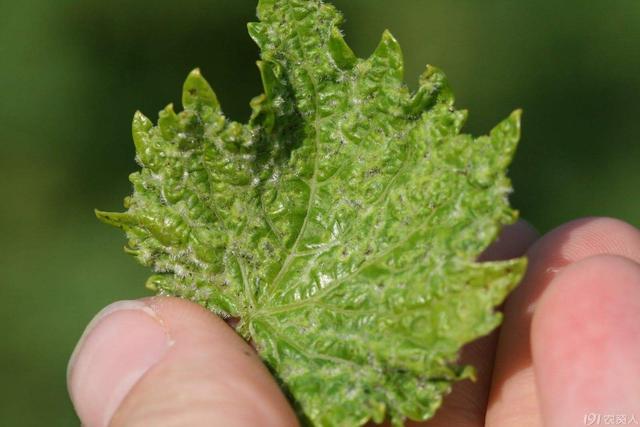
Grape green plant bug (Apolygus lucorum)
Grape growers should scrape off loose bark, clear weeds, dead branches and fallen leaves in winter and early spring, and dispose of them in a concentrated way to kill some overwintering adults. During the grape bud break period, spray pyrethroid pesticides such as deltamethrin and lambda-cyhalothrin at 2000 times dilution, with special attention to early control in newly planted vineyards.
Grape spotted lanternfly (Lycorma delicatula)
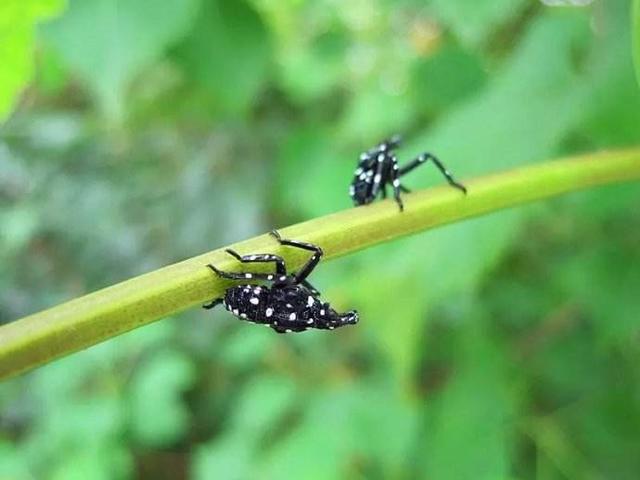
Grape spotted lanternfly (Lycorma delicatula)
Grape growers can, in combination with pruning and management of grape vines, remove egg masses on vines and trellis materials to eliminate overwintering eggs. During the grape growing period, observe the underside of grape leaves promptly; once infested leaves are found, spray fenpropathrin, bifenthrin, beta-cypermethrin, or deltamethrin pesticides at 2000 times dilution. When establishing a vineyard, it should be kept as far as possible from mixed woods such as tree of heaven (Ailanthus altissima) to reduce the number of spotted lanternflies.
Grape whitefly (Trialeurodes vaporariorum)
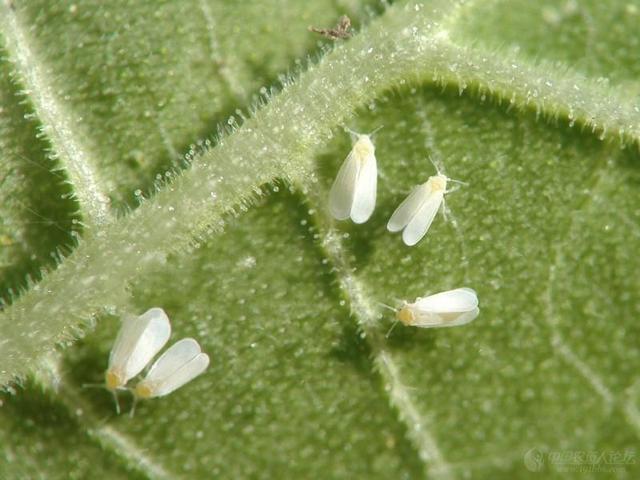
Grape whitefly (Trialeurodes vaporariorum)
Grape growers can use yellow sticky boards for trapping and killing; in greenhouses, Encarsia formosa can be artificially bred and released for biological control. Spray pesticides to kill adults and nymphs; since various stages of the pest are present at the same time, continuous application is necessary. Commonly used pesticides include 10% deltamethrin emulsifiable concentrate at 1000 times dilution, 25% fenvalerate emulsifiable concentrate at 1000 times dilution, 2.5% bifenthrin emulsifiable concentrate at 3000 times dilution, 2.5% lambda-cyhalothrin emulsifiable concentrate at 5000 times dilution, and 20% fenpropathrin emulsifiable concentrate at 2000 times dilution.
Grape growers, the above are the control methods for various grape pests. Grape growers, have you learned them? If you have any questions, you can leave a message in the comments.