Planting Panax notoginseng has its own rules; behind earning ten thousand yuan per mu in three years lie the bitter hardships of notoginseng growers
Wenshan in Yunnan is famous for Panax notoginseng; the unique geographical location of Wenshan Prefecture and its conditions of light, heat, water, soil and air provide a warm bed for the growth of Panax notoginseng, and for this reason Wenshan has been named "the hometown of Panax notoginseng" by the state.
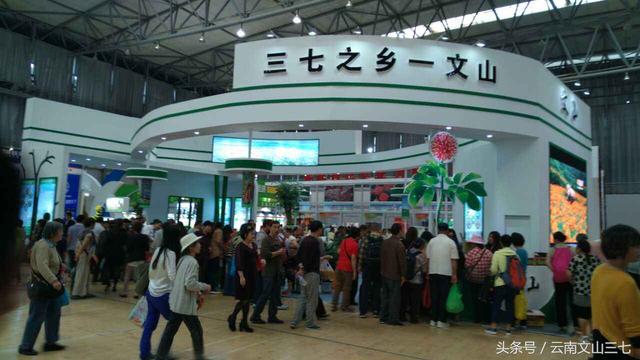
Panax notoginseng specialty store
In Wenshan, besides growing chilies, flue-cured tobacco and vegetables, many farmers are keen to devote themselves to growing Panax notoginseng, and plenty of them have been at it for decades.
How does Panax notoginseng earn 10000 yuan per mu? Let me first take you through the entire growing process of Panax notoginseng.
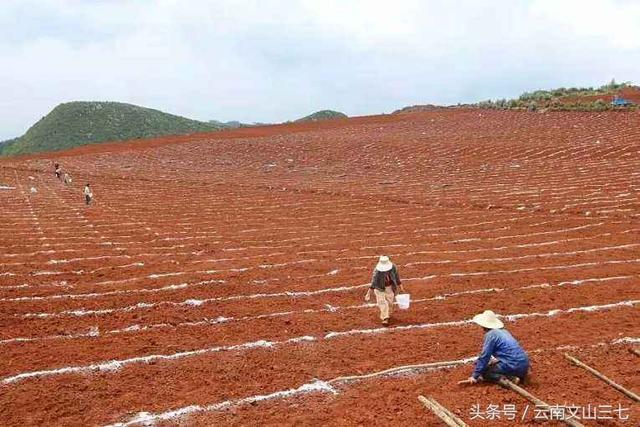
Choosing and preparing the land
First is choosing and preparing the land. Choosing a Panax notoginseng plot is very particular: you must choose a plot that has never grown solanaceous crops or Panax notoginseng before, and one that previously grew corn, peanuts or beans is best. A gentle slope of 5-10 degrees is optimal. After the plot is chosen, it must lie fallow for more than half a year, during which it must be plowed and sun-exposed several times, cleared of debris and disinfected for later use.
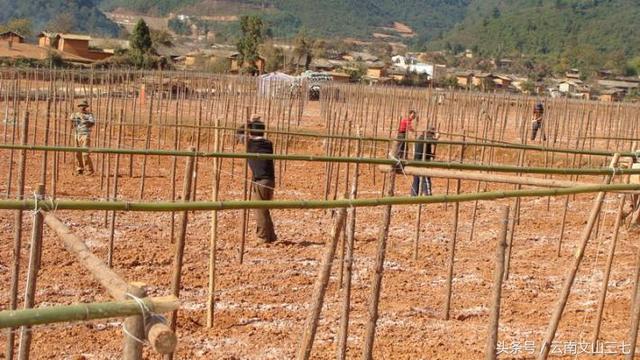
Building sheds and fences
Next, the plot must be fitted with sheds and fences. Panax notoginseng is a shade-loving plant, and the shade shed built for it should let in three parts light and block seven parts. The surroundings must also be fully enclosed to avoid direct sunlight, and it can regulate the air and humidity inside the garden and prevent livestock from breaking in.
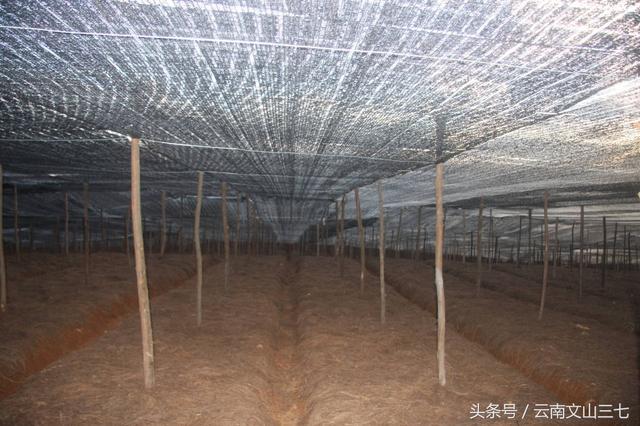
Applying base fertilizer and making beds
Then the plot must be made into beds and given base fertilizer. The base fertilizer is mainly farmyard manure and turf ash mixed with calcium magnesium phosphate. The plot must be made into beds to facilitate drainage and routine maintenance.
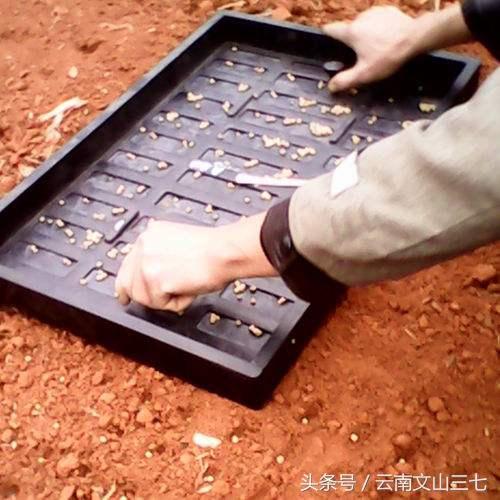
Sowing
Then comes the sowing of "red seeds".Generally in the first year it is all close planting, and after sowing, the bed surface must be covered with a layer of pine needles (pine tree leaves) to keep the bed surface moist and warm.
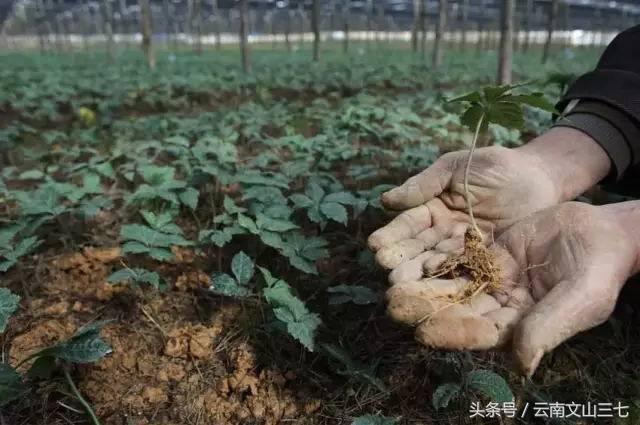
Transplanting "seedlings"
After one year of growing, the "seedlings" must be transplanted。Transplantingis to expand the growing area of each individual Panax notoginseng plant, so that the Panax notoginseng can grow larger and have greater medicinal value.During the transplanting process, both the ground and the "seedlings" must be disinfected.
Field management
Field management of Panax notoginseng.Weeds among Panax notoginseng cannot be killed with herbicide, only removed by hand. In dry seasons it must be watered often to keep the ground moist. In the rainy season, attention must be paid to drainage and waterlogging prevention, to avoid water accumulation causing disease to the roots of Panax notoginseng. There is also bud picking, flower thinning and fruit protection, as well as cleaning inside the garden, and so on.
Panax notoginseng affected by disease
Pest and disease control.Because Panax notoginseng is grown for a relatively long period, pest and disease control is also of paramount importance, for example black spot disease and root rot.
Harvesting Panax notoginseng
Only at the end comes the harvest.After at least three years of growing, and after countless hardships, can it be harvested. At this point the yield is inseparable from all the work done before.
Now let me do the accounts for everyone:
At current market prices: unified goods are 130-150 yuan per jin (unified goods means that after Panax notoginseng is harvested, it is only simply trimmed and sun-dried, and sold together regardless of size). The cost of one mu of Panax notoginseng over three years is at least 25000 yuan, not counting one's own labor costs, and the average yield per mu is 200-250 jin (not counting risk or natural disasters; if disease strikes, the yield will halve or even be a total loss).
Calculated at the most ideal price and yield: 250 jin x 150 yuan - 25000 cost = 12500 yuan.
Calculated this way, it is only a gross profit of 12000500 yuan per mu, and you should know this was under last year's big price rise, and it is the output of three years; a couple managing a Panax notoginseng plot for three years, still without estimating pest and disease problems or the risk of price drops, do you still think it makes money? Panax notoginseng is not easy to grow, so cherish every bite you eat.