Will dental implants affect MRI scans? A dental implant specialist answers for you
As the first choice for oral dental restoration, dental implants are most concerned about and cared about in terms of price, and when many friends come to consult about dental implant-related questions, the one they ask about more often is:Will dental implants affect MRI?


What is MRI?
Magnetic resonance imaging (MRI) uses a pulsed magnetic field for imaging and records the distribution of hydrogen atom-containing components (such as water) within tissues. It can be used for all parts of the human body.
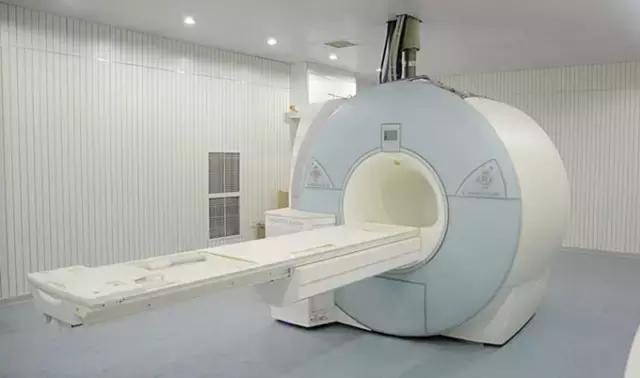
Because there is an extremely strong magnetic field in the MRI machine and the MRI examination room, people with cardiac pacemakers, those with metal clips or metal stents left after vascular surgery, or those who have undergone other metal stent surgeries are absolutely forbidden to undergo MRI examination. Otherwise, the metal may be attracted and moved by the strong magnetic field, which may produce serious consequences.
Do dental implants affect MRI?

According to the dental implant specialists at Huabei Dental, the material used in some regular internationally advanced artificial implants is pure titanium. Titanium is currently known as the metal with the best biocompatibility, and it is a non-magnetic metal. It will not be magnetized even in a very large magnetic field, so the implant itself has no effect at all on MRI examination.
What may affect MRI examination is the crown on top of the implant. At present, the commonly used dental implant denture restoration materials fall into two major categories: all-ceramic and metal-ceramic.All-ceramic materials are non-metallic and have no effect at all on MRI examination, while metal-ceramic teeth, depending on the type of metal, interfere to varying degrees with MRI imaging.
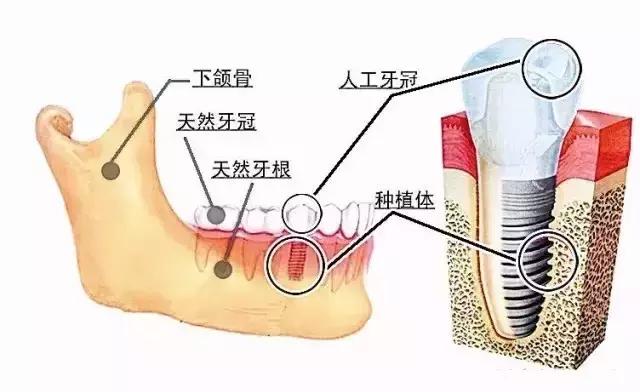
Therefore, the editor suggests that for fixed oral restoration,all-ceramic restoration should be given priority. When metal crowns and bridges have to be used, give priority to precious metals (gold alloy, gold-platinum alloy, etc.), followed by pure titanium metal, then titanium-containing alloy, and finally cobalt-chromium and nickel-chromium alloys. Even if precious metals are chosen, single individual crowns are still preferable, avoiding multi-unit crown and bridge restorations.
If there is a non-precious metal fixed restoration in the mouth
during MRI examination,must it be removed first?
Dental implant specialists at Huabei Dental point out that actually it is not necessarily so. This is because these dental alloys will not harm the body during MRI examination; they only interfere with imaging within a certain range around the restoration.
For metal restorations in the mouth, during MRI examination the effect involves areas such as the brain, neck, face, and inner ear. If the area we need to examine is not near the metal restoration, it will not affect the diagnosis of the disease, and there is no need to remove the restoration.
Properly choose the restoration material according to your own situation: dental implant doctors generally recommend all-ceramic and precious metals first, because such materials are both aesthetically pleasing and almost never cause adverse reactions such as allergies in the human body, and they will not interfere with diagnosis during MRI examination. Of course, if ordinary metals are chosen, they do not necessarily have to be removed during MRI examination; the radiologist will make a judgment based on the situation.
Friendly reminder
Friends who need dental implants should not worry too much. Dental implant specialists say that dental implants are a very safe, comfortable, aesthetically pleasing, and practical tooth restoration technology, and the greatest achievement in the field of oral restoration. They can restore most chewing function, have better retention, and are more comfortable, and are hailed as "humanity's third set of teeth." Here, Huabei Dental sincerely hopes that dental implant technology can benefit more people with missing teeth, and not let missing teeth harm your health.