Which profitable Chinese medicinal herbs are suitable for growing in mountainous areas?
1. Astragalus complanatus
It is suitable for growing in dry areas with little rain. Its main root is deep and long, and it can be grown on barren hills, wasteland, gobi, sandy shores, grasslands and poor soil, while land with good water sources and rich soil grows poorly. Its advantage lies in fast growth; it can be planted in three seasons of the year as long as the ground is not frozen. In dry areas, if planted in the dry season, it sprouts and grows within a few days. It has strong stress resistance. One planting continues to grow for 5 years, and during these 5 years the average annual yield of medicinal material is 120 kg per mu. The whole plant of Astragalus complanatus is rich in crude protein and vitamins. If used as forage for grazing, it can make cattle and sheep plump and strong without feeding them grain, and they do not get sick, which will also promote the development of animal husbandry. If planted on plains, use 1.5 kg of seed per mu; if spread in mountainous areas, use 2 kg; if used as forage grass, use 3 kg. Adapt to local conditions to achieve high yield and high efficiency.
2. Large-leaf dandelion
Large-leaf dandelion has strong stress resistance. Clinically it has a certain effect on treating acute mastitis, lymphadenitis, acute conjunctivitis, cold and fever, gastritis, hepatitis, etc. It sells very well on Chinese medicinal herb markets across the country and is an indispensable commonly used Chinese medicinal herb. Large-leaf dandelion is not only a Chinese medicinal herb, but also a tasty vegetable when young and tender. If planted in protected cultivation, it can be cut 6-7 times a year, yielding 7200-8000 kg of fresh vegetables per mu, and can continue for 3-4 years. This is a good project. If the market develops, it can actively supply specialty vegetables, letting people enjoy a treat and, while eating the vegetable, clear heat and detoxify and improve health.
3. Trichosanthes
Trichosanthes can grow all over the country, on mountain slopes, hills, grasslands, sloping land, in front of and behind houses and on idle land, and has strong adaptability. In recent years, the price of Trichosanthes has kept rising and it is in short supply, and the price of Trichosanthes seeds has also kept rising. The reason is that in the past Trichosanthes seeds were always used medicinally and few people ate them, but now Trichosanthes seeds are used in greatly increased amounts as a health product, and the seeds are also processed in the northern provinces and eaten as melon seeds. When the fruit turns yellow in late autumn, harvest it; the yield is 150-200 kg per mu. On the market, whole Trichosanthes is 14-15 yuan/kg, Trichosanthes seeds are 28-30 yuan/kg, and Trichosanthes peel is 12-13 yuan/kg, so the economic benefit is quite good.
4. Astragalus
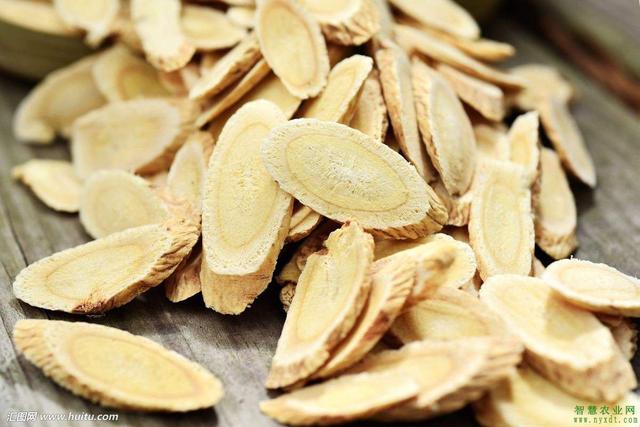
Astragalus prefers sandy or semi-sandy soil, with clay soil being second best. When the seedlings are small they need more water; after growing larger they need less water, and it is a semi-dryland crop. It is a light-loving plant and grows poorly in dark, damp conditions. On Chinese medicinal herb markets across the country it is a commonly used bulk variety, and a small amount is exported to South Korea, Japan and Southeast Asia. Astragalus is not only a Chinese medicinal herb for curing diseases and saving lives, but also one of the emerging health products. In the southwest and Inner Mongolia regions it is harvested after 2 years of growth; in other regions it can be harvested after 1 or 2 years. The yield is 300-400 kg per mu, and the market price is 8-13 yuan/kg according to different specifications. If used to green barren hills, use 2 kg of seed per mu, and it can continue to develop over the long term.
5. Cassia seed
Cassia seed does not occupy good land, is drought-tolerant and waterlogging-tolerant, has strong adaptability, and has no pests or diseases. In places with few people and much land it is a good project, using 3-4 kg of seed per mu, with little investment. The yield is 250-300 kg per mu. On the medicinal materials market the price fluctuates at 4-5 yuan/kg, and it sells well on the market.
6. Coix seed
Coix seed can be planted all over the country. It likes humid, warm, sunny conditions and can grow in ordinary soil. On Chinese medicinal herb markets across the country it is a commonly used variety, and it also occupies a place on the grain market. It is not only used as both medicine and food, but is also made into health products and distributed to markets in various places, with very ideal results. Plant in spring, using 5 kg of seed per mu, with mid-early maturing varieties being better; late-maturing varieties have low yields and are no longer used. The planting method is the same as planting peanuts. If planting on a large area, machine sowing can be used, the same as planting field corn. It is easy to plant, easy to sprout, and easy to manage, with almost no pests or diseases. After maturing in late autumn, thresh the seeds and dry them, and they are the finished product. The yield is 350-400 kg per mu, and after processing it is 6-7 yuan/kg.
7. Dry Pinellia
Dry Pinellia likes shaded conditions. It is planted from October to December and from February to May, and is harvested in the same year. Experiments show that the ordinary yield of dry Pinellia is 150-200 kg per mu, and the benefit per mu is more than 6000 yuan. If the soil is fertile and management is proper, the yield per mu can reach more than 250 kg, and the benefit is even more considerable. In the field, dry Pinellia can be intercropped with tall-stemmed crops such as corn and sorghum, and can also be interplanted under fruit tree orchards; three-dimensional planting gives even better benefits. The price of its seedlings rises and falls sharply, and dry Pinellia requires a relatively large amount of seed per mu, about 35-50 kg. The high planting cost puts it beyond the reach of medicinal herb farmers, and generally they do not dare to develop it on a large scale, only planting it on a small scale and expanding after cultivating their own seedlings.
8. Anemarrhena
Anemarrhena can grow on barren hills, barren slopes, wilderness, grasslands, sandy shores, among forests, hills and sloping land. It adapts to many kinds of conditions and is full of vitality, making it a good variety for closing hillsides for reforestation and for controlling soil erosion. Anemarrhena has a well-developed root system and a very strong ability to fix sand and soil, and it is also drought-resistant, waterlogging-resistant and cold-resistant. Domesticated Anemarrhena is harvested once every 2-3 years, with a yield of 400-700 kg per mu and a price of 10-15 yuan/kg, and it is showing an upward trend. Anemarrhena is sown in spring, summer and autumn, mainly in spring, using 3-4 kg of seed per mu, or 4-5 kg for spreading in mountainous areas or among forests.