How do you grow Gynura bicolor? These planting key points you need to master
Uncle Zhang in the village grew quite a lot of Gynura bicolor, which grew very well and had high yields. The young man surnamed Huang in the village saw this and also wanted to grow some, so he went to ask Uncle Zhang about the techniques for growing Gynura bicolor. Uncle Zhang said that Gynura bicolor is also known as Xuepicai, and is also called Liangse Sanqi Cao. Its tender stems and leaves are used for food. Its key cultivation techniques are as follows.
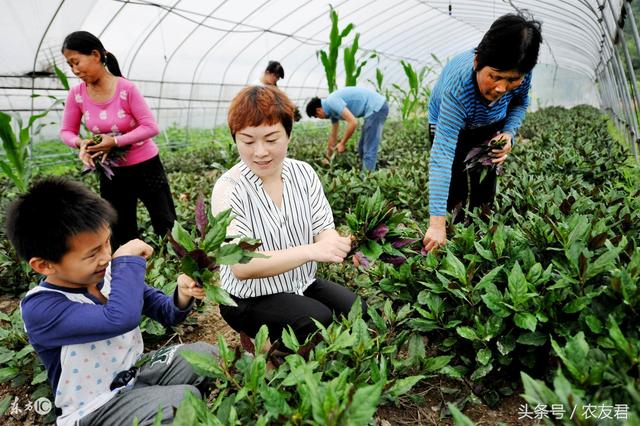
Image and text are unrelated
1. Seedling raising: Because adventitious roots easily form at the nodes of Gynura bicolor, cuttings root very easily, so cutting propagation is mostly used. Cutting seedling raising can be carried out in spring and autumn. Select healthy, disease-free branches and cut them into sections about 6-8 cm long. Remove 1-2 leaves from the lower part, then insert them into a seedbed or nutrient pot. Cover the top with old plastic film or non-woven fabric. Pay attention to shading and moisture retention. During the seedling stage, control the temperature at 20-25°C and keep the seedbed moist. After about 2 weeks, they can survive.
2. Land preparation and field planting: Choose deep, fertile, loose sandy loam soil for fine land preparation. Apply 3000 kg of high-quality farmyard manure and 25 kg of nitrogen-phosphorus-potassium compound fertilizer per mu. Make flat beds 1.2 m wide. On the beds, open holes at a spacing of 30x30 cm, plant the surviving cuttings into the holes, 1 plant per hole, water thoroughly after planting, and after the water seeps down, close the holes.
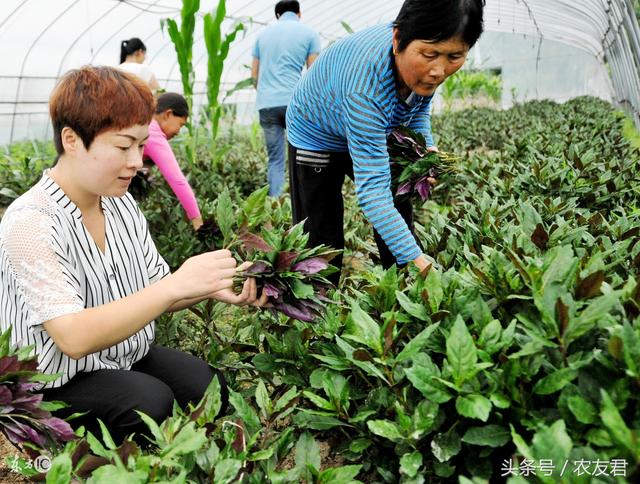
Image and text are unrelated
3. Field management: After the seedlings recover, cultivate and weed in time to promote root development. During the growing period, keep the bed surface moist. Be careful not to let it become too dry or too wet. Gynura bicolor likes warmth and tolerates heat. The suitable growing temperature is 20-25°C. It is not tolerant of low temperatures and can only endure 3-5°C. If frost occurs, it will freeze to death. Therefore, in low-temperature areas, it must be produced in greenhouses in winter. Gynura bicolor has strong growth vigor and a long harvest period. On the basis of applying sufficient base fertilizer, additional fertilizer should also be applied in small amounts multiple times during the harvest period. If virus-diseased plants are found early, they should be pulled out in time to reduce the spread of viral disease.
4. Harvesting: Gynura bicolor can be harvested 20 days after field planting. The harvest standard is generally when the tender shoots are about 10-15 cm long. At the first harvest, leave 2-3 nodes of leaves at the base so that new tender shoots continue to sprout from the leaf axils. At the second harvest, leave 1-2 nodes of leaves at the base. Under suitable environmental conditions, it can be harvested once every 10-15 days. The more times it is harvested, the more vigorous the plant's branching. If it is not harvested in time, it will instead be unfavorable for its growth.
Image and text are unrelated
Rural areas, farmers, agriculture. Follow Nongyoujun, and we will share with you things about rural areas, farmers, and agriculture.