Six key measures for high-yield ginger cultivation; you are welcome to share more growing techniques

Welcome to subscribe to and follow this Toutiao account. We share the latest agricultural planting techniques and agriculture-related information every day. If you have good suggestions or planting techniques you would like to learn about, please leave a comment. We will select some of the issues that everyone cares about most and invite agricultural technology experts to provide professional guidance and share their insights.
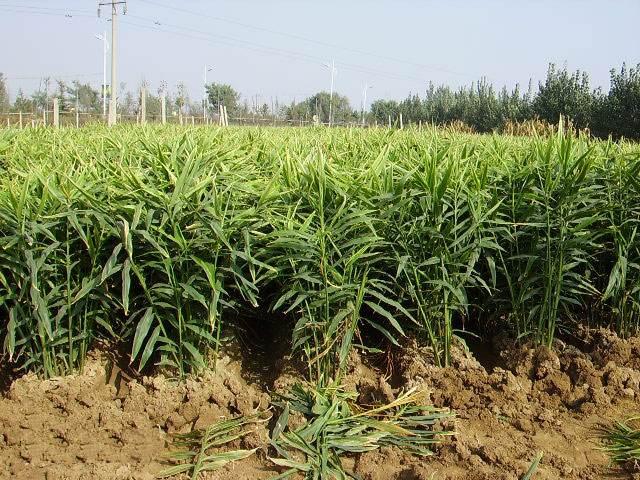
1. Strictly select the site and avoid continuous cropping. When ginger encounters a high-temperature, high-humidity environment, it is prone to rot disease, commonly known as ginger blast. Ginger blast is a bacterial soil-borne disease,and continuous cropping causes severe disease incidence and heavy yield reductions. Because ginger is subject to this devastating disease, it is not suitable for continuous cropping and should be rotated with cruciferous crops, leguminous crops,and others for 3-4 years. For growing ginger, it is best to choose fertile soil with a deep soil layer and plenty of organic matter, such as loam or sandy loam. The field should have convenient drainage and irrigationand should not easily accumulate water.
2. Sow at the right time and plant at a reasonable density. For seed ginger, a row spacing of 40 cm and a plant spacing of 20-25 cm is best.
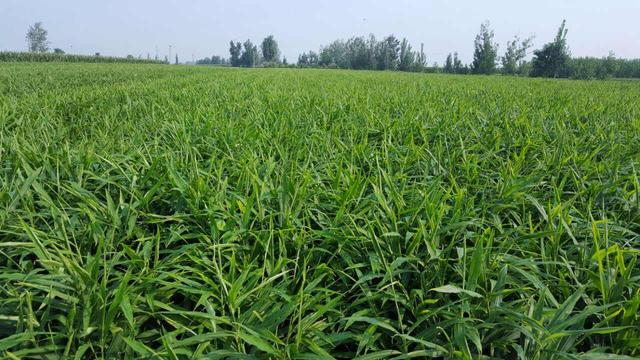
3. Apply sufficient base fertilizer and topdress scientifically. Determine the fertilization method and amount based on soil testing and formula fertilization: before plowing, collect soil samples according to scientific sampling methods and test them, and use the detected pHvalue, organic matter, N, P, and K content to convert the carbon-to-nitrogen ratio, and formulate a fertilization plan based on the nutrient requirements of large ginger. Ginger is relatively tolerant of fertilizer and has a long growth period,so the principle of applying sufficient base fertilizer and topdressing multiple times should be adopted. Apply 1500-2500 kg of pig and cattle manure and 10-15 kg of potassium fertilizer per mu as base fertilizer. Apply frequently and lightly, from diluteto concentrated. When the seedlings are 15 cm tall, apply a light fertilizer once, and when the seedlings are 30 cm tall, apply a second topdressing. After that, apply topdressing about once every 20 days. Combined with spraying plant electronicfertilizer, the fertilizer effect can be brought into extraordinary play. Using the high-energy electrons emitted by the plant's own photosynthesis and the principle of plant electronic polarity induction, it improves cell division, molecularsynthesis, and the level of nutrient matching and digestion, accelerates the frequency of metabolism, and activates the plant nutrient transport system to produce a fertilizer effect beyond ordinary fertilization. During the seedling stage, nitrogen fertilizer should be the main type, and during the rhizome enlargementstage, more potassium fertilizer should be applied.
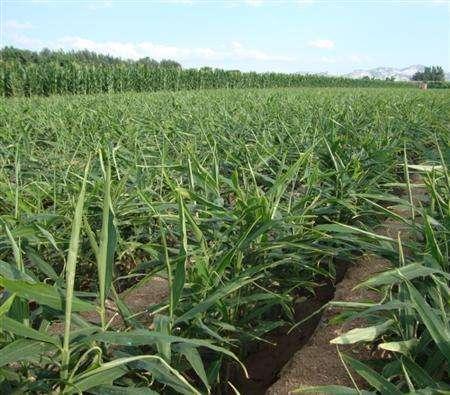
4. When sowing, use plastic film mulching or build small arched sheds to ensure the temperature needed for growth.
5. Provide shade and lower the temperature to promote growth. Ginger is a shade-tolerant plant, and scattered light is beneficial for growth. Begin shading in late May, with seven parts shade and three parts sun. Begin removing the net in late September,removing one panel every other panel, and then remove another panel every 15 days.
6. Hill up soil in time and prevent both drought and waterlogging. It is not tolerant of drought, nor of waterlogging. During the growing period, it is best to keep the soil moist. During the high-temperature period in summer, water in time to lower the temperature,and watering in the early morning and evening is best. On rainy days, drain standing water from the field in time to reduce the occurrence of ginger blast. The growth of ginger rhizomes requires a dark, moist environment,and as the rhizomes grow upward, they easily emerge from the ground, the skin becomes thicker, and quality deteriorates. Therefore, soil should be hilled up. Generally, hill up about three times. Thedepth of hilling can be determined according to the cultivation purpose. If harvesting young ginger, hill up deeper to increase the length of the young ginger and make the texture crisp and tender. If harvesting mature ginger, hill up shallowerto make the rhizomes thick and sturdy.