Peony Planting Methods and Propagation Techniques Explained in Detail
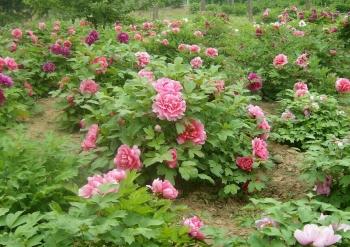
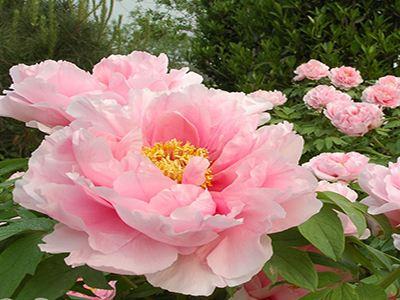
The peony is a precious woody ornamental flower unique to China, with large, brightly colored blooms that are elegant and graceful, rich and dignified, with a strong fragrance, and a great variety of cultivars. It has long been known by the laudatory titles "national beauty and heavenly fragrance" and "king of flowers." So how are peonies grown? What good methods are there for growing them? And what points need attention when growing peonies? Please read on with your questions as I go through them below!

How to grow peonies (basic knowledge):
Best propagation time: planting is generally best from late September to early October.
Best growing soil: Peonies require loose, fertile, well-drained neutral soil or sandy soil, and planting in heavy clay soil or in low-temperature spots should be avoided.
Growing humidity requirements: Peonies should not be watered too much, and generally no watering is done in winter. After May the weather gradually gets hotter; if there is drought and the ground is dry, a moderate amount of water may be given, but it is better to keep them on the dry side rather than wet, and water only after the soil has dried.
Best growing temperature: Peonies are cold-hardy and cannot tolerate high temperatures. In East China and the central regions, they can overwinter outdoors; when the temperature reaches 4°C, the flower buds begin to gradually swell. Suitable temperature: 16-20°C; below 16°C they will not bloom. In summer, when temperatures are high, the plant enters a semi-dormant state.
Best growing light: Peonies like sun but do not like being scorched. When planted in the ground, choose a higher, east-facing spot with sun exposure; when grown in pots, place them on a sunny east-facing balcony. If placed on a south balcony or rooftop platform, shade must be provided on the west side.

Points to note when growing peonies:
Applying fertilizer:
(1) When cultivating peonies, the base fertilizer must be sufficient. Base fertilizer can be compost, cake fertilizer or manure.
(2) Generally it is best to fertilize three times a year, that is, half a month before flowering, spray once with a phosphorus-based fertilizer solution plus a flower-stem strengthener.
(3) Half a month after flowering, apply a compound fertilizer once; before winter begins, apply compost once to ensure flowering the following year. Spraying with a high-new lipid film greatly increases the effectiveness of the active ingredients of pesticides.
(4) Nutrients in a pot are limited, so only timely topdressing can ensure the normal growth and development of peonies. Topdressing can begin in the spring of the second year, using water in which sesame, peanut or bean cake has been soaked and fermented. When applying, dilute with water; during the growing season, apply fertilizer solution 1-2 times a week.
Key points for watering:
(1) As the saying goes, "Peonies should be kept dry rather than wet." Peonies have deep, fleshy roots and fear long-term waterlogging, so they should not be watered much in normal times and should be kept appropriately on the dry side.
(2) Because potted peonies have a smaller volume, hold less soil and have limited water-holding capacity, they must be watered in time to maintain the normal water needs of the peony. After potting, water thoroughly once immediately; afterward, whenever the soil becomes dry or wet, water once every 3-4 days, keeping the potting soil moist as appropriate.
(3) If the amount of water is too much and the soil is too wet, it easily causes excessive growth of branches and leaves, and prolonged excessive moisture or waterlogging can also rot the roots. Especially in summer and autumn, the moisture of the potting soil should be controlled even more, and the rule should be not to water until dry. If it is dry in summer, water in the early morning or at night.
(4) In autumn, as long as it is not too dry, there is no need to water. If too wet, the buds grow vigorously and sprout in autumn, and they will not bloom the following spring.
Key points for pruning:
(1) After the peony flowers fade, cut off the spent flowers. To make the crown low and the flowers dense, pruning can be done before July to avoid branches being too dense and affecting flowering; it is best to keep 5-6 main branches per plant.
(2) To improve ventilation and light penetration for peonies and concentrate nutrients, shaping and pruning should also be carried out after leaf fall in autumn and winter. Cut out overly dense branches, such as twin branches, crossing branches, inward-growing branches and diseased or pest-damaged branches, so that the plant keeps a beautiful form.
(3) Pruning of potted peonies can be divided into two kinds: winter pruning and spring-summer pruning. In spring, for potted peonies, select and retain branches and buds, remove excess buds sprouting at the root collar, cut out inward-growing branches, crossing branches and over-vigorous branches, and thin out weak and surplus branches to ensure a beautiful plant shape and good ventilation and light penetration. In summer, spent flowers can be cut off, and after leaf fall in late autumn, diseased and dead branches and leggy branches can be cut off.
Repotting and soil replacement: When potted peonies have grown for three or four years, they need to be moved in autumn into a larger pot with fresh fertile soil or divided and replanted separately.
Key points for propagation:
1. Division. Division propagation of peonies was already widely used in the Ming Dynasty. The specific method is: (1) Dig up the whole large, vigorously growing peony and separate it from where the root system textures join. (2) The number of divisions per plant depends on the size of the original plant; large ones can be divided into more, small ones into fewer. Generally every 3-4 branches make one division, and each should have a relatively complete root system. (3) Then mix a little sulfur powder with mud. Apply and rub it evenly over the wounds on the roots, and they can then be planted separately. (4) The time for division propagation is during the period from the Autumn Equinox to Frost's Descent each year, and it is best done at the proper time. (5) Division cultivation does not seriously affect root growth, and after division planting some new roots and a small number of plant buds can still be produced. (6) The mother plant used for peony division is generally a robust clump. The mother plant used for division propagation should retain as many root suckers as possible, and all roots on the new seedlings should be retained, so that after 5 years of growth more new seedlings can be divided out.
2. Grafting. Grafting propagation of peonies is divided into two types according to the rootstock used: one is wild peony; the other is using herbaceous peony roots. The commonly used peony grafting methods mainly include three types: inlay grafting, side grafting and bud grafting.
3. Cuttage. Cuttage propagation is a method of using peony branches, which readily produce adventitious roots, to propagate new plants, and is one of the asexual propagation methods. The method is to first cut off the cuttings from the mother plant, then insert them into soil or another medium so that they root and become new plants. For peony cuttage propagation, choose current-year soil sprout branches sent out from the peony roots, or, when shaping and pruning peonies, choose branches with solid stems, plump terminal buds and no pests or diseases as cuttings, 10-18 cm long. Peony roots are fleshy roots, like dryness and high conditions, avoid moisture, and tolerate drought. Therefore, the nursery bed should be chosen in a ventilated, sunny place and built into a raised bed for raising seedlings. When cutting, after finishing one bed, irrigate that bed, watering thoroughly once.
4. Sowing. Sowing propagation is the use of seeds to reproduce offspring or select and breed new varieties, and is a sexual propagation method. Before sowing, the soil must be fairly carefully prepared and disinfected; the land should be deeply plowed and finely worked, with sufficient base fertilizer applied. Then build small beds 70-80 cm wide; either hole sowing or drill sowing is acceptable. Sowing must not be too deep, with 3-4 cm as the limit; after sowing, cover with soil level with the bed surface. Then gently firm the soil and water thoroughly immediately.
5. Layering. The peony layering method is a propagation method based on the principle that branches can produce adventitious roots. The branches are bent down or covered with soil on the plant without being separated from the mother plant, the soil is kept moist, the buried part of the branch roots, and then it is cut off and planted to become a new plant; this is likewise an asexual propagation method for peonies. This method mainly includes the pot-in-pot soil layering method and the double-flat method.
Pest and disease control:
1. Brown spot disease. In this disease, yellow-green spots first appear on the leaf surface, then gradually expand to form brown or black markings. Bordeaux mixture can be sprayed 1-2 times a month, and if the condition is severe, it can be sprayed 3 times. Leaves that are more seriously infected should be cut off and burned to prevent spread.
2. Root rot. Root rot specifically harms the roots of peonies; the symptoms are that the roots turn black and rot, hindering growth, and in severe cases it can cause the death of the whole branch. To prevent this disease, carefully inspect during division planting; if diseased roots are found, they must be cut off and burned, and some sulfur powder should be scattered in the planting hole at planting time.
3. Cottony cushion scale. The common pest is cottony cushion scale, which can be sprayed with a 1500-fold dilution of 40% omethoate emulsifiable concentrate; applying lime sulfur mixture to the lower part of the trunk in winter or early spring also gives fairly good control results.


Tips from growing peonies:
1. Peonies are cold-hardy and cannot tolerate high temperatures. In East China and the central regions, they can overwinter outdoors; when the temperature reaches 4°C, the flower buds begin to gradually swell. In the process of growing peonies, attention should be paid to factors such as temperature, humidity and light. At the same time, attention should be paid to pest and disease damage.
2. Peonies like light and like dry, high conditions, and should be placed in a sunny, ventilated spot with ample light. In summer, with high temperatures and much rain, they should be placed under a cool shed to prevent leaf scorch. In winter they can be moved indoors or the whole pot can be buried in a sunny place, with the surface covered with sawdust, so that they overwinter safely. In March-April of the following year, when the weather turns warm, move them again to a place with ample light.
3. Peonies dislike prolonged rain and excessive moisture and hot, severe summer heat. When encountering long periods of high temperature and high humidity, the leaves will scorch and the roots will rot. During the hottest part of midsummer, potted peonies can be moved under a seedling shed for shade, or gathered and buried in the soil to prevent heat and lower temperature, while keeping drainage and ventilation good.
4. When there is no rain, spray water on the branches and leaves and the surroundings every day to increase air humidity and ensure the water supply during the peony flower bud differentiation period. In the rainy season, pay attention to drainage; on cloudy and rainy days, tip the flower pots over to prevent water accumulating in the pots.