Clever Tricks for Growing Vegetables on the Balcony: Turning Waste into Treasure
In our daily lives we produce a great deal of household waste, part of which is biodegradable and very easy to handle, while a small portion is very hard to get rid of. This is especially true of all those bottles and jars. So how do we deal with these bottles and jars? Below, let's learn how to grow vegetables in discarded plastic bottles.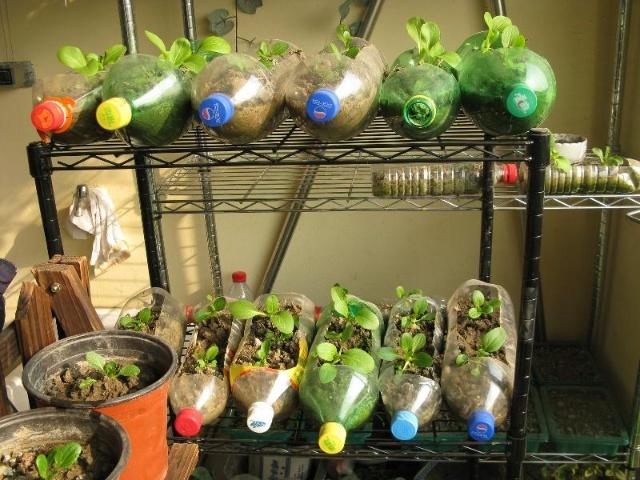
First, sort the discarded bottles from daily life by size into three types: large, medium and small. Use scissors to cut away the front face on one side, keeping only the surrounding sides and the bottom. Then poke a few small air holes in the bottom. Then arrange them in a certain order, or nail them to a piece of wood with nails.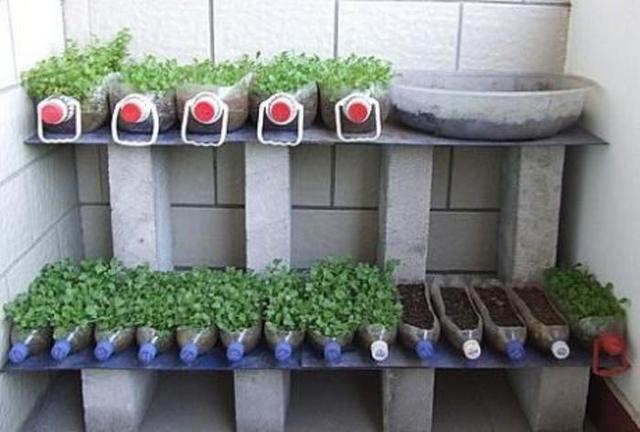
Next comes raising the seedlings. We can choose vegetable varieties that are easy to grow and easy to keep alive, such as green lettuce, red lettuce, bitter chicory and other vegetable varieties. Then sow them into 50-cell or 72-cell seedling trays, cover them with a layer of vermiculite to keep them warm and retain moisture, and then water them thoroughly. After about five days the seeds begin to sprout. After about fifteen days they are ready to be transplanted.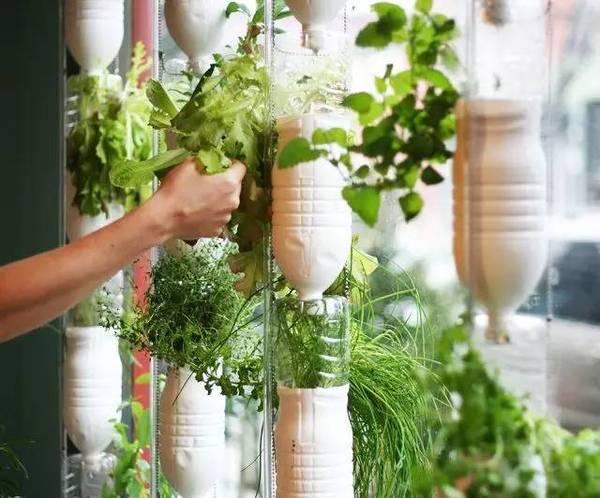
When the lettuce seedlings are ready to be transplanted, fill the prepared bottles with peat soil mixed with organic fertilizer, water thoroughly, and drain off the excess water. Get ready to transplant, following the order of one to two plants per bottle. The burying depth should be just enough to cover the roots firmly and press them down. After planting, add a small amount of water to help the seedlings recover. After about three days the young seedlings begin to put out new roots.
Normally you only need to water a little, and that is enough. After planting, in about thirty days you will have fresh, delicious vegetables to eat.