Detailed Explanation of Key Pruning Techniques for Navel Orange Cultivation
Navel orange trees grow vigorously in their youth stage with strong branching ability. If allowed to grow naturally, they easily form a multi-trunk canopy framework, resulting in a dense canopy, affecting light, weakening tree vigor and shoot growth.
Artificial shaping and pruning can cultivate a good canopy structure, rationally utilize space and light energy, strengthen tree vigor, increase leaf area index, and lay the foundation for high and stable yields.
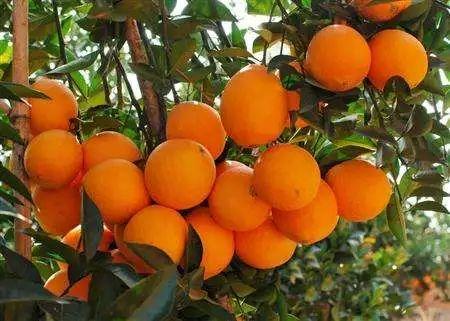
1, Shaping and Pruning of Non-Bearing Young Navel Orange Trees
Winter pruning of navel oranges is carried out about 1 week before spring bud break, and summer pruning is carried out in mid-to-late July before autumn shoots sprout.
① Navel orange trunk determination:For navel orange seedlings that have not yet had their trunks determined or whose branches are too high and stems slender, after planting, cut the trunk at 40 cm to encourage vigorous shoots to sprout within 15 cm below the cut.
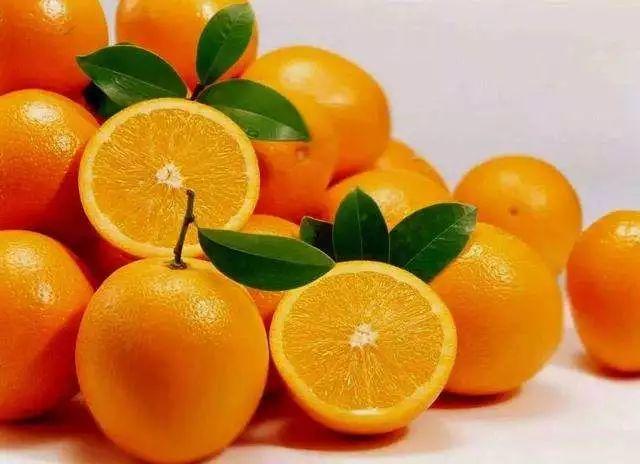
② Selection and retention of main branches for navel orange:Starting from about 25 cm above the navel orange graft union, select 3 vigorous branches with uniform directional distribution and certain spacing between them as main branches for training. At the top of new shoots, select one strong-growing new shoot as the main branch. Thereafter, select side branches with wide opening angles on both sides of each main branch, paying attention to filling spatial positions and preventing excessive density and crowding.
③ Pinching and sprout removal for navel orange:If the growth vigor of the selected main branches of navel orange is unbalanced, it will affect tree shape. When new shoots reach a certain length or summer shoots are too long, pinch them promptly to control extension and promote maturity and thickening. Adventitious buds in improper positions on main branches and trunks and rootstock suckers should be removed promptly.
④ Removal of flower buds from navel orange:Some navel orange varieties produce flower buds in the nursery or after planting, which should be removed promptly to prevent affecting canopy growth.
⑤ Pruning of improperly positioned branches of navel orange:Young navel orange trees have sparse branches and leaves and should not be heavily pruned. However, clustered branches and crossing branches should be pruned to avoid disrupting tree shape.
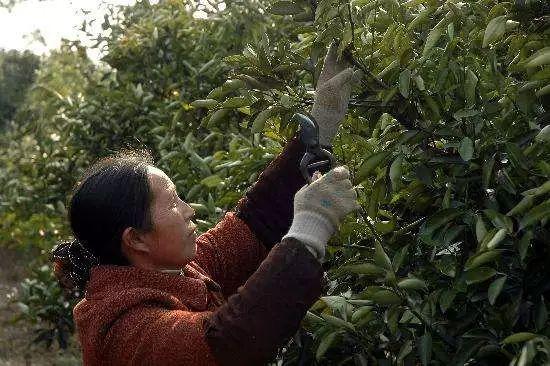
2, Shaping and Pruning of Bearing Navel Orange Trees
Navel oranges begin trial flowering and fruiting 2 to 3 years after planting. Tree nutrients must maintain both fruit growth and canopy growth. In addition to strengthening fertilizer and water management, appropriate pruning is also necessary to achieve a balance between vegetative growth and reproductive growth.
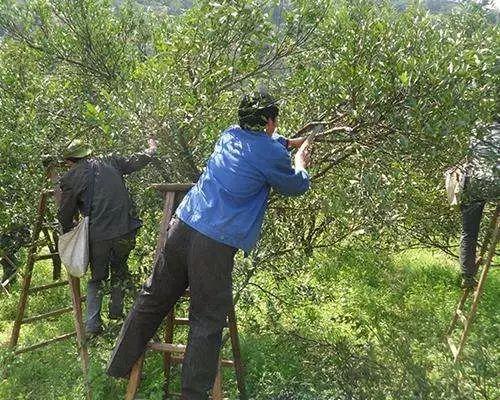
(1) Cultivating three-dimensional fruiting
Based on the characteristics of navel orange branches growing uniformly, main branches having relatively stable insertion angles, and good tree shape, generally retain lower and inner canopy branches. Both the lower part and the inside and outside of the canopy bear fruit. Pruning should be light, maintaining a tree shape that is large at the bottom and small at the top, similar to an obtuse cone.
If the fruiting branches after harvest are vigorous and can still produce good growing shoots and fruiting branches from the base of the fruit stalk the following spring, they should be retained without pruning. If the fruiting branches are slender and weak, they can be pruned from the base.
(2) Branch renewal
Mainly carried out through summer retractive pruning, which can reduce nutrient consumption, resolve the conflict of nutrient competition between fruits and shoots, stimulate autumn shoot growth, and change the proportion of fruiting mother branches.
Taking Guangdong Province as an example, summer pruning is generally carried out after the physiological fruit drop period has passed and before the fruiting mother branches sprout; winter pruning is carried out after fruit harvest and before spring shoot sprouting, combined with orchard cleanup, pruning diseased, pest-damaged, and weak branches.
(3) Pruning of aging trees
For trees that are severely aging or too dense, main branches can be renewed, generally by sawing off at 70 to 100 cm from the base of the main branch and heavily heading back the skeletal branches. For aging trees whose some branches can still bear fruit, heavy heading back is carried out alternately over 2 to 3 years, and excessively dense and weak side branches are thinned out, retaining most of the relatively vigorous branches.
Within the several years of renewal, a certain yield can be maintained each year, new shoots grow better, sunscald is reduced, and high yields are restored more quickly. Renewal is carried out before spring buds sprout. After renewal, sun protection measures should be taken, such as wrapping with rice straw or whitewashing, applying preservatives or grafting wax, and ground mulching. After renewal, large numbers of new shoots often sprout and should be thinned promptly, leaving 2 to 4 evenly distributed new shoots on each main branch to form a new canopy framework.