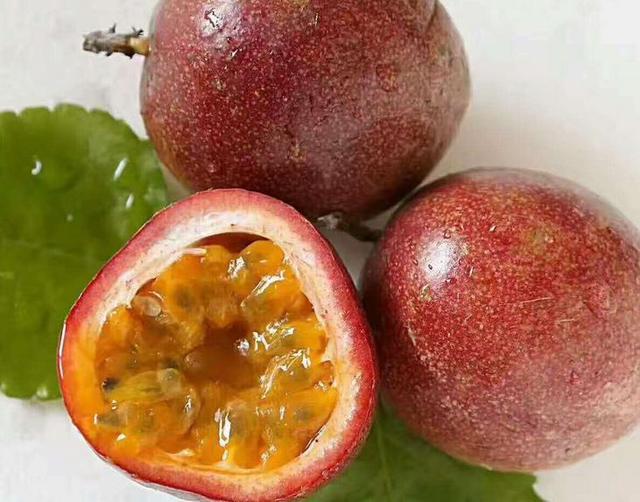
Key Points of Passion Fruit (Passiflora edulis) Cultivation Techniques in Datian County
Passion Fruit (Passiflora edulis) Cultivation Techniques in Datian County
1 Selection of Nursery Site and Cutting Seedlings
For raising seedlings, it is best to choose a plot with high organic matter content, loose soil texture, and convenient management. Seedling raising methods can use seed sowing or cutting propagation. Cutting seedlings can maintain the excellent characteristics of the mother plant, grow uniformly, bear fruit early, produce uniform fruit, give high yields, and have excellent quality. Therefore, the time for using cutting propagation should be after the autumn harvest is completed. For cutting propagation, river sand is best used as the medium, because river sand retains water, is breathable, and contains few bacteria. For the cuttings, it is best to use 1-year-old branches, which give the highest survival rate. Cut the branches into small sections, each with 2 to 3 buds, and cut the lower end into a slanted opening, similar to the cutting method for sweet potato slips in Fujian Province. When inserting into the sand, distinguish the top from the bottom and do not insert them upside down; if conditions permit, rooting powder can be used. Old branches and tender branches are not easy to root. During cutting propagation, drainage should be smooth, and attention should be paid to water management. In winter, pay attention to cold protection for the seedbed. A small plastic arched shed can be built for cold protection and insulation, but attention should be paid to ventilation.
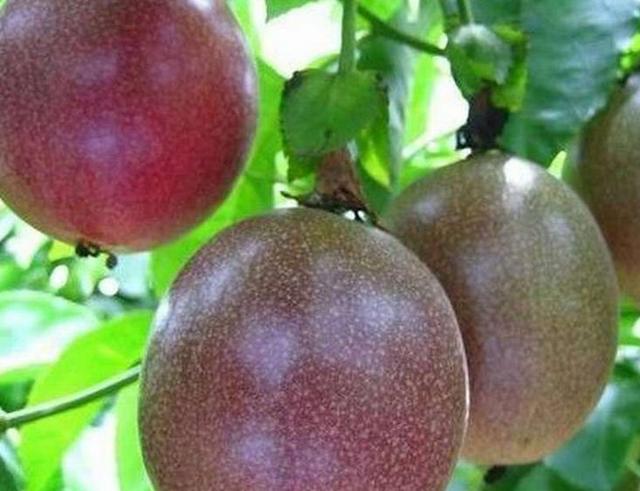
2 Land Preparation, Hole Digging, and Transplanting
Passion fruit can be planted all year round. For planting beds, high ridges and wide beds are preferable. For trellis-style cultivation in fields, a row spacing of 2.5 m and a plant spacing of 3 m are suitable, planting about 70 plants per 667 sq m; for sloping wasteland, single-side hedge-style cultivation is better, planting about 100 plants per 667 sq m. However, planting from March to April is best. During land preparation, the soil should first be deeply plowed, and planting holes should be dug well, so that the soil is further matured and the holes are sunned, which helps reduce pathogenic bacteria in the soil. Previously fermented farmyard manure can be placed in the holes as base fertilizer, and then mounds can be formed for planting. If soil moisture is insufficient, water can be applied to settle the roots. After the seedlings survive, they should be promptly supported with stakes, and the axillary buds should be removed, leaving only the terminal bud of the main vine. At the same time, fix the main vine to the support so that the plant climbs onto the trellis as quickly as possible. The furrows should be dug well and deep to facilitate drainage during the rainy season. This is because passion fruit is especially afraid of waterlogging; once water accumulates, it will cause root rot, affecting yield in mild cases and causing plant death in severe cases. However, if the soil is too dry, it should be irrigated in time. Therefore, reasonably managing soil moisture is the key to success.
3 Construction of the Trellis
Because passion fruit is a vine plant, it needs a trellis for support during its growth process. If it is allowed to grow freely, it will produce few or no fruits. Therefore, at this time, the trellis should be built in time to create a good growing environment for passion fruit. The form of the trellis is generally mostly flat-topped, and the trellis height is preferably 1.8 to 2 m. The top of the trellis is woven into a grid shape with iron wire or nylon rope.
4 Fertilization and Daily Management
For newly transplanted passion fruit, nitrogen fertilizer is mainly applied in the early stage to promote plant growth. After transplanting, the root system begins to grow in 10 to 15 d, and 0.5% diluted urea water can be applied, then once every 20 to 25 d thereafter. In the middle and late stages, phosphorus and potassium fertilizers are mainly used, preferably compound fertilizer, 15 to 20 kg per plant, applied in furrows around the Beginning of Spring. During the flowering and fruiting period, appropriate topdressing should be carried out, applying fertilizer once every 20 d, about 0.5 kg per plant. Timely pruning can promote the fruiting mother vines to produce more multi-level branches, increasing the number of flower buds and fruits. Passion fruit has very few pests and diseases. In the seedling stage, the main ones are damping-off, mosaic disease, Phytophthora blight, stem base rot, and anthracnose. The main measures for disease control in production are: (1) Do a good job in drainage. Prevent waterlogging in the orchard, especially in some low-lying orchards, where local water accumulation must be prevented to avoid root rot and induced diseases. (2) In early spring, after the fruit harvest is completed, combine pruning and orchard cleaning, remove diseased branches, diseased leaves, and diseased fruits from the orchard and burn them, reduce the number of pathogenic microorganisms, and disinfect the orchard. (3) After diseases are found, 50% carbendazim 500-fold solution can be sprayed to control damping-off in the seedling stage; 1000-fold thiophanate-methyl solution can be sprayed to control stem base rot and anthracnose.
5 Conclusion
Throughout the entire planting and management process, special attention should be paid to the effects of moisture and low temperature on passion fruit plants. When frost occurs, it will cause frost injury to the plants. Therefore, growers should pay special attention to this in production. In actual production, the method of directly replacing with new seedlings in the second year should be adopted to prevent an outbreak of Phytophthora blight in the second year.