Detailed Explanation of Key Management Techniques for Goji Berry Planting in the First Year
Management Techniques for Goji Berries Planted in the Current Year
Author: Wulali. Duishanbieke
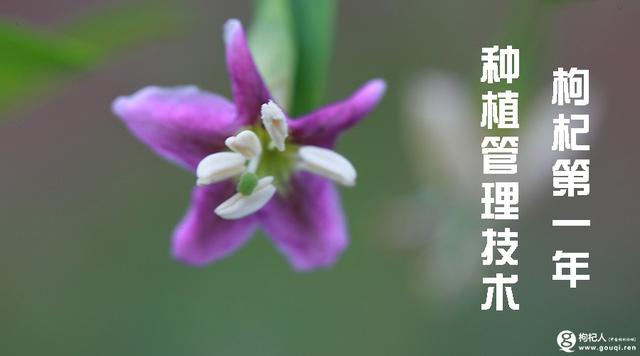
Goji berry is a perennial shrub cash crop tolerant of drought, barren soil and salinity-alkalinity, with strong adaptability and a preference for sunlight. It can be planted in sandy loam and poor saline-alkali soil. The annual dormancy period of goji berry runs from November of the current year to March of the following year, and the annual growth period is 7 months, namely April to October each year. There are two large-scale flowering and fruiting periods within a year: flowering in late April, fruit harvest in late June; the other flowering in late August, harvest in mid-September.
1. Establishment of the Goji Berry Orchard
The orchard site should be selected in a plain area with deep soil, soil organic matter content above 1%, and a slope below 5%. Planning should be carried out first, installing water and electricity equipment (including drip irrigation facilities), laying out main roads and operation paths, and establishing shelterbelt strips around the planting area to improve the microclimate and provide wind protection.
2. Preparation of Seedlings
The seedlings should be intact and free of injury. Treat them well before planting, then plant. For seedlings that cannot be planted in time, dig a trench 15-20cm deep, place the seedlings with their roots and stems facing down, bury them one by one in the soil, then tread the soil firm with your feet for heeled-in storage. The heeled-in site should be chosen on high ground in a shaded place.
3. Pruning Before Planting
The seedlings should be pruned once before planting. Cut off the side branches of the seedling trunk to encourage new branch growth. Then dilute ABT rooting powder or naphthaleneacetic acid to 15-20ppm, soak the seedlings for 12-24 hours before planting.
4. Planting Method
Before planting, dig trenches at a row spacing of 3m, with a trench depth of 40cm and a trench width of 60cm. Along the trench, dig planting holes at a spacing of 1.5 (width 40cm, depth 40cm; the width at the bottom and the surface of the hole must be consistent). When planting, the seedling roots should spread out and must not curl. During the operation, one person holds the seedling while another fills the soil, and finally tread it firm with feet. The planting depth should be consistent with the depth at which the seedling grew in the original nursery. After planting, lay drip irrigation tape and promptly drip water thoroughly once.
5. Management of the Goji Berry Orchard
April management:In mid-to-late April, carry out one drip irrigation. The dripping depth should reach more than 30cm, and the general dripping time is 6-8 hours.
May management:By May, the seedlings enter rapid growth, and at this time support stakes need to be set up manually for the young trees. The method is: insert an upright wooden stick along the root, tie the main trunk branch to the stick with rope, and let the young tree grow upright. Clear all weeds in the orchard. To accelerate root and new shoot growth, apply 10kg of urea and diammonium phosphate per mu. After fertilizing, drip water once to let the fertilizer dissolve promptly, which helps the young trees absorb it fully.
June management:
Carry out summer pruning in June. Prune 2-3 times within the month, select 3-4 side branches as the main trunk branches, and cut back at 20cm from the tree center, then cut at the opening to grow new branches, which will fill out the canopy according to angle. Cut off main trunk branches with an angle less than 30 degrees. Branches between 30-40 degrees can be retained as fruit branches where branches are sparse, and can be appropriately thinned where branches are dense. For branches with an angle greater than 40 degrees, do not prune or move them. Young trees planted in the current year flower in July. Clear the weeds on the ground, drip water once, and after dripping, carry out inter-row cultivation and weeding to keep the soil ventilated and breathable.
If aphids, fly mites and rust mites are found in the goji berry orchard, choose imidacloprid 2000-fold solution and spray the whole orchard once for advance prevention. If goji berry fly mites infect the plants, spray the leaf surface with pyridaben 2000-2500-fold solution, spraying 2-3 times at intervals of 7 days; if goji berry rust mites are found, spray the leaf surface with pyridaben emulsifiable concentrate or pyridaben 2000-2500-fold solution, spraying continuously 3-4 times at intervals of 7 days. This can effectively control pests and diseases during the young tree growth period.
July management:July is the vigorous growth period of goji berry and a key period for cultivating the canopy. Therefore, adopt a three-tier tree form for pruning, with tree height 1.8-2m and crown width 1.5-1.7m. At this time, lay the foundation for cultivating the first tier of canopy for the coming year. Form the first tier of canopy on the central trunk above 70cm from the ground, retaining 3-5 branches, until branches of different numbers of fruiting branches grow on the main trunk branches at the treetop, retaining 3-5 branches at 40cm spacing, to cultivate the second and third tier branch-tier tree form.
From July to August, drip water 4-6 times. Because the weather is hot, ground evaporation is high, and soil water retention is poor, observe soil moisture and seedling water demand in time, and drip water several more times.
In mid-July, goji berry young trees grow flower buds the same size as goji berries. The flowering period of goji berry is 3-5 days. On the 1st day the flower buds are full and fragrant, on the 2nd day they bloom into small purple five-pointed star-shaped flowers, on the 3rd day the purple gradually changes to white, on the 4th and 5th days they turn brown, slowly fall off leaving the fruit pulp of the first fruit, and afterward green young fruits form.
August-September management:Entering mid-to-late August, goji berries planted in the current year bear fruit. Because the growth time in the current year is short, branching and flowering are relatively fewer, and when the goji berry fruit turns bright red it can be picked. Mainly manual picking: hold the fruit branch with one hand, gently pinch the fruit with the other, and do not pick the fruit stem or leaves.
October management:After fruit harvest, cut short and retract the branches that grew in the current year on the young goji berry trees, which helps the branches become thick and strong. In spring and autumn, a base fertilizer must be applied once, choosing fully decomposed high-quality farmyard manure, such as cow dung and sheep dung, both are fine. At a distance of 20cm from the roots of the young trees, dig fertilization holes or open trenches around the young trees for fertilization, with a depth of 20-30cm, put the fertilizer in, and cover with soil level. The fertilization amount per mu is 3000kg. This can both expand canopy growth and meet the young trees' fertilizer needs for overwintering.
November management:The goji berry orchard enters the winter dormancy period. This is the best time to use diverted water for one flood irrigation. If there are no flood irrigation conditions, drip water once, and the dripping should be thorough, with a general dripping time of 10-12 hours. Provide sufficient water for the overwintering young trees, which is also beneficial to the canopy expansion and root development of the young trees. When the average temperature is below -3°C, goji berry leaves fall off, and at this time goji berry officially enters the winter dormancy period.
Published by Goji Ren Net (www.gouqi.ren)