A Detailed Guide to Cyclamen Planting Methods and Propagation Techniques
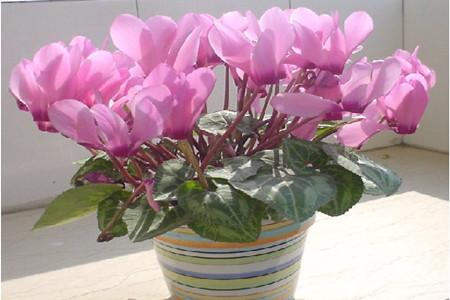
Cyclamen, also known as one-pin crown, rabbit ear flower, fire basket flower, radish begonia, primrose, etc., is a perennial herbaceous bulbous flower of the genus Cyclamen in the family Primulaceae. Cyclamen has a flat, round fleshy tuber, a magnificent form, and a plant height of 20-30 cm. The enlarged tuber at the base is oblate or spherical (commonly called a bulb). One-year-old small tubers are pale dark red, while old tubers are purple-black, covered externally with a corky texture, and many slender fibrous roots are densely grown at the bottom of the tuber.
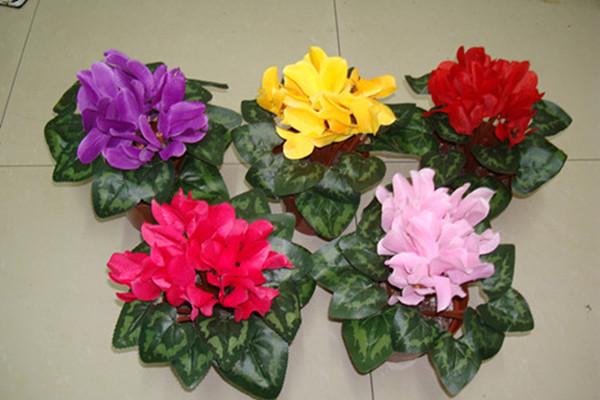
Cyclamen has a robust plant form, moderate height, abundant flowers and leaves, bright colors, a very long flowering period, and unique flower shapes, some with a sweet fragrance. In recent years, it has risen in horticultural flower cultivation and become an outstanding choice for embellishing rooms and living rooms and beautifying interiors in early spring. Below is a detailed introduction to how to grow cyclamen:
1. Soil selection for cyclamen cultivation
The potting soil can be prepared with 3 parts humus soil, 2 parts forest leaf mold, 2 parts furnace ash cinders, 2 parts river sand (sandy vegetable garden soil), and 1 part decomposed compost, with an appropriate addition of chemical substances such as superphosphate. This kind of soil is loose and fertile, suitable for cyclamen growth. When cultivating, the potting soil must be fumigated with chemicals and strictly disinfected at high temperature. The cultivation container should be gradually increased according to the size of the tuber; a large pot must not be used to grow small seedlings.

2. Fertilization methods for cyclamen cultivation
Cyclamen likes fertilizer but does not like concentrated fertilizer. In addition to applying some base fertilizer when repotting and changing soil, it can generally be fertilized once every ten days to half a month, with emphasis on light fertilizer applied frequently. After planting, during the vegetative growth period lasting several months, organic liquid fertilizer can be applied at concentrations of 1:6, 1:8, and 1:10, using muddy water to water the flowers. After summer begins, if the temperature cannot be controlled, fertilization should be stopped.
3. Watering methods for cyclamen cultivation
Cyclamen can tolerate drought. However, during the growing season the soil should be kept moist, and care should be taken that water does not accumulate in the pot. Cyclamen does not like overly wet soil, so watering should be frequent but light. In summer, if it does not go dormant, normal watering can be carried out to keep the potting soil dry and moist. After the Start of Autumn, cyclamen enters the reproductive growth period, and at this time phosphorus and potassium fertilizers should be applied. If the plant is found to be growing leggy, switch to applying superphosphate or wood ash extract to control vegetative growth, promote flower bud differentiation, and encourage budding and flowering.
4. Temperature requirements for cyclamen cultivation
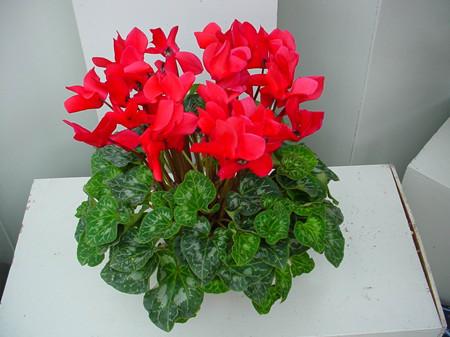
The suitable growth temperature for cyclamen in winter is 10-22°C, and a temperature difference of 8-10°C should be maintained between day and night. If the nighttime temperature is controlled at 7-8°C, it can also bloom, but the flowering period will be slightly delayed; however, if it is below 6°C, it cannot bloom normally.
5. Light requirements for cyclamen cultivation
Temperature and light both have a certain influence on the growth and development of cyclamen. Throughout the entire growth process, the main approach is to start with temperature and consider extending the flowering period. After the number of flowers decreases at the end of April, the potted flowers should be moved out of the greenhouse and placed in a ventilated, cool place with scattered light for cultivation. Climate changes and suitable temperature and light will also cause cyclamen to grow another batch of flower scapes and continue blooming. In the Yangtze River basin and areas to its south, leaves gradually turn yellow after May, which reflects rising temperatures; at this time watering should be controlled. In summer, if conditions permit, cooling equipment should be used to lower the ambient temperature.
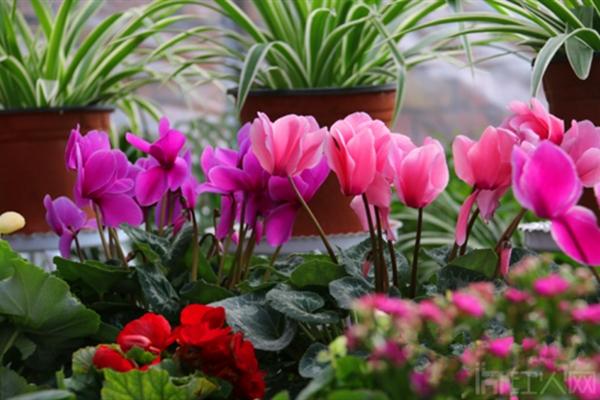

Generally, at home, potted flowers should be placed in a ventilated, cool place indoors during the day and on a balcony for ventilation at night. If the temperature does not exceed 20°C, fertilizer and water management can be carried out, and cyclamen will still grow slowly. In July, the hottest period when all leaves wither, the flowerpot should be placed in a low-temperature, ventilated environment, and the potting soil should not be too dry either, allowing it to go dormant for one month. After August, cyclamen should again be placed in a temperature and light environment suitable for growth, with slight watering, so that the tuber recovers and sprouts as quickly as possible, and cyclamen can then sprout ahead of time. At the end of August, repot and change the soil, cut off rotten roots, and let the plant grow vigorously under good ecological conditions.
6. Pest and disease control methods for cyclamen cultivation
During the growing season, cyclamen is easily harmed by aphids, red spider mites, leaf rollers, and others, so attention should be paid to control. At the same time, the roots of cyclamen are prone to nematode disease. For treatment, pesticides such as carbofuran can be used for potting soil disinfection, with an amount of 2-3 grams per pot (0.1% of soil weight), mixed into the soil. Cyclamen is also prone to soft rot, leaf spot disease, fungal wilt disease, and anthracnose. When disease occurs, a 0.01% aqueous solution of thiophanate-methyl, or 0.15%-0.2% aqueous solutions of Tuzet or chlorothalonil, can be used for effective spraying.
7. Precautions for cyclamen cultivation
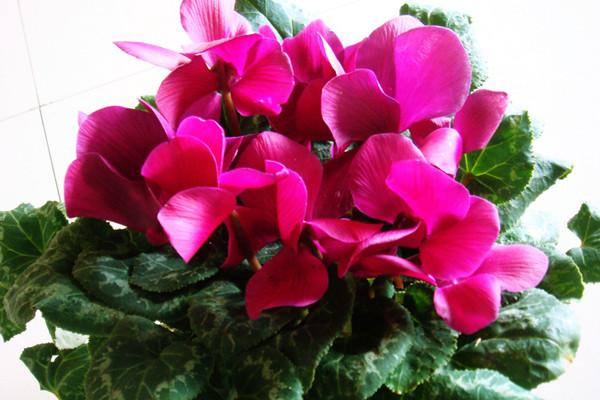
When summer temperatures exceed 28°C, cyclamen tubers begin to go dormant. If dormancy is not managed well, the tuber is very likely to dry out or rot. How to safely pass through summer is a difficult point in cyclamen cultivation.
Using robust young seedlings to pass through summer is the best method. Annual seedlings grown from seed grow vigorously and have a weak tendency to go dormant in summer. Before summer begins, fertilizer and water management should be strengthened to form strong seedlings, making the leaves thick, numerous, deep-colored, and glossy. Such seedlings have strong heat resistance, and at the same time cooling and humidity reduction work should be done well. Cover with a shade net, increase ventilation, apply light fertilizer frequently, and spray water around the plants to lower the temperature. After passing through summer in late August, cyclamen enters the growing period, and fertilizer and water management should be strengthened.

For old tubers more than two years old, they should also be moved to a shaded, rain-protected place when summer begins, and water should often be sprayed around them to lower the temperature. Watering into the pot should be strictly controlled, preferring dry over wet. Generally, about every 10 days, pour 20%-30% water into a thoroughly dry pot. Do not use too much water or let rain fall on them, otherwise the tuber will rot. Until early September, gradually resume watering. After two or three weeks, they can be moved into sunlight and normally given fertilizer and water, and they will bloom as scheduled during the Spring Festival. After the start of the dog days, once cyclamen leaves have completely fallen off, dig out the tuber, remove soil and dead leaves, and store it indoors in a cool, ventilated place. Replant in the pot after autumn, apply fertilizer and water reasonably, and it will recover its vitality. To break dormancy in cyclamen, a cool environment can be created artificially, for example by placing it in an air-conditioned room. Keep the temperature at 20-30°C and water normally, and cyclamen will continue to grow, sprout new leaves, and produce new flowers. After autumn, restore the original environment.
8. Propagation methods for cyclamen cultivation
(1) Seed propagation: Cyclamen seeds, especially hybrid seeds, are difficult to germinate if the seeds themselves are shriveled. Before sowing, the seeds should first be disinfected with 75% alcohol, rinsed with water, then placed in sequence in 1% mercuric chloride and 10% potassium dihydrogen phosphate solutions for disinfection, then cleaned with water, and then soaked in warm water at 35-40°C for 24 hours before sowing. Alternatively, wrap plump seeds in gauze, soak them in warm water at 24°C for 12-24 hours, rub and wash the seed coat clean, and then sow. This method is simpler, but the germination effect is somewhat poorer than the former method.
The soil for sowing can be 2 parts vermiculite, 2 parts peat soil, and 1 part fine sand, mixed evenly before sowing, or sieved humus soil from under a deciduous broad-leaved forest can be used directly. When sowing, the spacing between seeds is 1-2 cm, and after sowing cover with 0.5-0.7 cm of soil. After soaking in water, place them in a dark place to germinate (Cyclamen is a plant that germinates in complete darkness), with temperature controlled at 18°C and humidity controlled at about 90%. To maintain humidity, plastic film can be used to wrap the plug tray, and germination can occur in about 20 days. Seedlings emerge in 35-40 days, with an emergence rate of over 90%.
(2) Stem cutting propagation: This is generally carried out from 1-15 months after flowering in spring, or from late August to late September. Any tuber with a diameter of more than 3 cm and more than two bud eyes can be divided. The principle of division is to ensure that each piece has one bud eye. The cutting tool must be disinfected to prevent the spread of viruses. When cutting, use the knife to cut straight downward, reaching all the way to the root. Treat the cut with wood ash, let it dry, and then plant.
If you like my work, remember to like and follow!