What Should You Do If a Dental Implant Fails? An Introduction to Common Treatment Methods
Key point: Dental implants are the choice of many young patients today. Their advantages are numerous, mainly that they do not require grinding down adjacent teeth and that they are very firm. However, even so, there are still cases of dental implant failure. So when this happens, what is the best way to handle it?
Dental implants are a relatively new technology, and it is now a very mature technique, but there are still cases of dental implant failure caused by various reasons. If a dental implant fails, there are still many ways to remedy it, and you should still go to a proper hospital for treatment. There are many reasons that lead to dental implant failure.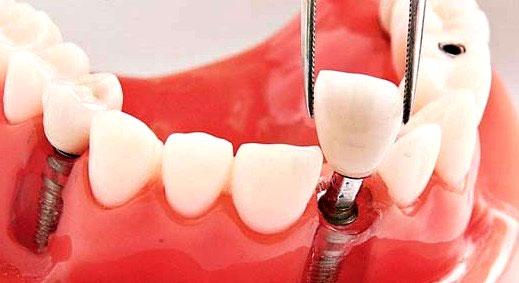
One is that the implant bears uneven pressure, and the weak part bears too much pressure, which leads to dental implant failure. Another is that the pressure on the dental implant is too great, causing the implant to loosen, which also makes the surgery fail. Another is oral inflammation: after dental implantation, a series of oral inflammations are triggered, which is very unfavorable to the survival of the dental implant and leads to dental implant failure.
After a dental implant fails, there are still ways to make up for it. First, consider repairing it with the currently relatively mature guided bone regeneration technique; this is a minimally invasive surgery and is currently the most widely used. If multiple surgeries have already caused extensive destruction of the surrounding tissues, then the continued dental implant surgeries must be stopped, and depending on the situation, it should be decided whether to find a way to close the wound surface.
Finally, when there is truly no way to repair it, the bone graft block should be removed as early as possible, because certain infections may have already caused necrosis of the bone graft, so it must be removed quickly to avoid worsening of the wound, which otherwise would never heal. After removal, the wound surface must be thoroughly cleaned.

Dental implants are a very good technology, but whether to undergo surgery still requires a cautious choice, because this technology has very high requirements in all aspects: the doctor's skill, the medical equipment, and whether the patient has enough patience and is willing to cooperate with and trust the treating doctor. These aspects are all key to the success of the surgery. If you really are going to have dental implant surgery, you must choose a proper hospital.
After dental implantation, good maintenance is also needed to ensure the success of the surgery. At the very beginning of dental implantation, there may be some discomfort, which will improve with the length of time worn. It is best not to eat foods that are too cold or too hot at the very beginning, as this may cause tooth sensitivity. In addition, pay attention to oral hygiene.