A Detailed Guide to Lily Planting Methods and Propagation Techniques
The lily has long been known as the "Fairy of the Clouds," with its pure white blooms and graceful form. Growing a beautiful lily must make you very proud. So, how can you grow lilies well, and how should lilies be grown?
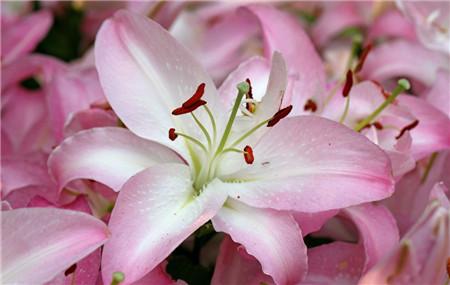
The growth habits of lilies
Lilies are plants that prefer cool conditions and are relatively cold-tolerant; they grow poorly in high-temperature areas. They like dryness and fear dampness, and the soil must not be too moist, otherwise the plant will die. Lilies are not demanding about soil, but fertile, loose sandy soil is better, and they are relatively tolerant of fertilizer.
How to grow lilies
Lilies can be grown in pots by planting the bulbs in soil and carrying out routine care, and they will produce beautiful flowers. In addition, lilies can also be grown in water, that is, hydroponically, which also has a distinctive appeal.
Lily growing methods
Temperature and light
Lilies grow best at 12-18°C, but they are also relatively cold-tolerant and will not freeze to death at temperatures of 3-5°C. The suitable temperature for flowering is 16-24°C.
Because lilies like light and fear dampness, insufficient artificial light and excessive shading will affect their flowering. However, a little shading is still beneficial to the growth of lilies.
Water and fertilizer management
Lilies have low requirements for water and fertilizer. Do not water excessively; keep the soil moist in general. You can spray water on the lilies to increase air humidity, with 60%-80% being best. Lilies also do not need much fertilizer; fertilizing once every half month is enough. During the flowering period, additional fertilizer is needed to promote flowering. They need relatively more nitrogen and potassium fertilizer, and relatively less phosphorus fertilizer.
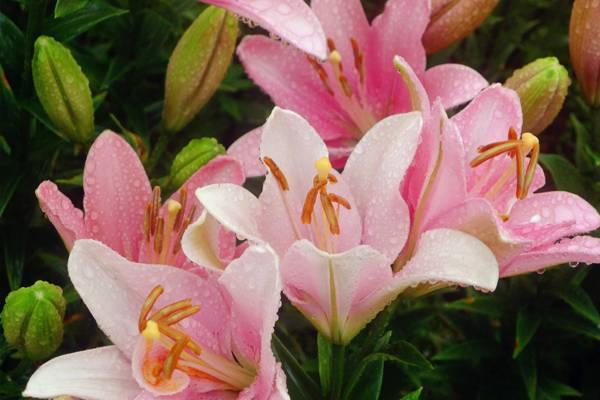
Propagation methods
There are mainly 4 propagation methods for lilies: sowing, dividing small bulblets, scale cuttings, and dividing bulbils.
Sowing propagation mainly involves collecting seeds in autumn and sowing them again in spring of the following year. The cultivation cycle is relatively long, so this method is generally not used in home cultivation.
The small bulblet division method mainly involves separating some small bulblets from the old lily bulbs in September and planting them in pots in early spring of the following year. It is relatively suitable for home propagation of lilies.
The scale cutting method involves breaking scales off the old lily bulbs and using them for cuttings. This propagation method can produce a relatively large number of plants. After a period of cultivation, the scales grow into small bulblets, which can then be planted in pots in spring.
The bulbil division method is only suitable for a few species. The method is to remove the bulbils formed in the leaf axils of the lily's aboveground stem and cultivate them. Once they grow into large bulbs, they can be planted, and they usually bloom in 2-4 years.
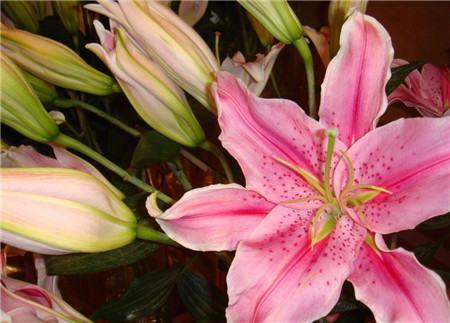
Precautions for growing lilies
Choosing pots and soil
Lilies have well-developed roots, so when choosing a flowerpot, choose a relatively large and deep one, fill it with soil mixed from leaf mold, sandy soil, garden soil, and so on, and apply some base fertilizer. In addition, lilies are best repotted once a year as they grow, replacing the soil and fertilizer with new ones.
Pest and disease control
Lilies have several common diseases, including lily mosaic virus, leaf spot, bulb rot, leaf blight, and so on, as well as pests such as aphids, cutworms, ants, mole crickets that gnaw on seedlings (stems), nematodes, and earthworms that damage the underground bulbs and basal plates, causing the lily plants to die.
Growing precautions
Before planting lilies, soak the bulbs in 2 ml of silver thiosulfate solution. Potted lilies can be stored for 14-28 days at 0-3°C.
Lilies should have their pots turned once a week. This is to prevent the plants from growing crooked and affecting their ornamental value.
After lilies bloom, the bulbs still have regenerative capacity. You can cut off the remaining leaves, dig out the bulbs and bury them in sand, then replant them the following year, and they may bloom a second time.