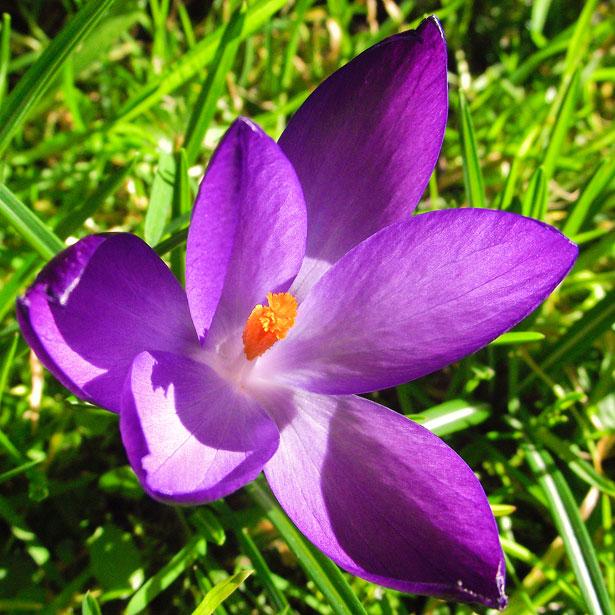
Detailed Guide to Saffron Crocus Planting Key Points and Precautions
Alternative names for saffron crocus: saffron, saffron crocus. Place of origin: originally from southern Italy in Europe and the Mediterranean coast. Today it is mainly distributed in Spain, France, Sicily, Iran and other regions. A detailed introduction is given below:
1. Soil selection: For potted saffron crocus, it is best to choose soil rich in organic matter, loose and fertile, and with good drainage and aeration.
2. Cultivation: (1) Saffron crocus can be planted either in pots or grown in water.
(2) Potting is generally done from September to October.
(3) Place a few pieces of broken tile at the bottom of the pot to serve as a drainage layer.
(4) Add growing soil to the pot until it reaches half the height of the pot.
(5) Place the saffron crocus corms into the pot. Generally, a clay pot with a diameter of 15-20 cm can hold 5-7 corms.
(6) Cover the corms with a layer of moss, then fill with growing soil.
(7) Water thoroughly and place outdoors. After rooting, move into a cold room, where the indoor temperature should be slightly higher than outdoors.
3. Watering: (1) Water promptly during dry weather.
(2) In March to April, with continuous spring rain, water easily accumulates in the pot, and if the soil stays wet for a long time, the corms rot easily, ultimately causing the leaves to turn yellow and the plant to wither prematurely. Therefore, remember to drain promptly after rain.
(3) Before winter arrives, water thoroughly once to ensure safe overwintering.
4. Temperature: (1) The optimal growing temperature for saffron crocus is around 15°C, and the optimal temperature at flowering is 14-20°C.
(2) Saffron crocus fears heat, so in southern regions, if the temperature reaches 25°C, the plant should be properly shaded, which helps extend the growing period of saffron crocus.
(3) Saffron crocus is also fairly cold-tolerant and can endure low temperatures of -18°C, but if it drops below this temperature, cold protection measures should be taken to avoid frost damage. Saffron crocus should not remain in low temperatures for long periods, otherwise the plant will grow poorly, with yellowing leaves and sparse flowers, affecting its ornamental value.
5. Fertilizing: (1) During the vigorous growth period, saffron crocus needs a dilute liquid fertilizer applied every 15 days.
(2) During the bud stage, some quick-acting phosphorus fertilizer should also be applied, which helps flowering.
6. Light: (1) In summer and autumn, sunlight is intense, so it is best to shade the plant from 60% of the sunlight at this time, otherwise the leaves will be scorched, causing them to dry out and turn scorched yellow.
(2) In winter, sunlight is soft, so the plant can be placed in a location with relatively abundant light.
7. Propagation: Saffron crocus is commonly propagated by division of corms and by sowing, but division of corms is the main method, because seed propagation takes too long, generally requiring 3-4 years of cultivation before flowering.
8. Pruning: To maintain a beautiful plant shape, promptly cut off dead branches, diseased branches and damaged branches.
9. Pest and disease control: (1) The most common diseases during saffron crocus cultivation are sclerotinia disease, damping-off disease and rot disease. For sclerotinia disease, spray with 50% thiophanate wettable powder at 500 times dilution for control; for damping-off disease, spray with 50% leaf blight powder at 1000 times dilution or 75% chlorothalonil wettable powder at 500 times dilution for control; for rot disease, use 50% thiophanate at 1000 times dilution for control.
(2) The common pest of saffron crocus is the Robin bulb mite, which can be killed by spraying with dicofol.