What are the principles of rational close planting of cotton?
Rational close planting helps make full use of soil fertility and improve light energy use efficiency; it can fully usespace, increase the total number of bolls; it can improve the spatial distribution of cotton bolls and increase the average single boll weight, thereby achievingthe goal of increasing yield. The following factors should be considered when determining planting density.
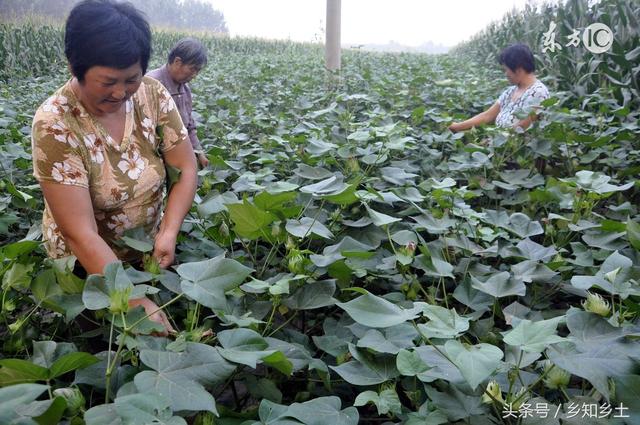
1. Climatic conditions In areas where the average temperature during the cotton growing season is high and the frost-free period is relatively long,cotton plants grow faster and are tall, so appropriately sparse planting is suitable; in areas with a cool climate and a shorter frost-free period,appropriately close planting is suitable. In recent years, as the climate has warmed, appropriately late sowing in production is conducive to fullseedling establishment and achieving high yields.
2. Soil fertility In cotton fields with high soil fertility or a high level of fertilization, cotton plants grow vigorously,are tall, have large leaves and many fruiting branches, and are likely to cause the cotton field to become closed and shaded, aggravating the shedding of budsand bolls in the middle and lower parts; in cotton fields with low soil fertility or a small amount of fertilization, cotton plants grow shorter and smaller, and field closureis less likely. Therefore, under the same climatic conditions, fertile fields should have a lower density than lean fields.
3. Variety characteristics Varieties with a long growth period, tall plants, a loose plant type, long fruiting branches and large leavesshould have a lower density; early-maturing varieties with short plants, small leaves, a compact plant type and short fruiting branchesshould have a higher density. Because hybrid cotton has strong growth vigor, its planting density should be lower than that of conventional cotton.
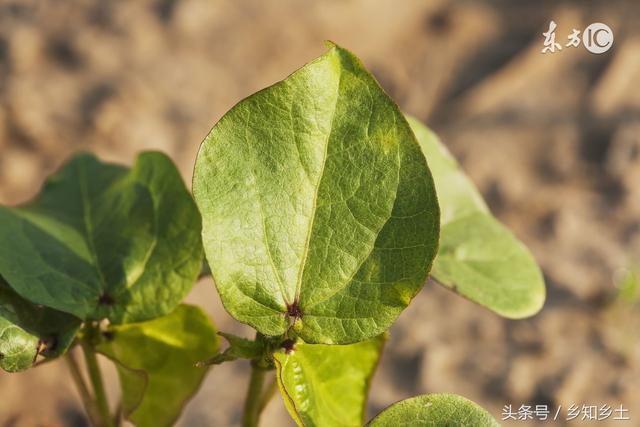
In China, cotton planting density is generally higher in the north than in the south, and higher in the west than in the east. In the southernXinjiang inland cotton region, the planting density is 240,000 to 300,000 plants per hectare.