Detailed guide to tiger lily cultivation techniques: master the key planting points
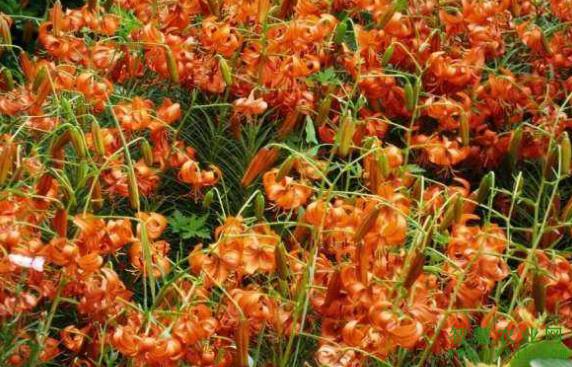
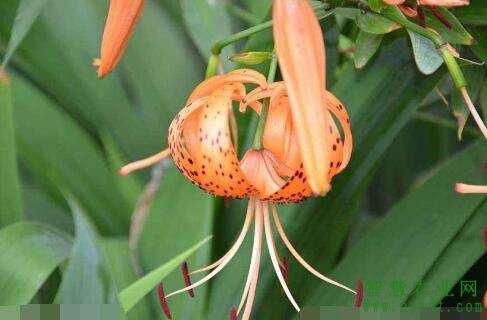
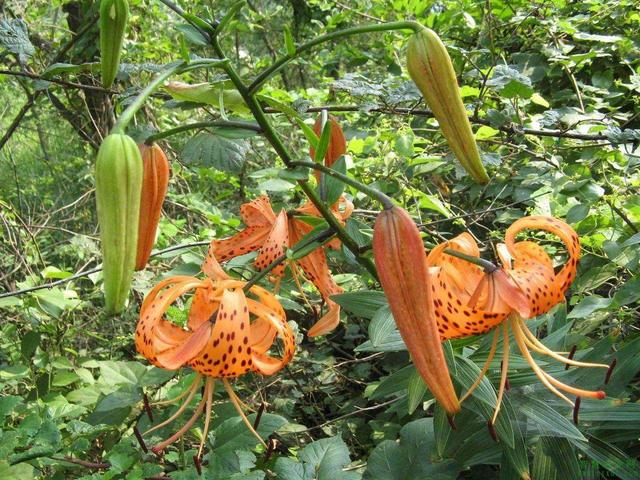
Lilies are perennial herbaceous bulbous plants of the genus Lilium in the family Liliaceae. There are more than 100 varieties worldwide, and they can be divided into three major categories by use: ornamental, medicinal, and edible. The tiger lily (Lilium lancifolium), native to China, is a lily variety cultivated both for medicine and food, with the underground bulb as the harvest target. In rural courtyards of the north, it is often widely planted as an ornamental flower.
I. Loosening the soil and supplementing fertilizer
Most tiger lilies in the north are planted in arid mountainous or semi-mountainous areas, and the water needed for lily growth comes mainly from natural precipitation. Therefore, intertillage and soil loosening to preserve soil moisture and store water play an important role in using and maintaining soil moisture. Intertillage and soil loosening can be carried out when the lily seedlings are 10 cm tall. In the first and second years, because the underground bulbs are still small, deeper intertillage is suitable; in the third year, soil loosening should be shallow rather than deep, otherwise the roots and bulbs are easily damaged. While loosening the soil, apply a seedling-promoting fertilizer as a top dressing, with 15-20 kg per mu of 45% nitrogen-phosphorus-potassium compound fertilizer. Apply fertilizer first, then loosen the soil, and then earth up the soil.
II. Plant adjustment
1. Topping and pinching out the growing tip
Lilies have obvious apical dominance, and topping and pinching out the growing tip can control the consumption of nutrients by aboveground stem and leaf growth and promote the growth and development of the bulbs. Topping and pinching out the growing tip are carried out in early June, when the seedlings are 40 cm tall, to ensure the plants have a certain amount of growth and sufficient leaf area. Pinching out the growing tip is best done around noon on a sunny day, which helps the wound heal. When topping, plants with vigorous growth should be topped earlier and more heavily, while weak seedlings and small seedlings can, depending on the situation, be topped later or have only a small number of growing leaves pinched off, so as to achieve balanced growth.
2. Removing flower buds
Flowering and seed setting in lilies consume a large amount of nutrients and seriously affect bulb development. For cultivation aimed at harvesting bulbs, when the flower stem grows to 1-3 cm, pinch off the flower buds, commonly known as "pinching the tip." Pinching too early easily damages the plant; pinching too late makes the flower stem tissue aged and difficult to break off. Because plants produce flower buds at different times, they need to be checked every day and pinched at the right time, repeatedly over many rounds, so that "no red is seen in the lily field." The removed flower buds can be dried for eating or steeped in water as tea.
3. Removing bulbils
Tiger lilies produce multiple bulbils in the leaf axils. If bulbils are not used for propagating planting material, they should be removed when they have just swollen but not yet changed color, to reduce nutrient consumption and promote bulb enlargement. Bud removal is best done on sunny days and requires careful operation to prevent breaking the plants and damaging functional leaves.
III. Shading and cooling
The most suitable air temperature for lily growth is 15-25°C. Above 28°C, growth is inhibited; if the temperature remains above 33°C, the plants turn yellow and may even die. Corn or vine-type melons and vegetables can be appropriately interplanted between lily rows so that the vines and leaves provide shade. If corn is interplanted, after the corn plants grow tall in July-August, it has a good effect on lowering field air temperature and soil temperature, can extend the green-leaf period of lilies, and can increase yield by about 10%.
IV. Fertilizer and water management
In the late growth stage of lilies, the application of nitrogen fertilizer must be strictly controlled, especially after topping; too much nitrogen fertilizer causes rampant stem and leaf growth and affects bulb enlargement. After topping, generally apply 30 kg per mu of compound fertilizer containing 15% each of nitrogen, phosphorus, and potassium. In late July, when bulb enlargement slows, 0.2% potassium dihydrogen phosphate or plant life essence can be sprayed on the leaves to extend the lifespan of functional leaves and prevent premature senescence. The bulb enlargement period coincides with the rainy season, so attention should be paid to drainage to ensure that the ground dries after rain with no standing water.
V. Chemical weed control
1. Pre-emergence weed control
To control grassy and broadleaf weeds before emergence, 48% trifluralin emulsifiable concentrate or 33% pendimethalin emulsifiable concentrate can be used at 2500 ml per hectare, or 48% butralin emulsifiable concentrate at 3750 ml per hectare.
2. Post-emergence weed control
When lily seedlings are 20-30 cm tall, 2000 ml per hectare of 10% quizalofop-p-ethyl emulsifiable concentrate or 750 ml of 24% oxyfluorfen can be sprayed to control many broadleaf weeds and most grassy weeds.
VI. Controlling diseases, pests, and rodent damage
1. Damping-off: after emergence, spray 50% carbendazim 1000-fold solution once every 10-15 days, for 2-3 consecutive sprays. After disease occurs, promptly pull out diseased plants, and disinfect the affected area with 50% lime milk.
2. Leaf blight: spray 50% carbendazim 500-fold solution, or 75% chlorothalonil 500-fold solution, or 70% thiophanate-methyl 500-fold solution, or 50% procymidone 1000-fold solution for control, once every 10-15 days, for 2-3 consecutive sprays.
3. Lily blight: spray 0.5% Bordeaux mixture 1000-fold solution, or 25% metalaxyl 2000-fold solution, or 70% dexon original powder 1000-fold solution. When spraying, enough liquid should flow to the stem base of diseased plants and the surrounding soil.
4. Aphids: spray 40% dimethoate 1200-fold solution, or 10% imidacloprid wettable powder 2000-3000-fold solution, or 3% acetamiprid emulsifiable concentrate 2000-2500-fold solution.
5. White grubs: drench the soil with 50% malathion 800-1000-fold solution or 50% phoxim emulsifiable concentrate 1000-fold solution.
6. Rodent damage: in spring when the ground thaws, depending on the severity of rodent damage, put out poisoned bait at the appropriate time. Use 1 kg per hectare of 0.005% bromadiolone bait and broadcast it on the ground surface. Small doses applied multiple times can also be used, with better results.
Article source [China Smart Agriculture Official Website]