How to grow and propagate the sago palm
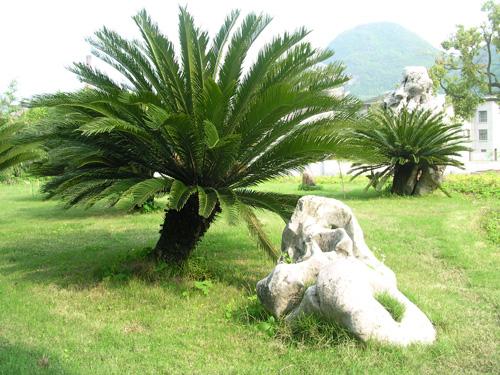
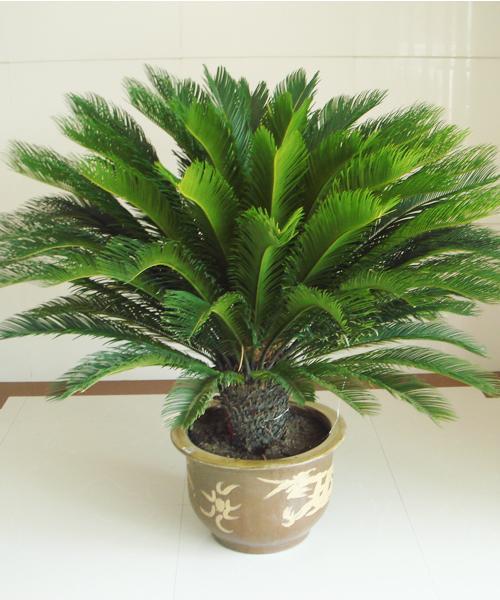
The sago palm stays evergreen all year round and is an excellent ornamental plant that can beautify courtyards and living rooms. You can plant sago palms in the open ground in a courtyard, or grow them in large pots; when placed indoors, they can go in the living room, hallway and similar spots.
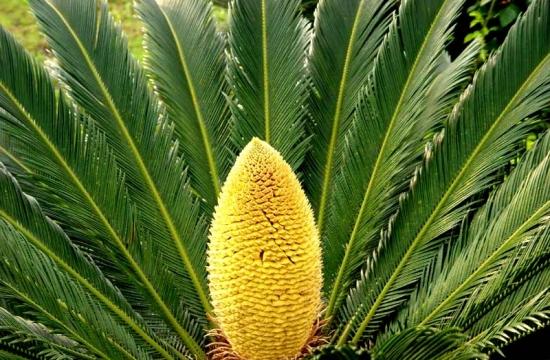
In tropical regions, a sago palm will bloom every year after about ten years, while in temperate zones it generally does not bloom. Sago palm flowers are dioecious; the male flowers are arranged in a spiral like a pineapple, covered with downy hairs, pale yellow when they first open and turning brown when mature. The female flowers are larger, with palmate scales, shaped rather like a flattened cylinder, and bloom from July to August. Here is a detailed guide to growing sago palms:
1. Soil selection for growing sago palms
Sago palms do best in fertile, slightly acidic sandy soil. A growing mix can be made from 1 part coarse sand and 4 parts garden soil, or 5 parts leaf mold and 1 part fine gravel, or 2 parts sandy soil and 2 parts leaf mold.

The sago palm is a plant that loves iron, so when mixing the growing medium you can blend in a small amount of iron filings, or in early spring scatter iron filings on the surface of the potting soil or bury them in the pot. The iron gradually seeps in and is absorbed. You can also use a 0.5% ferrous sulfate spray to supplement iron, making the leaves firm and deep green. Before planting, put 5 cm of coarse sand or crushed stone in the bottom of the pot as a drainage layer, and use decomposed soybean cake fertilizer as a base fertilizer. After planting, water thoroughly and keep in a cool, shady spot for half a month, after which it can be used for display.
2. Fertilizing methods for growing sago palms
During the growing season from May to October, apply a compound fertilizer or urea 1 to 2 times a month. Urea is best diluted 1000 times with water and sprayed on the leaves; when applying foliar fertilizer, follow the principle of "small meals, more often." The water left from rinsing rice at home each day, as long as it has no oil in it, can be collected in a bucket or basin and used the next day as a liquid fertilizer for watering, and it has a certain fertilizing effect.
During the growing season, apply diluted decomposed soybean cake liquid fertilizer once every 20 days. To make the leaves glossy and deep green, add a small amount of ferrous sulfate to the fertilizer water.
3. Watering methods for growing sago palms
After temperatures stabilize in late April, move the sago palm pot outdoors and water thoroughly once, then hold back watering appropriately for a period until new leaves appear, after which increase the amount of water. Once the new leaves have unfurled, cut off the lower yellowed leaves to give the plant a fuller, more colorful appearance. In the peak growing period of summer, water once every 1 to 2 days, and apply decomposed cake fertilizer or human waste once a month to keep the soil supplied with enough moisture and nutrients. After autumn arrives, temperatures gradually drop and the plant slows its growth, so watering twice every 3 to 6 days is suitable. Before frost descends, move it indoors to overwinter, control watering, and keep the potting soil in a semi-dry state.
The sago palm grows slowly and does not like heavy watering, especially in spring, autumn and winter, when watering must strictly follow the principle of alternating wet and dry, that is, after one watering, wait until the potting soil looks dry before watering a second time. In summer, except on rainy days, water once a day and spray water over the leaf cluster, but avoid waterlogging, otherwise the roots rot and the plant dies.
Watering: in spring and summer, the vigorous growing seasons, you can water a little more to keep the soil moist; after autumn, growth gradually slows, so moisture should be controlled and a certain degree of dryness maintained to help it overwinter.

4. Temperature requirements for growing sago palms
The optimum growing temperature for the sago palm is 20 to 30°C, but it tolerates both high heat and severe cold. In winter it can still overwinter outdoors at around minus 5°C; below minus 10°C it needs protection to overwinter. The sago palm fears snow, so if it snows, move it indoors or cover it with plastic film, otherwise the old leaves will turn yellow the following spring and it will lose its ornamental value.
The sago palm likes a sunny, humid and well-ventilated environment. In northern regions it can be moved outdoors in early April and moved into a greenhouse to overwinter before frost descends in November; the room temperature should be kept between 7 and 10°C, though it can also tolerate low temperatures of 0 to 5°C without suffering cold damage.
5. Light requirements for growing sago palms
The sago palm rather likes a sunny, warm and humid environment, and should usually be placed in a spot with direct sunlight. Potted sago palms, however, do not tolerate scorching sun, and the new leaves in particular are easily scorched and yellowed. Therefore, after the new leaves emerge and in midsummer, some shade should be provided.
The sago palm is a sun-loving species and is best kept in a sunny environment. In midsummer, the sun is strong around midday, so shade it appropriately. Especially while new leaves are growing, do not place it under strong light, otherwise the new leaves will develop scorched edges or withered tips.
6. Pest and disease control for growing sago palms
① Leaf spot disease: a fungal disease. In hot, rainy weather this disease spreads easily. After the leaves are infected, small light brown spots appear first, then spread into nearly round or irregular shapes with a diameter of 1 to 5 mm, causing the leaves to die and break apart. For control, water with clean water more often in summer, remove diseased and old leaves promptly, and in the early stage of the disease spray 75% wettable powder Baiyinqing at 800 times dilution, or 50% wettable powder Topsin at 800 times dilution, about once every 10 days, for a good effect.
② Scale insects: when grown and cared for on a balcony, ventilation and light are often insufficient, and the leaves tend to be harmed by scale insects. Repeatedly wipe the affected leaves gently with alcohol, which can kill both adults and larvae; soak a cotton ball in rice vinegar and gently wipe the affected leaves to kill the scale insects.

7. Points to note when growing sago palms
(1) The sago palm likes a warm, well-ventilated environment and a slightly acidic, fertile sandy soil. Usually place it in a sunny spot, water moderately, and avoid waterlogging so the roots do not rot and the leaves do not yellow. The sago palm should be repotted and given fresh soil once every 3 years. You can put some scrap iron in the pot to increase the iron content, which makes the branches and leaves more striking. Sago palms are prone to sooty mold, which can be controlled with a 1000 times dilution of Tuijunte solution. Ordinarily you can often wipe the leaves with a warm cloth, which not only keeps them clean and more attractive but also helps prevent pest and disease infection.
(2) The roots and the heart at the top of the stem of the sago palm are toxic, so great care must be taken when using the roots and stem for medicinal purposes.
(3) Never use clayey soil for potted indoor sago palms. The sago palm loves fertilizer, especially iron fertilizers. To keep the leaves moist, deep green and glossy, apply a thin liquid fertilizer once or twice in late spring and early summer, with ferrous sulfate solution added. A common folk practice is to use scrap iron filings as a base fertilizer. In early spring, put scrap iron filings on the potting soil; with normal watering and care the iron rusts and gradually seeps into the potting soil, which also has a certain effect.
(4) In the hot summer weather, sago palms often develop a dull color. To improve this dull appearance, add a small amount of ferrous sulfate to the fertilizer water; when watering, the amount should not be too large, and the potting soil must not become waterlogged, to avoid root rot and yellow leaves.
8. Propagation methods for growing sago palms
Sago palms are usually propagated by sowing seed and by division. When male and female plants bloom at the same time, seed is easily obtained through artificial pollination. Sowing large seeds: germination is slow, with seedlings beginning to emerge 4 to 6 months after sowing, and the seedlings separated after 2 to 3 years. In the north, seeds are rarely obtained from cultivation, so division is mostly used.
Vigorous perennial plants often produce offshoots at the base. Cut off a three-year-old offshoot with 4 to 5 leaves, plant it in a pot filled with river sand, planting it to a depth of about half its height, water thoroughly, and place it in a shaded spot to encourage rooting. The potting soil should be on the dry side rather than wet; rooting generally begins in 2 to 3 months, and after rooting, pot it up in leaf mold soil.