How to Grow Vegetables on an Urban Balcony? A Detailed Guide to Planting Techniques
Urban Balcony Vegetable Growing Techniques
1 Tool Selection
The rational selection of balcony vegetable growing tools helps improve the work and management efficiency of vegetable growers. Based on a summary of relevant experience, scissors (mainly pointed and fine-tipped), a transplanting trowel, a watering can, a sprayer (with a capacity of about 1L), supports, buckets, plastic bags and sieves are commonly used growing tools, and they can be reasonably selected according to the growing area and the growth characteristics of the vegetable varieties being grown.
2 Constructing the Balcony Vegetable Environment
Growers should reasonably choose the vegetable growing time according to the actual conditions of the balcony, including whether it is enclosed, the direction of sunlight, ventilation conditions and the duration of light exposure. For example, a semi-enclosed balcony is not suitable for growing vegetables in winter; in summer, light exposure should be managed according to the habits of the vegetables.
3 Preliminary Preparation Work
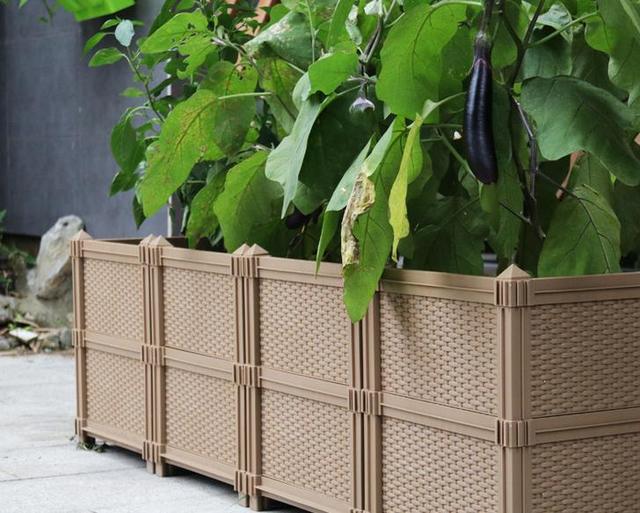
(1) Container selection. In addition to purchasing certain vegetable growing containers on the market, such as flower pots and growing troughs, growers can also process and adapt objects found in daily life to make their own growing containers, for example, using cake boxes, wooden boards, aluminum sheet boxes, beverage bottles, plastic boxes, etc., selected scientifically according to the vegetable varieties being grown. At the same time, drainage should be taken into account when making the containers.
(2) Substrate preparation. According to their own actual circumstances, growers can choose soilless cultivation or soil cultivation methods. Soilless cultivation substrates are mainly nutrient solution and substrates such as peat, bark, water and perlite; for soil cultivation, the substrate should preferably be soil that is light in texture, highly breathable, nutritionally complete, sufficiently fertilized and strong in water retention, or it can be made by oneself according to a ratio of garden soil to leaf mold of 2:1 [2].
(3) Seed selection and treatment. According to the cultivation area, the characteristics of balcony vegetable growing and the growth conditions of the vegetables, choose seeds with a small plant type, a short cycle, easy cultivation and a low incidence of pests and diseases, such as baby bok choy, lettuce, chili peppers and pak choi. At the same time, in order to improve the quality of seedling growth and reduce disease, before sowing the seeds, the seeds can be disinfected by physical or chemical means, such as soaking them in hot water (about 60°C) for about 12 min, then removing them when the water temperature drops to 30°C and drying them in the sun [3].
4 Germination Promotion and Sowing
For seeds that germinate slowly, such as cucumber, chili pepper, eggplant and celery, germination can be promoted to shorten the seedling period and increase the growth rate. Usually, the soaking method can be used to promote germination and raise seedlings. For example, cucumber seeds need to be soaked for 1-2 h; chili pepper and eggplant seeds need to be soaked for about 4-5 h; celery seeds need to be placed in a 4°C environment for 24 h first and then soaked, and sowing is carried out after the seeds germinate and the white root tips show.
When sowing seeds, the broadcast sowing method can be used for small leafy vegetables, that is, evenly scatter the seeds onto the substrate, then cover the seed surface with a layer of sieved substrate (about 0.5-0.8 cm thick) and press it firm; the drill sowing method is used for vegetable seeds of medium size, that is, open sowing furrows of about 1 cm according to a plant row spacing of more than 10 cm and less than 15 cm, and after evenly scattering the seeds, cover with substrate and press firm.
The dibbling method is used for larger seeds of solanaceous fruit vegetables or legume vegetables, that is, make holes according to a plant row spacing of 2 cm, place 2-3 seeds per unit, cover with substrate and press firm. In addition, after sowing the seeds, water them.
5 Growth Management
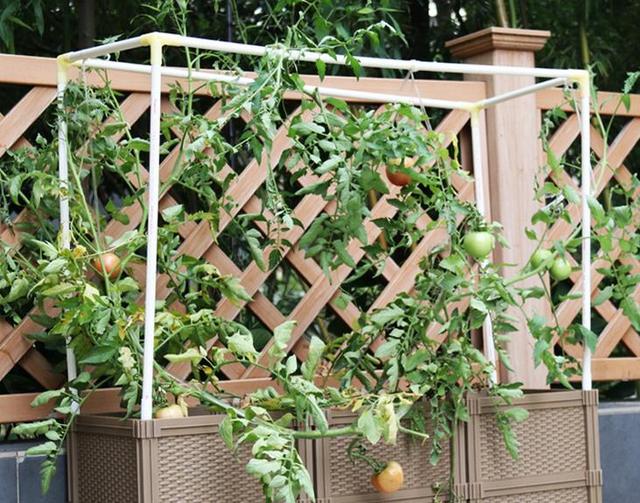
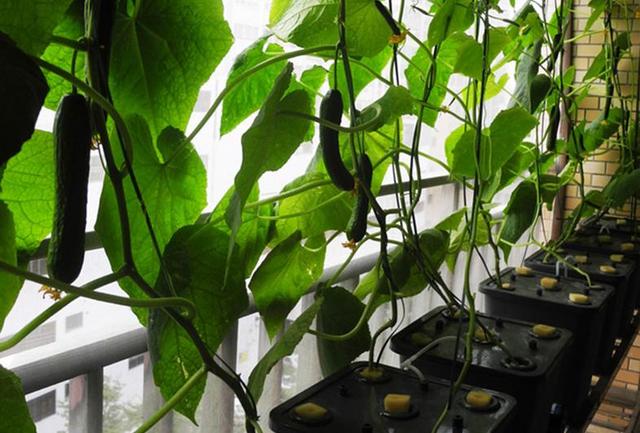
As the plants continue to grow, according to the actual situation and the growth needs of the vegetables, treatments such as hilling, watering, thinning, loosening the soil, transplanting (staking), fertilizing and pruning and flower thinning need to be carried out, so as to ensure healthy plant growth and improve vegetable yield and quality [4].
6 Pest and Disease Control
In response to the pest and disease problems of balcony vegetables, the causes of the pests and diseases should first be identified, and in response to the existing problems, methods such as manual catching, installing insect-proof nets, removing diseased leaves and applying medication at the source of the disease should be used for treatment [5].