Aeroponic cultivation makes growing plants so romantic
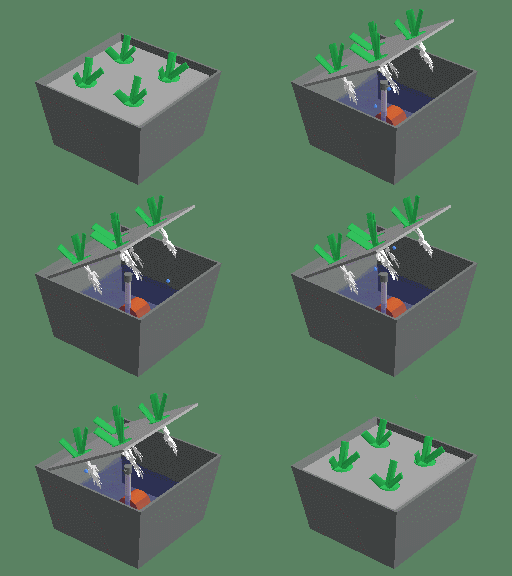
Spray cultivation animation demonstration
Spray cultivation, also known as aeroponics or spray culture, is a soilless cultivation technique that uses a spray device to atomize the nutrient solution into fine droplets and spray it directly onto the plant root system to provide the water and nutrients needed for plant growth. The crops are suspended in a closed cultivation device (trough, box or bed), while the root system is exposed inside the cultivation device, and the nutrient solution is atomized by the spray device and sprayed onto the root surface.
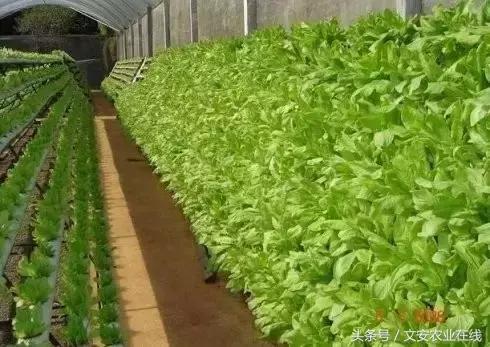
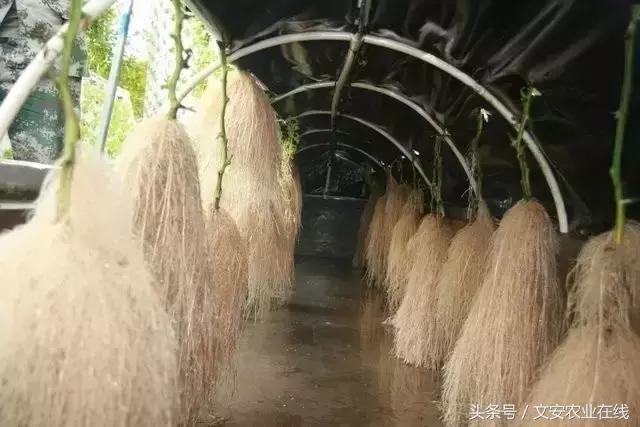
It is the form that best resolves the water-air contradiction of the root system among all soilless cultivation techniques, and it is also easy to automate control and carry out vertical cultivation, improving the utilization rate of greenhouse space. It can multiply crop yields. However, because this device requires continuous circulating supply of solution, if a power outage lasts for a relatively long time (more than 30 minutes) or the water pump fails, and circulation cannot be carried out in time, problems easily arise.
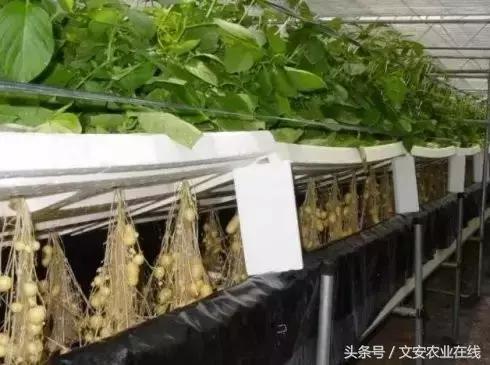
Aeroponic cultivation of potatoes
The various aeroponic cultivation methods introduced previously were all used for leafy vegetables and melons and fruits, and they share a common feature: the products people can utilize from the harvest are all the original aboveground branches, leaves and fruits. In fact, adopting aeroponics is even more beneficial as the best cultivation method for plants harvested for their root systems or various tubers and rhizomes. It is not only beneficial to the development of root systems and tuberous roots and stems, but also extremely convenient for harvesting, allowing harvest in batches at any time, or selective harvesting according to standard specifications. For some plants whose roots are harvested for medicinal use, it is even more conducive to the formation of well-developed root systems, greatly increasing the economic yield.
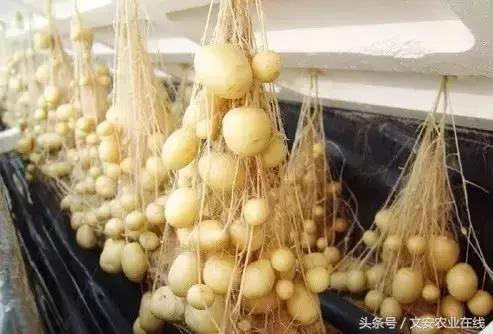
So what advantages and conveniences does aeroponic cultivation have for underground-use plants such as lilies, potatoes and sweet potatoes?
First, aeroponic cultivation of these crops, like that of other leafy vegetables and melons and fruits, greatly accelerates the formation of biological yield, reaching several times that of soil cultivation; second, their underground parts can be inspected at any time, which is more conducive to observing and studying the development of the underground parts and provides more field data for people to formulate management measures and study cultivation techniques. For example, the effect of foliar spraying of paclobutrazol on potato tuber development is more convenient and intuitive to observe than in soil cultivation; in addition, for soil-cultivated plants, when harvesting the underground parts, most are harvested by one-time digging, resulting in uneven product size and quality, whereas with aeroponics, harvesting the underground parts is like picking melons and fruits, allowing harvest in batches and selective harvesting, and the harvested tuberous roots and bulbs can fully achieve consistency in size and quality. Using this method increases the overall economic yield by several times compared with one-time harvesting, which may be related to less waste of plant nutrients and the ability to fully convert biological yield into economic yield.
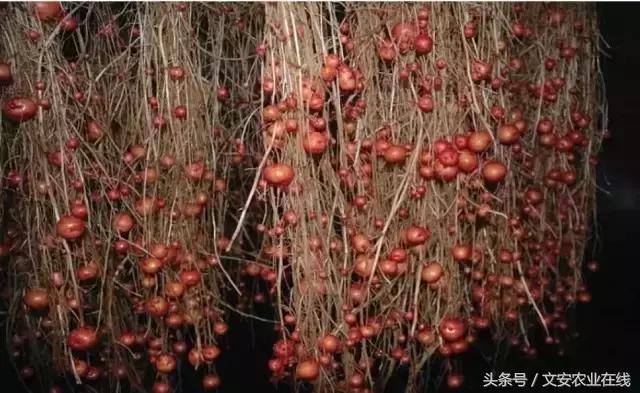
In addition, from the perspective of the technology itself, aeroponics is also more convenient in operational production. The development of the underground parts can be inspected at any time, and the nutrient solution can be regulated at any time according to the development situation. More importantly, underground development is completed in the air, and its morphological development is not affected by the mechanical resistance of soil. Individual development is extremely uniform, showing relative consistency in morphology. For example, potatoes appear as consistent round or oval shapes, truly like eggs of uniform size. The labor required for management is also greatly reduced. There is no need to hoe weeds or loosen soil, and no need to earth up or preserve soil moisture. Root tubers and stems can develop in the mist without any obstruction, allowing their varietal potential to be brought into full play, with yields several times or dozens of times those of ordinary soil cultivation.