Detailed Explanation of Key Techniques for Lily Planting and Management
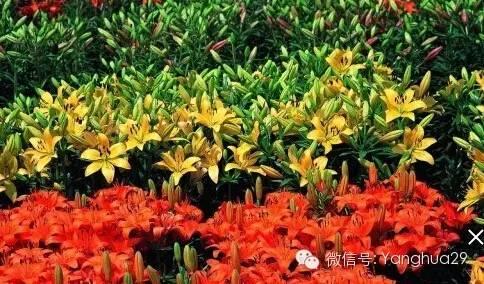
The lily is one of the three major cut flowers. Its blooms are beautiful and deeply loved by flower enthusiasts, and many gardeners also enjoy growing it. The lily is a bulbous herbaceous plant of the genus Lilium in the family Liliaceae. Its stems are upright and elegant, its leaves are emerald green, its flower shapes are unique, and its colors are refined and elegant, making it very endearing.
There are many lily varieties, mainly three groups: Asiatic lilies, Easter lilies (Lilium longiflorum), and Oriental lilies. For home growing, management is generally extensive. Most are grown in open ground, then lifted and planted in pots before flowering. The bulbs can also be planted directly in pots in spring. When grown in open ground, water thoroughly only after planting and no further watering is needed afterward. Generally, watering is done once in the morning and once in the evening, and the plants are placed directly on a balcony to receive the nourishment of sunlight.
I. Growth Habits of Lilies
Lilies are bulbous flowers of the genus Lilium in the family Liliaceae. They prefer a sunny environment and are long-day plants. Day length not only affects flower bud differentiation but also affects flower growth and development. Lilies do not like high temperatures and prefer a cool, humid climate. The optimum growing temperature for Asiatic lilies and Oriental lilies is 20-25°C during the day, while for Easter lilies (Lilium longiflorum) it is 25-28°C, with night temperatures above 14°C. Temperatures above 30°C will seriously affect the growth and development of lilies, causing bud abortion, and the flowering rate will also drop significantly. Below 10°C, growth nearly comes to a standstill.
II. Soil Requirements for Lilies
Lilies do best in sandy loam soil that is rich in humus, deep and loose, able to retain appropriate moisture, and well-drained. Clay soil must never be used to grow lilies.
Lilies prefer slightly acidic soil. The suitable soil pH for Asiatic and Easter lilies is 6-7, and the suitable soil pH for Oriental lilies is 5.5-6.5. Lilies are generally not salt-tolerant; the fluorine and chlorine content in the soil should both be below 50 mg/L, and the total soil salinity should not exceed 1.5 ms/cm.
III. Preparatory Work Before Planting
1. Soil disinfection: Before planting lilies, the soil must be disinfected. The commonly used disinfection methods are steam disinfection and chemical disinfection. Steam disinfection is rarely used now because it consumes a lot of energy and is troublesome to operate. Chemical disinfection uses 40% formalin diluted into a 1:50 or 1:100 solution and sprinkled onto the soil at a rate of 2.5 kg/sq m. After sprinkling, cover with plastic film for 5-7 days, then uncover and air-dry for 10-15 days before planting. Alternatively, carbendazim technical powder at 8-10 g/sq m can be scattered into the soil for disinfection.
2. Thawing and disinfection of bulbs: After the bulbs arrive, immediately open the packaging and place them in a 10-15°C environment to thaw. Disinfect after they are completely thawed. Disinfection method: Soak the bulbs in a 0.1% aqueous solution of captan, chlorothalonil, carbendazim, potassium permanganate, etc. for 30 minutes. The bulbs can also be soaked in an 80-fold dilution of 40% formalin solution for 30 minutes. After removal, rinse off the residual solution on the bulbs with clean water, then dry them in a cool place before planting. At some domestic planting bases, the original basal roots are trimmed off before planting, which helps promote the growth of new basal roots.
---------------------------------------
Flower-Growing Knowledge
WeChat: yanghua29
Flower-growing knowledge, questions and answers, solving your flower-growing problems!
Over 10,000 flower-growing enthusiasts exchanging tips together!