Great tricks for controlling pests in vegetables without spraying pesticides - how many do you know?
There are many ways to control vegetable pests without spraying. It mainly depends on where you are growing, the growing area, whether it is open ground, protected cultivation, a modern agricultural park, or a small family balcony vegetable garden. Small insects like the Tianyan you mentioned - I really do not know which type of insect it is. I will briefly explain a few, for your reference.
1. Balcony small vegetable garden, a few sq m of vegetable plot: you can choose to use insect-proof netting to block insects from invading. At home you can sew one from an old mosquito net, window screen, etc. There are also ones sold specifically online, together with planting boxes. Manually set up barriers to trap and kill.
2. Before planting vegetables, fully disinfect the soil, using high temperature to sterilize and kill insect eggs. Organic fertilizer should be fully fermented. Choose clean, pest-free seeds and seedlings (plant quarantine). For homemade soil, in the hot summer you can put the soil into plastic bags and expose it fully to the sun, then spread it out flat and sun it again to kill insect eggs (using high temperature to kill insects). You can also buy finished packaged peat-type soil at a flower market. This kind of soil has already been fully disinfected by the manufacturer.
3. For insects that have already appeared, look at the type of insect. Generally they are attracted to yellow. Use this yellow attraction to trap and kill them. You can buy sticky insect boards at a flower market and hang them 20 cm above the vegetables in the vegetable plot. According to the number of insects, choose the number of yellow boards. You can also make yellow boards at home. Find stiff cardboard, paint it yellow, then coat it with a layer of machine oil or cooking oil, etc. It can be reused several times.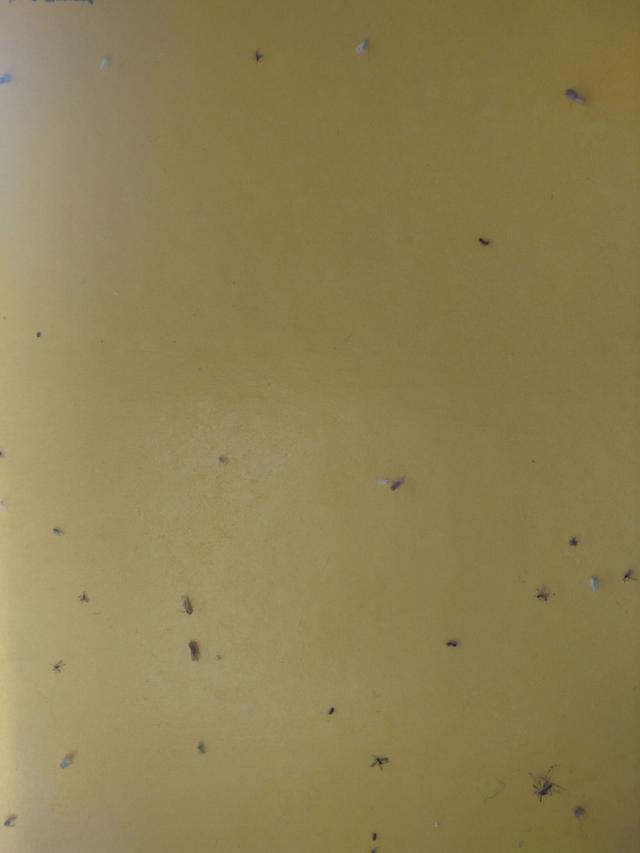
4. For pests that are attracted to light or attracted to darkness, you can place a few small lights beside the vegetables at night, with some weeds under the lights, to gather and attract the insects for elimination. Such as scarab beetles. Or a small flame, paying attention to safety, like moths flying into the flame, which is the same principle. Some animals such as snails, millipedes, and alder moths also have dark-seeking behavior, that is, they respond negatively to light, negative phototaxis, and can be gathered and eliminated at night.
5. Sugar-vinegar-alcohol liquid lure method for trapping and killing. You can place some small bowls where insects are concentrated, put some prepared sugar-vinegar-alcohol liquid, or laundry detergent water, etc. in the small bowls to lure pests and eliminate them in a concentrated way.
6. Biological chain, natural enemy treatment method. The mantis stalks the cicada, unaware of the oriole behind. Use insects to control insects, using predatory natural enemies and parasitic natural enemies to control pests. Such as ladybugs, hoverflies, wasps, mantises, etc. Or parasitic wasps and parasitic flies.
7. Manual capture and killing. Make use of insects' gregariousness and death-feigning behavior, use a bamboo pole or manual removal to eliminate one by one. Eliminate overwintering cocoons, etc. For flying ones, you can try a flyswatter. For non-flying insects, you can brush them out with a soft-bristled brush, pick them out with a toothpick, etc.
8. A more advanced option: modern agricultural parks cultivating some organic fruits and vegetables use insect-killing lamps. They are sold online.
9. Cigarette butts soaked in water, chili powder soaked in water, garlic juice soaked in water, etc. all have a certain effect and can be tried.
10. Use bacteria to control insects. Among bacteria, Bacillus thuringiensis is used; among fungi, Beauveria bassiana is used; viruses, etc. are also used to control insects.
11. Other insecticides: matrine, toosendanin, tobacco, derris, etc. are low-toxicity and highly effective, and can be tried. Buy the smallest package to use.
12. Use birds to control insects.
13. Use hormones to control insects. Generally, external hormones and internal hormones are used to control insects. Such as sex pheromones, aggregation pheromones, trail pheromones, and alarm pheromones. This method is generally not commonly used.
14. In an indoor enclosed environment, you can try lighting mosquito coils, fly-killing incense, etc.
I will talk about these for now. If you have other problems during care, you can take clear, valuable pictures and upload them, describe them clearly, ask on Wukong Q&A, follow me, invite me to answer, and I will give you a targeted detailed reply. If other teachers have different opinions, please leave a message in the comments to exchange, discuss, and learn together.
If you have read it all, give it a like before you go, and you can also share it with more people who need it. Like + follow, and I am your private gardener.