What are dental implants most afraid of? Lesion problems cannot be ignored
"My mother has basically lost all her teeth, and I want to take her to get implants, but I heard that implants can cause complications. Is that true?
"What exactly is a dental implant? Is it safe?"
"I'm so miserable. Eating with dentures takes over an hour, and I can't even taste what I'm eating!"
"The elderly person in our family has been without teeth for over a decade. Will there be inflammation after getting implants?"
At present, implant-supported restoration has gradually become one of the important restoration methods for missing teeth. Withimplant survival rate(survival rate) andimplant success rate(success rate) continuously improving, oral implant treatment has been widely carried out.
The editor has also heard many friends' doubts and concerns about dental implants. Of course, implant treatment may also fail due to some biological complications. So today, let's talk about the problems that may arise with the now wildly popular dental implant technology - peri-implant lesions.
Peri-implant lesions
Peri-implant lesions (lesion of peri-implant), also known as peri-implant tissue inflammation, refer to inflammatory damage occurring in the soft and hard tissues around implants, including peri-implant mucositis that only involves soft tissue and peri-implantitis that involves the implant bone bed and causes significant bone resorption. If the latter is not treated in time, it will lead to continuous bone resorption and "disintegration" of the implant-bone interface, ultimately causing the implant to loosen and fall out. Peri-implantitis is one of the main reasons affecting the long-term effectiveness of dental implants and leading to implant failure.
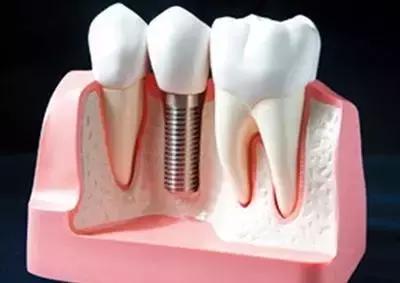
Etiology
Smoking:Smoking has been proven to be one of the main risk factors for periodontitis and peri-implantitis.Data show that the incidence of peri-implantitis in smokers (9.2%) is higher than in non-smokers (5.3%).

Tobacco contains a large amount of toxic substances, among which nicotine has been proven to have strong vasoconstrictive properties, affecting blood supply and nutrient delivery. In addition, smoking will change the oral environment around the implant, reduce healthy flora around the implant, and increase the accumulation of pathogens around the implant.
Therefore, for patients planning to get dental implants, we usually advise them to quit smoking or reduce smoking.
Plaque:Plaque accumulation is an important factor leading to peri-implantitis. Around healthy implants, there are mainly aerobic or facultatively anaerobic cocci or bacilli. When there is inflammatory damage around the implant, the surroundings are mainly Gram-negative anaerobic bacteria, including a large number of motile bacilli, fusiform bacteria and spirochetes.
Did you understand? I didn't either......

But the doctor told the editor,After dental implantation, you must pay attention to oral hygiene! You should develop the habit of brushing your teeth every morning and evening and rinsing your mouth after meals.If you do not pay attention to oral hygiene, long-term retention of food residue will cause plaque accumulation. The reproduction of plaque will cause biological destruction at the junction of the gums and the implant, thereby causing peri-implantitis and shortening the lifespan of the dental implant.
Excessive biomechanical loading:Excessive occlusal loading is an important triggering factor for the onset of peri-implantitis. In other words, problems such as abnormal occlusion, poor denture retention, inappropriate number of implants, problems with denture design, incorrect implant position, and abnormal maxillomandibular relationship may all cause the onset of peri-implantitis.
Clinical manifestations
The clinical manifestations of peri-implantitis are similar to periodontitis. There are no subjective symptoms in the early stage, and it is usually discovered only during follow-up examinations.
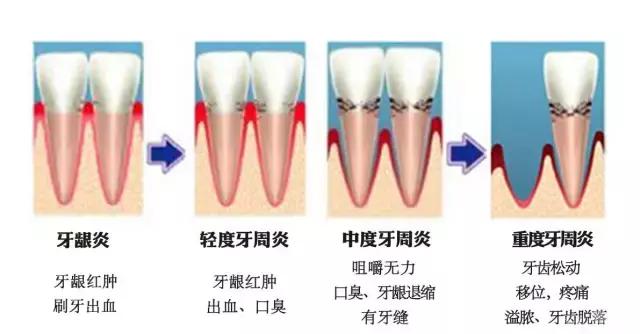
The typical clinical manifestations of peri-implantitis are: mucosal redness and swelling, bleeding on probing, pus discharge from the peri-implant pocket, increased probing depth, and reduced osseointegration. X-ray examination shows various types of bone resorption, and typical symmetrical "saucer-shaped" (or "crater-like") bone defects may appear.