Key Points and Practical Experience for Growing Potted Lilies

Key Points for Growing Potted Lilies
Every year, some lily growers fail to use cold storage for rooting, resulting in products that are too short with flower buds too small to sell at all. They then blame the poor quality of the bulbs, which is completely wrong. Plants, like people, have basic requirements for their living environment, and we must meet them. What are the notable points in potted lily production?
To plant lily bulbs, there must be a 3-to-4-week low-temperature rooting period, with a rooting temperature of 9°C. Every potted lily grower must find a way to achieve this; it is the fundamental requirement for successful lily cultivation.
Without a low-temperature rooting period, the lily root system cannot grow out normally and fully. Without sufficient roots, during the long growth process that follows, the lily's disease resistance and ability to withstand harsh weather will be very poor. This manifests as stunted plants, easy leaf drop and bud drop, and easily deformed flower buds. Once these problems appear, there is no way to solve them later.
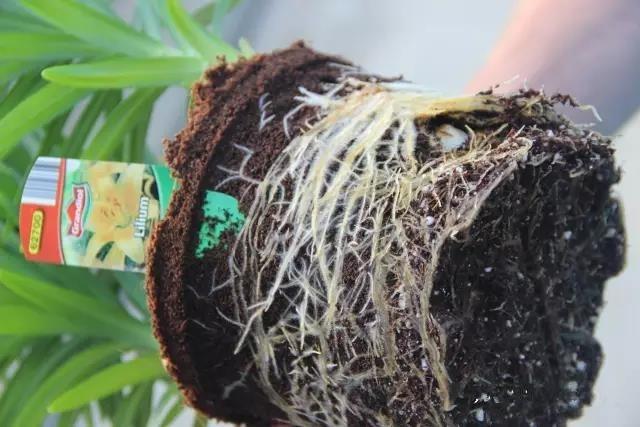
For lilies, cold storage rooting is especially important when planting in summer. July to September is usually the hottest season. Without the cold storage rooting step, it is impossible to produce qualified products. This is true not only in China; high-quality lily producers worldwide all do the same. Many growers are unwilling to build cold storage due to cost concerns. In that case, it is recommended to give up producing lilies in the hot season, because the quality will certainly not be good. At the same time, cold storage rooting can effectively control the flowering period.
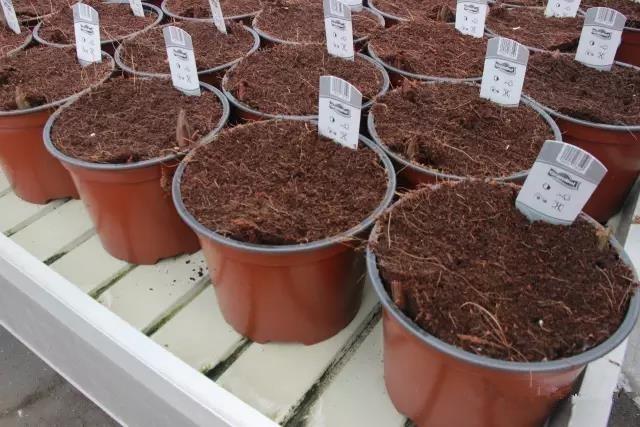
In potted lily production, besides the essential cold storage rooting, the second key point is to use a mixed substrate of imported peat moss, coconut husk, perlite, etc., generally 50% imported coarse peat + 30% coconut husk + 20% perlite. Because the soil for potted lilies is all inside the pot, the substrate needs to have very good permeability; a single substrate has very limited space.
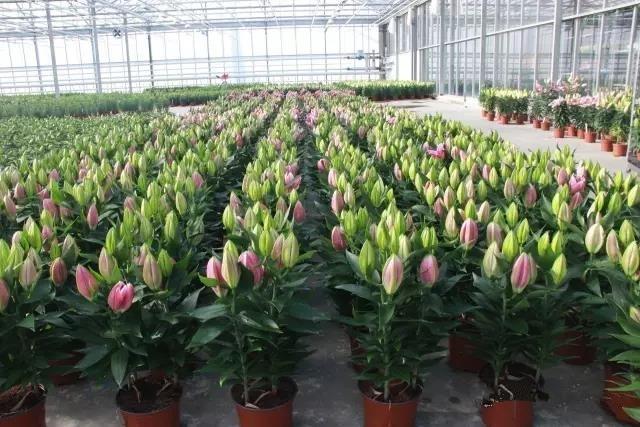
The most suitable temperature for lily growth is 14°C to 16°C. Every effort must be made to keep the ambient temperature close to this range. In summer, shading and sufficient ventilation are necessary. In the coldest winter, the temperature should not drop below 8°C. Pink-flowered varieties in particular will drop leaves below 8°C; white and yellow varieties are more cold-tolerant and can withstand temperatures as low as 5°C or even 2°C. However, lilies are more afraid of heat. As soon as the temperature exceeds 25°C, root rot, leaf drop and plant death can occur.
Lilies are divided into Oriental lilies, OT lilies, Asiatic lilies and LA hybrid lilies. Many people think all lily varieties take the same time from planting to flowering. Wrong. Oriental lilies and OT lilies take twice as long from planting to flowering as Asiatic lilies and LA hybrid lilies. More importantly, Asiatic lilies and LA hybrid lilies have no fragrance.
The time from planting to flowering differs depending on the planting period. Planted on October 1, flowering takes 90 to 120 days; the same variety planted in June takes 60 to 75 days. This is because winter has low temperatures and short daylight hours, while summer has high temperatures and twice the daylight hours of winter.
The freshest bulbs have stronger vitality and more flower buds. Dutch bulbs are harvested in December each year, and January of the following year brings the earliest arrivals. Therefore, bulbs planted in January have stronger vitality and more flower buds. If the same batch of bulbs is kept until September for planting, the number of flower buds decreases by an average of 1 to 2, and the growth is also not as good as in January. So, early planting can use small bulbs; for late planting, such as September to October, it is recommended to plant large bulbs.
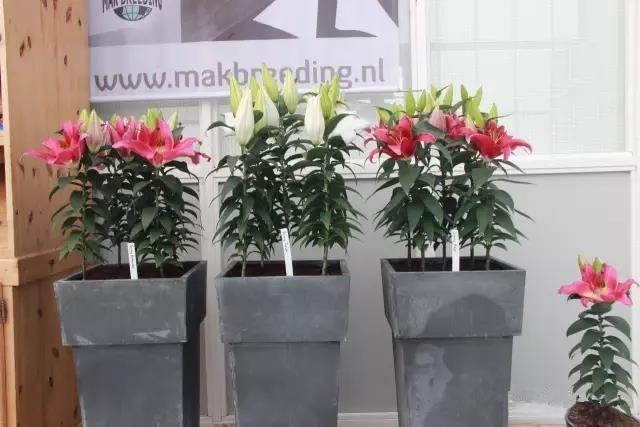
If planting multiple plants per pot, it is recommended to plant after sprouting, which ensures uniform plant height within the pot and a better ornamental effect.
Attached image: General bulb planting depth chart
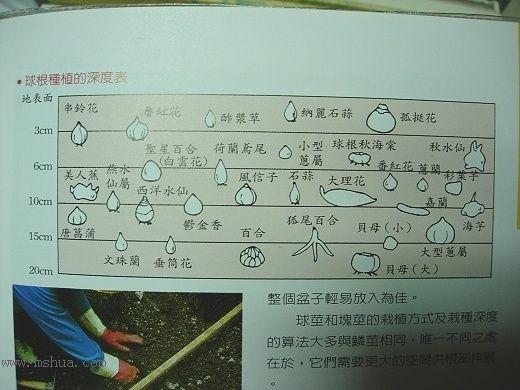
Source: Zanghua Pavilion Forum
Author: Qiandao Shuishan