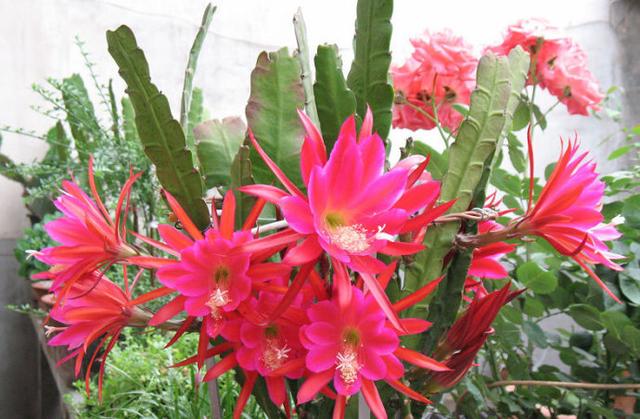
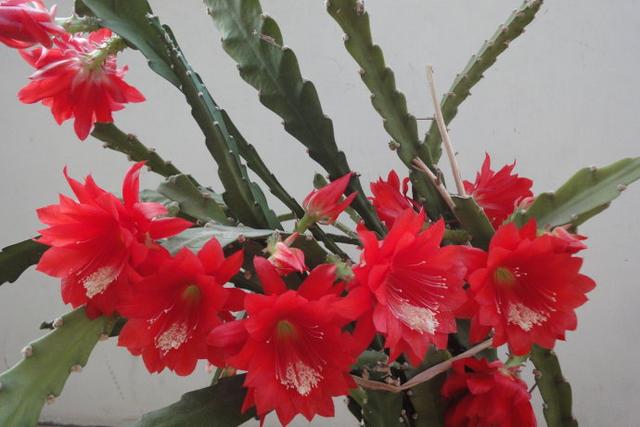
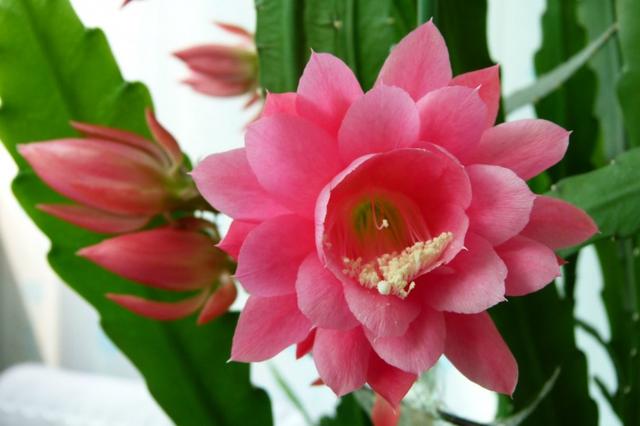
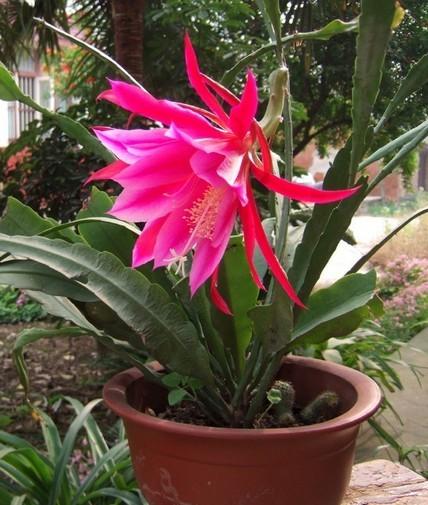
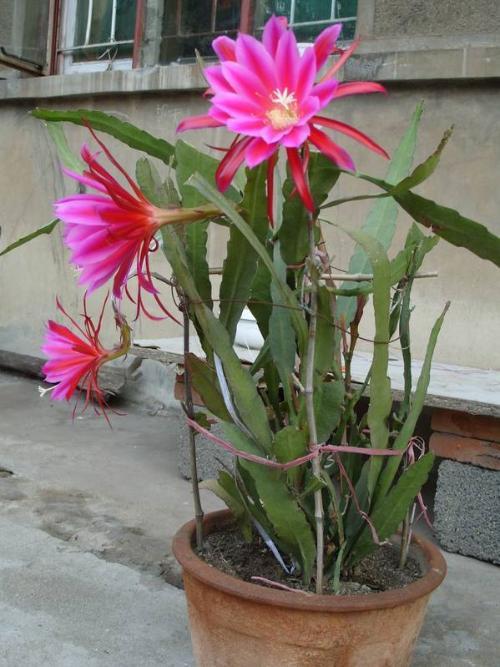
Detailed Guide to Growing and Caring for the Orchid Cactus (Epiphyllum), Part One
Other names for the orchid cactus (Epiphyllum) - lotus orchid cactus, cactus arrow, red peacock, peacock orchid. Place of origin: originally from south-central Mexico, as well as Bolivia, Peru and other places. A detailed introduction follows:
1. Soil selection: The orchid cactus (Epiphyllum) likes loose-textured, fertile, well-draining, organic-rich slightly acidic or sandy soil; when grown in heavy clay soil, it is prone to root rot.
2. Watering: ① The orchid cactus (Epiphyllum) likes moisture, but when grown in pots, if the soil is too wet, it easily leads to root mildew and rot or flower bud drop, so the potting soil is best kept slightly on the dry side.
② In spring, it is not suitable to water too much; keeping the potting soil slightly moist is best.
③ In summer when the climate is dry, in addition to normal watering, you should also frequently mist the plant's modified stems with clean water and spray water on the ground around the flower pot to increase relative air humidity and spur the plant to grow and bloom faster.
④ After autumn arrives, gradually reduce the amount and frequency of watering, and place the flower pot in a spot with ample sunlight.
⑤ In winter, watering should be controlled; keeping the potting soil slightly moist and on the dry side is enough.
3. Propagation: ① Cut well-developed stems from the mother plant of the orchid cactus (Epiphyllum), cut them into 6-10 cm lengths, and let them dry for 2-3 days.
② Insert the cut stems into the potting soil to a depth of 2-3 cm.
③ After inserting, water promptly and place in a semi-shady spot, watering once every 3 days to keep the soil moist.
④ After one week, gradually let the potted plant receive scattered light; after about one month, roots will grow, and after that it can be cared for normally.
4. Light: In spring and autumn, place the potted plant on a balcony with good ventilation and good light transmission. In summer when temperatures are higher and the weather is hot, prevent the plant from being exposed to strong sunlight for long periods; it can be placed in a shady, cool spot without direct sunlight. Note that you must not shade it too much or leave it in a shaded place for too long, otherwise the plant's flowering will be affected.
5. Temperature: The orchid cactus (Epiphyllum) likes warm and semi-shady environments and cannot withstand cold; when grown in northern regions, it must overwinter indoors. After bringing it indoors, place the potted plant in a spot with ample light, and keep the indoor temperature at 10-15°C; if the temperature is too low, the plant easily dies, while if the temperature is too high, the plant easily grows leggy, which is unfavorable for flowering and for maintaining a good plant shape.
6. Fertilizing: The orchid cactus (Epiphyllum) is quite fond of fertilizer. During the growing season, you can use fully decomposed sesame paste residue, cake fertilizer or horse hoof slices diluted with water, applying once every 15 days. After the Spring Festival, you can apply liquid fertilizer once every 10 days to spur faster growth. During the bud stage, apply quick-acting phosphorus fertilizer 1-2 times, which can make the flowers larger and more colorful. Note that you must not apply too much nitrogen fertilizer, otherwise the leaf-like stems will grow too densely and lushly, adversely affecting flowering.
7. Propagation: The orchid cactus (Epiphyllum) can be propagated by cuttings and grafting.
8. Pests and diseases: The main diseases that frequently occur on the orchid cactus (Epiphyllum) are brown spot disease and various pests.
① When the orchid cactus (Epiphyllum) suffers from brown spot disease, it can be treated by spraying a 1000-fold dilution of 50% carbendazim wettable powder.
② When the orchid cactus (Epiphyllum) is harmed by scale insects, aphids or red spider mites, spray a 1000-fold dilution of 50% fenitrothion emulsifiable concentrate to kill them.
③ When the orchid cactus (Epiphyllum) is harmed by root-knot nematodes, drench with a 1000-fold diluted solution of 80% dibromochloropropane emulsifiable concentrate.
9. Pruning: ① Each year in spring or autumn when repotting, cut off the plant's dried and rotted roots to encourage new root growth.
② During the growing period, set up a support for the plant as early as possible and tie up the flexible modified stems to prevent the modified stems from breaking and the plant from toppling.
③ During the growing season, remove excess side shoots and basal shoots as early as possible to reduce nutrient consumption and ensure abundant, lush flowering.